


HUNTINGTON – A federal judge has declined the West Virginia’s request to dismiss a lawsuit brought by West Virginia’s largest overdose prevention group hoping to overturn the state’s nearly two-decades-old moratorium on new methadone clinics.
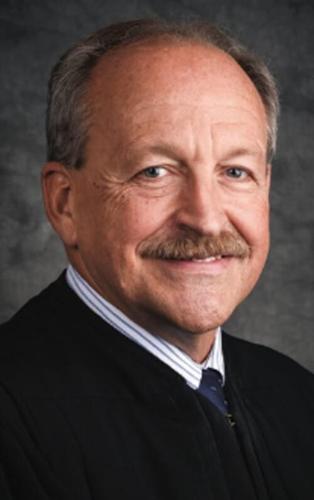
The August 14 ruling by U.S. District Judge Robert C. “Chuck” Chambers allows the case filed in March by Solutions Oriented Addiction Response of West Virginia (SOAR-WV) to proceed.

Chambers
“As SOAR-WV has alleged the lack of methadone treatment centers has made it more difficult and time consuming to connect individual users to treatment, it necessarily follows that it is spending more of its resources on each individual referral,” Chambers wrote. “Therefore, the court has little difficulty finding that SOAR-WV has sufficiently alleged a direct connection between the moratorium and zoning restrictions and injury to its mission.”
SOAR-WV filed its complaint against the state, Gov. Patrick Morrisey, the Department of Health, Secretary of Health Arvin Singh, the West Virginia Health Care Authority, WVHCA Executive Director Gordon C. Lane Jr. and WVHCA Chairman Robert Cheren.
The current state law has resulted in only nine clinics operating in the state. SOAR-WV Co-Director Sarah Stone says this leaves “broad swaths of the population more than an hour’s drive from the nearest methadone clinic.”
In the 38-page complaint, SOAR-WV claims the 2007 law that instituted the moratorium violates Title II of the Americans with Disabilities Act and Section 504 of the Rehabilitation Act.
“As we are packing thousands of doses of naloxone and care packages for Save a Life Day 2026, we are reminded that access matters,” Stone said. “Whether it’s naloxone, methadone or any other evidence-based care, people shouldn’t have to overcome stigma and unnecessary barriers to get the care they need.
“Dignity, autonomy and equitable access should not be extras. They are a baseline.”
According to the complaint, West Virginia is the only state in the nation with a moratorium on new methadone clinics.
“A cruel irony given that West Virginia has led the nation in the rate of opioid overdose deaths for 14 of the last 15 years,” the complaint states. “It has additionally layered on strict zoning restrictions targeted exclusively at providers of medications for opioid use disorder, including methadone.”
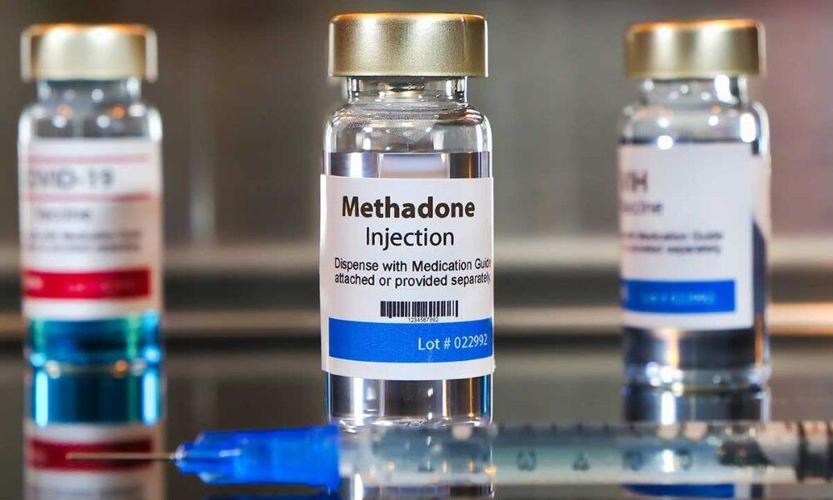
The lawsuit challenges what SOAR-WV calls the state’s “discriminatory and deadly statewide moratorium and zoning restrictions on opioid treatment programs, which are the only facilities federally authorized to dispense methadone — a proven, life-saving medication — to treat OUD. OUD is a chronic disease of the brain that, if left untreated, often results in death.”
The complaint says the results of the moratorium are deadly.
“For many individuals in West Virginia, methadone is the only effective medication available to treat their opioid addiction, especially for those with the most severe OUD and those who frequently use fentanyl,” it states. “This is because — among other reasons — methadone is the only FDA-approved MOUD that allows those with more severe OUDs to begin taking effective medication without having to go through painful withdrawal symptoms first.
“Fentanyl withdrawal, compared to heroin withdrawal, typically involves more serious withdrawal symptoms, making avoiding withdrawal altogether even more important. Without access to methadone, individuals with the most severe addiction are less likely to enter treatment and thus are at a dramatically higher risk of fatal overdose.”
People seeking drug rehabilitation health services are considered people with disabilities under federal law.
“One purpose of the Americans with Disabilities Act is to ensure people are able to receive the care they need, without the social stigma that often accompanies addiction,” ACLU staff attorney Joseph Longley said. “The government should not be getting in the way of lifesaving care.”
The complaint also says there is a “pervasive stigma” associated with people seeking methadone treatment that limits their access to the medication.
“This stigma is grounded in longstanding, widespread and deeply rooted misconceptions that OUD is a choice and a moral failing, rather than a disease of the brain,” the complaint states. “West Virginia’s moratorium and zoning restrictions are rooted in this stigma.
“For example, during the West Virginia House of Delegates debate of a bill that would have lifted the moratorium, Delegate Ty Nestor from Randolph (County) said of methadone: ‘This stuff is bad. You can’t fight West Virginia’s addiction to opioids with something just like heroin and just calling it something different.’”
SOAR-WV seeks to enjoin the state from enforcing the methadone clinic moratorium, and it also challenges the state’s zoning restrictions that ban new methadone clinics from operating within a half-mile of any daycare center or school. The complaint says this type of restriction does not apply to other types of health care facilities. It also seeks court costs, attorney fees and other relief.
“Obviously our clients hate that this moratorium has been in place for so long,” ACLU-WV Communications Director Billy Wolfe told The Record. “While we all wish we could go back to 2007 and make sure it never passed in the first place, SOAR-WV is doing what they can to stop the harm now.
“With the dramatic rise of fentanyl use in recent years, it’s become increasingly urgent that the moratorium be lifted. Providers need every tool at their disposal to combat this crisis.”
SOAR-WV is a non-profit that operates throughout the state and has volunteers and partners in all 55 counties who distribute naloxone, an opioid overdose reversal medication. It also hosts monthly mutual aid fairs in Charleston to connect individuals with OUD to treatment, housing and other social services.
The non-profit is being represented by the American Civil Liberties Union of West Virginia, the American Civil Liberties Union and Chicago-based Kaplan & Grady.
U.S. District Court for the Southern District of West Virginia case number 3:26-cv-00175