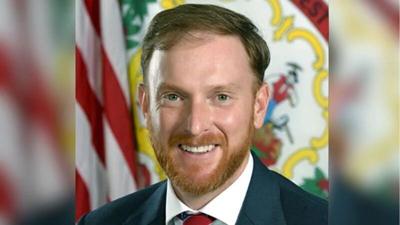


West Virginia Attorney General J.B. McCuskey
CHARLESTON – West Virginia Attorney General J.B. McCuskey has announced a settlement with Monsanto Company, Solutia Inc. and Pharmacia LLC resolving the state’s claims involving PCB contamination and alleged impacts to its waterbodies and natural resources.
The settlement guarantees a $24.5 million payment to the state, including $12.5 million to be paid by the end of 2025. It has a total potential value of up to $60.5 million to be paid before December 2030, contingent on the outcome of separate indemnity litigation Monsanto is pursuing against major PCB purchasers.
Polychlorinated Biphenyls, commonly known as PCBs, are toxic chemicals banned in 1979 because of their links to cancer and harmful effects on immune, nervous and reproductive systems. Despite the ban, PCBs have persisted in the environment, accumulating in human and animal tissues.
Monsanto once was one of the largest makers of a now-banned class of chemicals.
“West Virginia communities have shouldered the burden of PCB contamination for far too long, impacting our rivers, land and health,” McCuskey said. “This settlement agreement ensures that Monsanto is held accountable for the environmental damage caused by PCBs decades ago and will be critical in our ongoing efforts to protect West Virginians for generations to come.”
Complaints filed in other states have alleged that Monsanto produced 99% of all PCBs in the United States and knowingly concealed their environmental and health risks for decades. Over 540 acres of lakes and 440 miles of rivers and streams in West Virginia are believed to be impaired by PCBs.
West Virginia’s settlement follows similar resolutions in other states. West Virginia’s per-capita settlement amount — even excluding contingencies — is among the highest in the country.
Also Monday, Monsanto agreed to pay the Illinois at least $120 million under a settlement with Illinois AG Kwame Raoul. Raoul sued Monsanto in 2022 alleging company officials long knew that widely used PCBs were dangerous to people and the environment even as they denied it.
Monsanto issued a statement on its settlement agreements with West Virginia and Illinois, saying they are the ninth and 10th settlement agreements the company has made with states over alleged PCB claims. There are five state cases remaining.
“Monsanto has reached settlement agreements with West Virginia and Illinois to resolve all claims relating to polychlorinated biphenyls (PCBs), a legacy product the company voluntarily ceased producing in 1977 at values that are in the company’s best interest,” the company’s statement said. “The settlements contain no admission of liability or wrongdoing by the company. Under the terms of the agreements, Monsanto will make upfront payments of $12.5 million to West Virginia and $80 million to Illinois ($40 million of which will be paid in 2026). The settlements include additional contingency payments within five years that are tied to the outcome of Monsanto’s pending action in Missouri to enforce its indemnity rights against its largest former customers.
“Both states agreed to cooperate with Monsanto in this action, having determined there is a substantial basis for the company’s pending indemnity case and a significant portion of the liability should be borne by Monsanto’s former customers. Under the terms of the agreement, West Virginia could be paid up to an additional $48 million while Illinois could be paid up to an additional $200 million. The settlements include smaller backstop payments if the indemnity litigation results in substantially less than the target recoveries set forth in the agreements.
“During the time of manufacture, Monsanto conducted hundreds of studies on PCB safety, provided appropriate warnings to its sophisticated industrial customers based on state-of-the science at the time and cooperated with the U.S. government’s 1972 interdepartmental study. To recover a substantial portion of its PCB-related litigation costs, Monsanto filed a complaint in Missouri to enforce its rights under 1972 indemnity contracts with its six largest former PCB customers. Under these contracts, these sophisticated companies agreed to indemnify Monsanto for PCB-related litigation costs. The litigation against the former PCB customers remains pending.”