




CHARLESTON – Many people are familiar with the term food deserts.

Lady Justice
Those are areas with limited access to affordable, fresh and healthy food. They are common in low-income urban and rural neighborhoods where residents lack nearby grocery stores and reliable transportation, forcing reliance on fast food and convenience stores.
West Virginia has many of those, but the chief justice of the state Supreme Court says the state also has several legal deserts.

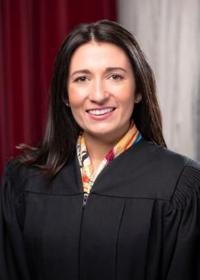
Bunn
“We have heard repeatedly from judges around the state about the practical difficulties they’re facing due to the lack of attorneys available to do court-appointed work or because the existing pool of attorneys are covering so many cases it’s difficult to schedule hearings,” Chief Justice C. Haley Bunn said. “To address this, the Supreme Court voted last year to create the (Commission on the Future of the Practice of Law) to first establish quantifiable data detailing the scope of the problem, and then to propose potential solutions to address it.”
Last week, the Supreme Court released a new report by the commission detailing the findings and recommendations.
“For years here at the court, we have been getting anecdotal information that there aren’t enough lawyers to do the work,” Bunn told The West Virginia Record. “We’ve heard about judges having a tough time scheduling things and so few attorneys doing so much appointed work. We can’t move the docket the way we need to.
“Around here, we like to look at the data to see what it says. For example, do we actually need more lawyers? Here in Charleston, people are in a microcosm. There isn’t a need for more lawyers here. But it’s not that way everywhere.”
The report 46 of West Virginia’s 55 counties classify as “legal deserts,” based on the definition established by the American Bar Association, meaning they have less than one attorney for every 1,000 residents.
Making matters worse, the demand for court-appointed legal work has risen sharply over the past decade. So while the majority of West Virginia counties currently lack an adequate number of attorneys available for appointment, the problem is expected to worsen because about 25 percent of the state’s private practice attorneys say they plan to retire over the next five years, according to the report.
“Isn’t our population declining as well?” Bunn asked. “Yes, but the rate of losing lawyers is about twice that rate. But the population decline hasn’t meant less courtroom work. In fact, there have been upticks in that.
“We want to have this commission look into what other jurisdictions are doing to address this problem. We want to find some creative solutions for West Virginia that the court and other branches of government can consider to fix this. And we want to find how we can encourage people to get into the practice of law.”
The 13-member commission is chaired by Supreme Court Administrative Director Keith Hoover and features representatives from various sectors of the legal profession and state government, including the state and federal judiciary, Legislature and West Virginia State Bar.
“Our commission has worked diligently over the past year to accumulate data, identify trends and study potential solutions, including reforms and best practices implemented in other states, to address structural challenges in our state’s legal system,” Hoover said. “We hope this work will help ensure our citizens have equal access to justice, due process and a legal system that can handle their cases effectively and efficiently.”
Among the report’s findings:
· The number of active, in-state attorneys declined 9.29 percent from 2014, outpacing overall population decline of 4.3 percent.
· At the same time, legal demand increased, with the number of child abuse and neglect cases – which typically require court-appointed counsel – increasing 36.63 percent.
· About 248 active, in-state attorneys leave practice each year, with an average of only 203 new attorneys admitted to the bar – a net annual decline of 45 attorneys per year.
· About 25 percent of West Virginia private practice attorneys plan to retire during the next five years.
· Only 32 percent of current private practice attorneys accept court-appointed assignments.
To address these trends, the commission recommended a series of potential policy proposals in the following areas:
· Ease restrictions for out-of-state lawyers to practice in West Virgina.
· Create targeted opportunities for new or recent law school graduates to open small firms in rural areas.
· Create incentives to retain existing court-appointed attorneys and encourage more lawyers to accept court-appointed work.
· Explore more opportunities for individuals to enter the legal profession as attorneys or non-lawyers.
· Seek new funding opportunities to support innovation and robust programs.
In its report, the commission included several ideas under each of those areas for policymakers to consider to address the overall goal.
“This report provides both a clear assessment of the challenges facing the legal profession in West Virginia and a roadmap for addressing them,” said Robby Aliff, president of the West Virginia State Bar and a member of the commission. “The need for talented lawyers has never been greater.
“As many experienced practitioners prepare to retire, law students and young lawyers have an unprecedented opportunity to build rewarding careers while serving their communities. By working together to implement the commission’s recommendations, we can strengthen our profession and help ensure that every West Virginian has meaningful access to legal services for generations to come.”
The commission will work with the Supreme Court, the West Virginia State Bar, the West Virginia University College of Law and lawmakers to review and discuss the recommendations in the coming months.
One glaring example is Calhoun County.
While 45 other counties have less than one attorney for every 1,000 residents, Calhoun County has zero attorneys.
“It’s a tough problem, and we need to encourage people to do this work,” Bunn told The Record. “These are problems not just limited to the legal field. We’ve heard of similar problems in the medical field for years.
“There are some creative potentials we are considering, such as potential loan forgiveness programs and removing barriers to practicing in these areas. We want to streamline the process of how you get to practice here, such as reciprocity and limited practice.
“And yes, we’re willing to accept the help, for sure. For example, the Bar Foundation has sponsored individuals to do Guardian Ad Litem work in certain areas in the past.”
Bunn also touched on the topic of artificial intelligence and its impact on the legal profession.
“An AI bot can’t walk into a courtroom and represent someone,” she said. “We have to have humans doing that work. There isn’t any chance on the horizon that we don’t need humans to do this work.”
Bunn said this problem might not seem to affect some people directly right now, but she said it’s a problem for everyone in the state.
“Even if you’re not a resident of a certain county, if you want to get on the docket with your judge, it makes it harder because they have to schedule around these other types of cases,” she said. “Fundamentally, there is no way around the fact that this requires the almighty dollar. So, we’re looking for some participation from other branches of government.”
Bunn said the problem is finding a pool of people willing to work here and stay here to work.
“This is a wonderful place to practice,” she told The Record. “This is a great place to work and live, and you can make a great living in these places. The demand is there, not just for court-appointed work. There are wills, property transfers and the like.
“There is a real opportunity for people who want to go to these places and hang out a shingle.”