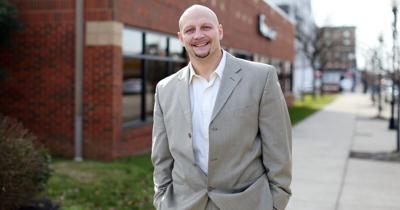



Rocky Meadows
CHARLESTON – The owners of a defunct Huntington drug recovery facility have been charged with conspiracy to commit wire fraud.
The indictments against Raymond C. “Rocky” Meadows II and his wife Helen Crutcher-Meadows were announced June 23 by U.S. Attorney Moore Capito. The couple operated Lifehouse Inc., a nonprofit, long-term, faith-based substance abuse recovery program.
Capito’s office said the charges filed in federal court are part of the Department of Justice’s 2026 National Health Care Fraud Takedown.
“As alleged in the criminal complaints, these defendants viewed West Virginia’s addiction crisis not as a tragedy, but as an opportunity,” Capito said. “While families buried loved ones, communities fought to save lives, and taxpayers funded efforts to combat substance abuse, they allegedly exploited the system for personal gain.
“The damage from conduct like this extends far beyond dollars and cents – it robs communities of resources, undermines recovery efforts, and betrays public trust. We will continue to pursue fraudsters who enrich themselves through the misery of others and hold them fully accountable.”
The DOJ takedown is a strategically coordinated, nationwide law enforcement action that resulted in charges against 455 defendants, including 90 doctors and other licensed medical professionals, for their alleged participation in health care fraud and opioid abuse schemes involving over $6.5 billion in false claims and significant patient harm, including death.
Rocky Meadows, 52, was charged with conspiracy to commit wire fraud. He was founder and director of Lifehouse, which served as a sober living community and received expense reimbursements through both state and federal government grant programs. Helen Crutcher-Meadows, 49, was charged by criminal complaint with conspiracy to commit wire fraud. She now lives in Florida.
The U.S. Attorney’s office says Meadows conspired with his wife and another individual to falsify and submit timesheets to a testing laboratory for drug testing work not actually performed. The scheme included Meadows’s wife routinely billing 32 hours of overtime each week for months at a time, as well as billing for hours when she was with him on out-of-state vacations.
The laboratory issued payments based on the fraudulent billings and subsequently obtained reimbursement from federal and state healthcare programs.
In an unrelated case, Capito’s office reached a $120,000 civil settlement with Beckley-based West Virginia Sleep Centers to resolve allegations that the company submitted claims for payment to Medicaid and the Veterans Administration Community Health program for sleep studies and polysomnogram reports that were prepared and signed by unqualified, non-physician staff during the period from January 1, 2016 through January 9, 2020.
A related federal civil lawsuit against Lifehouse and the couple has been on hold since last year, but court records indicate it could soon see action again.
In that case, former employee Jillianna Gillum originally filed a qui tam case against Tri State Addiction Recovery Resources, Lifehouse and the couple accusing them of accuse the defendants of using false and fraudulent records related to buying rebated drugs and phony health care service claims to defraud the government of millions. The federal government subsequently joined the complaint.
Last month, U.S. District Judge Robert C. “Chuck” Chambers issued an order directing the parties to object to lifting the stay on the case. Chambers had issued the stay “given the immediate pendency of criminal proceedings” against the defendants.
“Since this case has been pending for almost five years without meaningful progress toward resolution, the court will require the defendants to renew their request for a stay,” Chambers’ May 22 order states, directing the parties to object to lifting the stay by August 3 with “factual and legal basis for a continued stay.”
On June 15, Gillum’s attorneys entered a report notifying the court she intends to pursue all of the claims alleged in the complaint “because of her commitment to patient safety and patient choice.” She also plans to pursue her state law claims regarding the West Virginia Patient Safety Act.
TSARR is a licensed behavioral health center based in Huntington. It and Lifehouse are owned and operated by the Meadows’.
The government says the Meadows’ have engaged in a scheme to defraud Medicaid by “knowingly submitting false claims and/or causing the submission of false claims for Community Integration Transportation services to and from TSARR” and “for Peer Recovery Support Specialist services” from July 22, 2018, to present.
It says Medicaid claim submissions for Lifehouse were presenting using TSARR’s National Provider Numbers. It accuses the defendants of violating the federal False Claims Act, common law fraud, payment under mistake of fact/restitution and unjust enrichment/restitution.
According to the original qui tam complaint filed by Gillum, The Lifehouse provides basic housing and sober living for recovering addicts. It is funded almost entirely by grants. The complaint says its patients are prohibited from receiving outpatient care anywhere else, and Lifehouse residents are told they’ll be discharged from the sober living environment if they don’t get Vivitrol monthly through TSARR. The only patients at TSARR are Lifehouse residents.
Vivitrol is long-acting naltrexone, an opioid antagonist designed to treat alcohol and opiate addiction. Studies show it also assists with meth addiction.
According to her complaint, Gillum is a former employee of TSARR and a registered nurse licensed in Kentucky and West Virginia. She says she was hired by Crutcher to provide medical clearance for, prescribe and administer the monthly Vivitrol injections on an outpatient basis to patients suffering from various substance use disorders under the supervision of Dr. David Humphreys, TSARR’s medical director.
Humphreys is a board-certified psychiatrist practicing primarily in private practice in Barboursville. He also is employed by St. Mary’s Medical Center in Huntington to provide psychiatric care to hospital patients.
The Gillum complaint says TSARR falsely represented itself as a part of the federal government’s 340B Drug Program designed to allow entities to purchase drugs as a discounted rate, thereby enabling to profit when billed through Medicaid or any other payor party. It says TSARR obtained deeply discounted Vivitrol injections. It also claims The Lifehouse drove demand for Vivitrol among its residents because they were required to be treated at TSARR with monthly Vivitrol injections.
“TSARR buys about 100 shots per month and bills insurance for $1,500 per shot,” the Gillum complaint states. “That is approximately $150,000 per month for the past 12 months, resulting in $1.8 million in payments to TSARR for Vivitrol. …
“After TSARR purchased the discounted drug, subsidized by the federal government, it then billed Medicaid more than double the price it paid for the medication and the administration of the medication. …
“TSARR is using Dr. Humphreys' NPI (National Provider Identification number) and St. Mary’s Medical Center's 340B ID number to buy the discounted Vivitrol from Besse Medical though TSARR is not affiliated with St. Mary’s Medical Center in any way and is not itself a qualified 340B entity.”
The Gillum complaint goes on to say all Lifehouse residents are automatically signed up with Medicaid and food stamps and are prohibited from choosing their medical providers. Because West Virginia Medicaid law says patients must have a choice of providers, the complaint says “every single claim TSARR has ever made to West Virginia Medicaid for The Lifehouse residents is violative of Medicaid choice of care rules.”
“The Lifehouse fuels demand for Vivitrol by requiring all patients to take Vivitrol if they want to maintain their spot in the sober living facility,” the Gillum complaint states. “The majority of The Lifehouse residents were required, by Rocky Meadows, to establish care with the plaintiff (Gillum) at TSARR for monthly Vivitrol administration if medically cleared by plaintiff.”
Gillum says she was told by Meadows to contact him if any Lifehouse resident refused Vivitrol. She says she prescribed and administered 100 to 150 Vivitrol injections per month.
TSARR was reimbursed about $2.8 million total by West Virginia Medicaid for Vivitrol claims alone during Gillum's employment. That doesn’t include other services billed by TSARR on behalf of the same residents.
The Gillum complaint also says TSARR employees are actually working for The Lifehouse and fraudulently billing for Peer Support Services that are not provided. Of the roughly 60 full-time TSARR employees, about 15 report to TSARR for work. The remaining ones report to various Lifehouse homes in Huntington.
“WV Medicaid is being billed by TSARR for timed PRSS services, for the Lifehouse residents, for the duration of each of their shifts, however they are spending the majority of their shift working at The Lifehouse facilities and transporting Lifehouse residents to various appointments,” the Gillum complaint states. “Employees of TSARR are instructed by management to edit documentation to fraudulently document peer support when in reality very little peer support was provided. … Employees also augmented chart notes to show that a patient had received more peer support. …
“Therefore, Medicaid is paying the wages of employees who are actually providing non-billable services at a non-profit organization.”
The Gillum complaint also says TSARR adds Alcohol Use Disorder medical codes to each patient’s medical record so Medicaid would reimburse TSARR more, and it says all TSARR patients are forced to have intensive outpatient services even if they do not meet the criteria for it, also requiring Medicaid to pay TSARR more per month.
In addition, it says TSARR bills Medicaid for counseling services provided by a non-credentialed employee. And, it says TSARR was not complying with Medication Assisted Treatment laws.
Gillum also says she made multiple verbal and written complaints to TSARR about her allegations, but she says the defendants never were willing to address her concerns, telling Gillum “it was none of her business.”
On May 5, 2021, Gillum says she sent an email to a TSARR employee named Marcus regarding compliance issues as Crutcher had requested. About an hour later, she says she was suspended when she arrived at work.
Five days later, Gillum says she met with Marcus and was given a letter saying she was being demoted to lead group therapy sessions. When she declined, she says she told Marcus she might be willing to accept a severance package.
Gillum says she spent hours in interviews with federal investigators and provided hundreds of pages of documentation to support her concerns about TSARR for this qui tam lawsuit. When Meadows and Crutcher learned of the federal probe, Gillum says Meadows filed a complaint against her with the West Virginia Board of Nursing and had her served with papers to cease and desist “fake reports” to investigators.
Gillum says Meadows also filed four different versions of the same complaint to the West Virginia Board of Nursing making false accusations against her, even making a point to tell the board it needed to suspend Gillum’s license.
She says Meadows’ false and defamatory reports caused her to lose both her Kentucky and West Virginia nursing licenses, severely impacting her livelihood. She says she has incurred thousands of dollars in legal fees to defend the false claims Meadows made to the nursing boards.
The Gillum complaint accuses the defendants of retaliation and of violating the False Claims Act and the West Virginia Patient Safety Act.
Qui tam is a type of lawsuit that allows a private person, known as a relator, to prosecute a lawsuit for the government and receive a reward. The False Claims Act authorizes qui tam lawsuits to assist the government in prosecuting cases to recover damages and penalties for fraud against the government. If the case is successful, the relator can earn a whistleblower reward.
A mediation session involving two Huntington drug recovery-related facilities and their owners accused of bilking the government for millions of dollars finished with the parties unable to resolve their issues.
In April 2024, Meadows was arrested on DUI charges in Boyd County, Ky. He had a history of battling addiction and crime before turning his life around, according to media reports. The Lifehouse also has been recognized for providing support and guidance to those battling addiction in the Tri-State area.
Gillum seeks compensatory damages, court costs, attorney fees, witness fees and other relief. She is being represented by Jessica L. Olsheski of Olsheski Law Co. in Columbus, Ohio, and by William O. Merriman Jr. of Merriman Law in Parkersburg. District Judge Robert C. “Chuck” Chambers is hearing the case.
The federal government is being represented by Capito and assistant U.S. Attorneys Fred B. Westfall Jr., Jason S. Bailey and Matthew C. Lindsay.
In an unrelated case, Capito’s office reached a $120,000 civil settlement with Beckley-based West Virginia Sleep Centers to resolve allegations that the company submitted claims for payment to Medicaid and the Veterans Administration Community Health program for sleep studies and polysomnogram reports that were prepared and signed by unqualified, non-physician staff during the period from January 1, 2016 through January 9, 2020.
U.S. District Court for the Southern District of West Virginia case number 3:21-cv-323