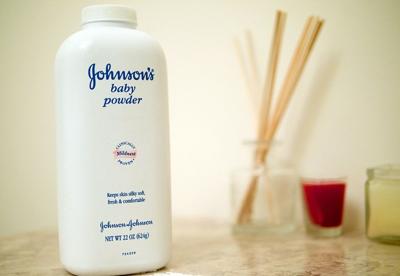


Johnson & Johnson Baby Powder no longer contains talc powder.
TRENTON, N.J. – The mass tort law firm leading tens of thousands of ovarian cancer lawsuits against Johnson & Johnson has been disqualified from cases in New Jersey for collaborating with one of the company’s former lawyers.
The state Appellate Division delivered the stunning ruling Friday, finding the firm Beasley Allen violated professionalism rules when it strategized with James Conlan on a mass settlement of talc claims. The ruling disqualifies Beasley Allen from 3,600 cases in New Jersey state court.
Conlan was a former partner at Faegre Drinker Biddle & Reath who defended J&J in talc litigation. He left the firm to start Legacy Liability Solutions, where he attempted to buy the company’s talc liabilities and opposed the company’s ultimately unsuccessful plan to settle all cases in bankruptcy court.
He worked with Beasley Allen’s Andy Birchfield to craft a settlement outside of the bankruptcy process, which was J&J’s preferred avenue. Conlan and the firm wanted the talc liabilities bundled to an offshoot company that would be sold to him.
Conlan even wrote an op-ed in Bloomberg touting that strategy.
“Realistically, Beasley Allen’s goals in reaching a settlement of the talc claims are clearly adverse to J&J, as Beasley Allen wanted to settle at the greatest amount possible for its clients, as does Conlan on behalf of Legacy for its own financial gain, while J&J wants the opposite,” Judge Mark Chase wrote.
“Therefore, Conlan worked together with Beasley Allen, whose interests in the talc litigation are materially adverse to those of Conlan's former client, J&J.”
J&J has vowed to fight talc cases in court after its plan to fund a $9 billion settlement was defeated – by Beasley Allen. A Houston bankruptcy judge last year found a poll of those with injury claims tied to Baby Powder use unreliable.
That ruling let cases around the country move forward. They allege the talc in Baby Powder contains asbestos, which the company denies. A huge amount of lawsuits are consolidated in a federal multidistrict litigation proceeding, but some are also in various state courts around the country.
J&J has won plenty of defense verdicts in trials that hinge on expert testimony regarding whether there is asbestos in the talcum powder, but when it loses, jurors aren’t shy about delivering massive verdicts. In December, one woman won $1.5 billion in Baltimore, and two women in Los Angeles won $40 million.
New Jersey plaintiffs will now have someone else leading their cases, and it’s possible J&J can use the ruling to disqualify Beasley Allen elsewhere. It had presented its case to both the New Jersey state court and the federal MDL court, though Friday’s ruling applies only to New Jersey’s multi-county litigation.
Erik Haas, the worldwide vice president of litigation at J&J, called Beasley Allen’s “surreptitious collaboration” with Conlan “an egregious breach of the most fundamental ethical duties that govern our profession.”
“It is shocking and deeply troubling that a plaintiff law firm leading a mass tort litigation would enlist—and secretly confer on litigation strategy with — a lawyer who represented its adversary on the same matter, claims and issues,” he added.
Conlan represented J&J from July 2020-March 2020, billing 1,600 hours and $2.24 million in fees. Haas testified that Conlan played a key role in the company’s defense strategy.
While J&J tried to use bankruptcy of a spinoff company to resolve claims, Conlan left Faegre and formed Legacy. The ruling said he knew how J&J valued cases and what would make them more likely to settle.
By April 2023, Conlan was talking with Birchfield about a J&J resolution that involved Legacy taking part in an agreement other than the bankruptcy plan. Beasley Allen would continue that fight against bankruptcy, feeling J&J’s offer wasn’t good enough.
“Conlan acknowledged that if J&J had succeeded in confirming a plan to resolve the talc claims through bankruptcy, Legacy would not profit, and he admitted his desire was to earn compensation from any transaction,” Judge Chase wrote.
When J&J’s second bankruptcy attempt fell through in October 2023, Conlan proposed to Haas a structural optimization transaction in which Legacy would acquire the company’s talc liabilities. J&J rejected this idea and was not told Conlan had developed this strategy with Beasley Allen.
That changed when Conlan emailed Haas to state Legacy had the support of plaintiffs lawyers for his plan. Haas testified he was “utterly shocked and appalled that our former counsel was conferring with our adversary.”
Then came the Bloomberg op-ed, which was praised in a Beasley Allen press release but left J&J concerned he was revealing its privileged legal strategy.
“The extraordinary and malicious nature of the ethical violation warrants the most fulsome remediation, including disqualification from all related litigation,” Haas said.
“Anything less would reward unethical behavior and undermine the fairness every litigant is entitled to expect in our judicial system.”