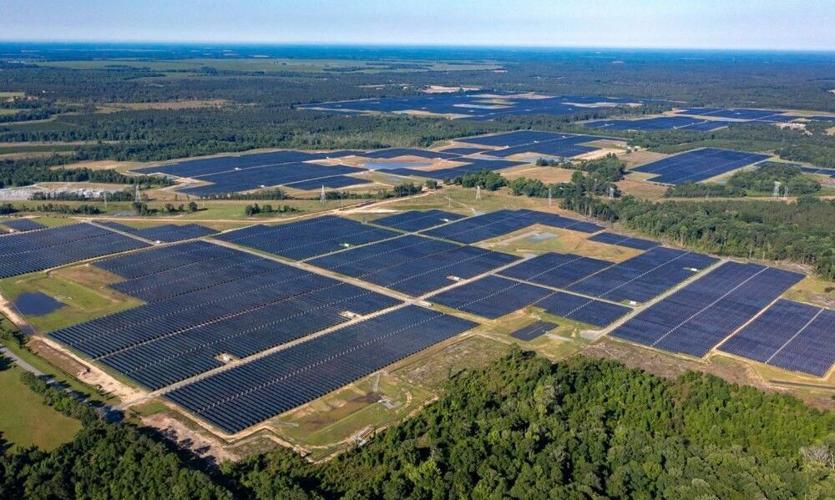


Silicon Ranch’s DeSoto Solar Farm in Georgia produces 250 megawatts. The proposed site in Stockton would produce 260 megawatts.
MONTGOMERY, Alabama — The upcoming election of two members of the Alabama Public Service Commission could hinge on alternative energy, an issue which could become a key legal battle as a large project is being planned for Baldwin County.
The development of solar farms has increased dramatically in recent years, helping provide one low-cost solution to help alleviate rising utility costs. But some have been critical of the impact such projects have environmentally. And some of those fights already have ended up in courtrooms across the country.
The primary for the Alabama PSC races is May 19.
For one seat, Republican incumbent Jeremy Oden has primary competition from Matt Gentry. Jeff Ramsey is the lone Democrat seeking that seat.
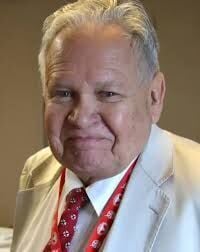
Zeigler
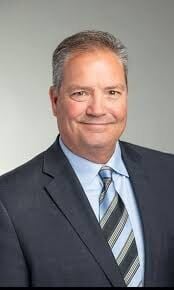
Jeff Boyd
For the second seat, Jeff Boyd and fellow Republicans Priscilla Andrews, Brent Woodall and Jim “Zig” Zeigler look to unseat incumbent Chris Beeker III. Sheila D. McNeil is the only Democrat running for that seat.
Zeigler, an elder care attorney and former state auditor, previously served on the state PSC from 1975 to 1979. His campaign website says he is running “to put the public back into the public service commission,” saying he will be a “watchman for the people.”
His site also says big tech companies that want to build data centers in the state should fund the power solutions for these projects instead of residents.
“AI data centers consume enormous amounts of electricity and water,” Zeigler’s campaign site says. “A single large facility can require 100 megawatts or more — enough to power 80,000 homes. Companies like Google, Amazon, Meta, and Microsoft are actively scouting locations for data centers and solar farms, and meeting this demand will require significant new generation capacity.
“The key question for the PSC: How should the costs of new infrastructure be allocated? These are trillion-dollar corporations. Residential ratepayers should not be asked to subsidize infrastructure built primarily to serve commercial operations, and Alabama communities should not go short on water.”
Utility rates are a key topic across the country, as affordability is at the forefront of election battles.
Alabama electricity rates are a prime example. Since 2019, a typical Alabama electric bill increased from the mid‐$130s per month to about $173.50 per month — a 30% increase.
Solar farms have become a target of litigation in recent years, focusing heavily on federal funding disputes and local land-use conflicts related to zoning, noise, visual impact and property values.
Some projects have been blocked because of rural land-use conflicts.
A 2025 report on court challenges to renewables under NEPA notes that large solar and wind projects increasingly face suits over environmental review adequacy, wildlife impacts and cumulative effects even when the projects advance climate goals.
In December, BrightNight filed a lawsuit challenging a Clark County, Indiana, decision to deny a commercial solar farm.
In November, the owners of more than 100 solar farms in Main sued to block implementation of a law they say strips benefits from projects already in operation.
In September, opponents of a planned solar farm at a cemetery in Belleville, Illinois, sued, claiming the city and planners are prohibited from using cemetery land for the project.
In Texas, a federal lawsuit saw neighbors sue over a proposed solar farm and battery energy storage system, claiming intentional, negligent, strict‑liability and anticipatory nuisance plus Texas Water Code violations. They sought more than $10 million and an injunction to block development.
And earlier this month, a judge said St. Clair County, Michigan, can’t restrict a planned solar farm by using the state’s public health code to address noise and “visual pollution.”
One hot-button energy topic in Alabama is a proposed solar farm near Stockton in south Alabama. The solar farm has been tied to the construction of a Meta data center near Montgomery, which is about two hours north.
Nashville-based Silicon Ranch wants to develop a 2,000-acre solar farm on a 4,500-acre property near the Tensaw River Delta wetlands.
The proposed site is near the 260,000-acre Mobile-Tensaw River Delta, the second-largest river delta in the United States that’s often called Alabama’s Amazon. The wetlands area supports commercial fishing, shrimping and crabbing industries. It also attracts tourism dollars.
Residents are concerned about the environmental impact. They’re also upset the project was approved by the PSC on December 2, but they were told about it until earlier this month.
State Sen. Chris Elliott, a Republican who represents an adjoining district, says he opposes the project as well.
“I am a proud MAGA supporter of President Donald Trump, and he has taught us the importance of listening to the people, not the politicians, when it comes to important issues affecting our homes and our quality of life,” Elliott told Yellowhammer News. “Alabama has more than 50,000 square miles of land, so there are plenty of other areas outside Baldwin County that could host this project without threatening wetlands that feed our commercial seafood industry and provide jobs to our friends, families and neighbors.”
The two facilities – known as Stockton I and Stockton II would generate a combined 260 megawatts of electricity that would be purchased by Alabama Power under 25-year agreements. The output is contracted to Dotier LLC, which is a subsidiary of Meta.
Boyd, who served 13 years on the Orange Beach City Council, emphasized a similar point as Elliott.
“But we also have to be realistic,” Boyd said. “As for this solar farm and the environmental concerns, if there is a better place to put it, I’d fight alongside the people of Stockton to move it somewhere else.”
Also in play this election is the possibility it will be the last time PSC members are elected. House Bill 392 would have the positions would be appointed by the governor, the speaker of the Alabama House of Representatives and the president pro tem of the Alabama Senate.
The bill would authorize the governor to appoint the president of the PSC when current President Cynthia Almond’s term expires in 2028, and to appoint the two associate members of the board starting in 2030. The bill was introduced after two Democrats won election to the Georgia PSC who campaigned on an affordability platform.
The shift to having PSC members appointed by the governor can change the dynamics of these types of situations as well.
In Michigan, for example, the state PSC is expected to decided sometime this year whether to approve a 900-acre, $100 million solar farm in Ingham County. It comes just a few years after Gov. Gretchen Whitmer signed legislation in 2023 to streamline the zoning of wind and solar projects, and Michigan PSC members are appointed by the governor.
But one Alabama attorney says she doesn’t think the issue isn’t really about solar power per se. And she doesn’t think it’s unique to her state.
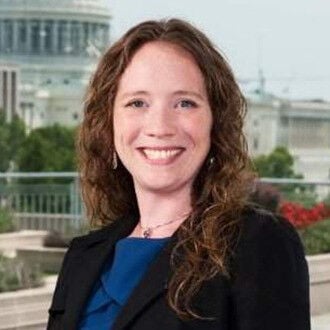
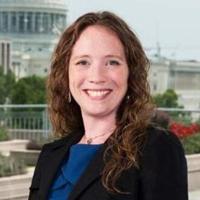
Talley
“Rather, solar finds itself caught up in a lot of cross-cutting and unresolved political issues that are now manifesting in the form of debate over new solar farms,” said Annie Talley, partner at Luther Strange & Associates in Montgomery. “I think you're seeing the manifestation of over a decade of regulatory and ESG war on fossil fuels that has made power grid expansion outside of renewables nearly impossible, all while consumers face runaway increases in their home energy costs.
“You see a reckoning that tech-based economic development projects are often intertwined with new energy requirements that put a further strain on the grid.”
Talley also said part of the issue also is a battle between those who see their agrarian way of life being swallowed by technology.
“I also think many people experience deeply personal feelings of loss of their rural or small-town way of life when they see familiar farmland transformed into vast solar arrays,” she said. “And, of course, when people feel helpless against all these forces, the age-old question of who ultimately decides these issues becomes even more important.
“Since these issues are rarely what's debated in or decide local elections and with a lack of a functional local media infrastructure to inform, these issues don't get aired until there is an inflection point like this.”
Then, Talley says, a solar farm becomes “the tip of the spear of a whole host of complex political issues.”
“So, I don't think the real thing animating this is simply a matter of people being ‘pro-solar’ or ‘anti-solar,’ and these issues are not going anywhere,” she said. “They’ll have to be sorted out in some combination of political and legal processes over time.”