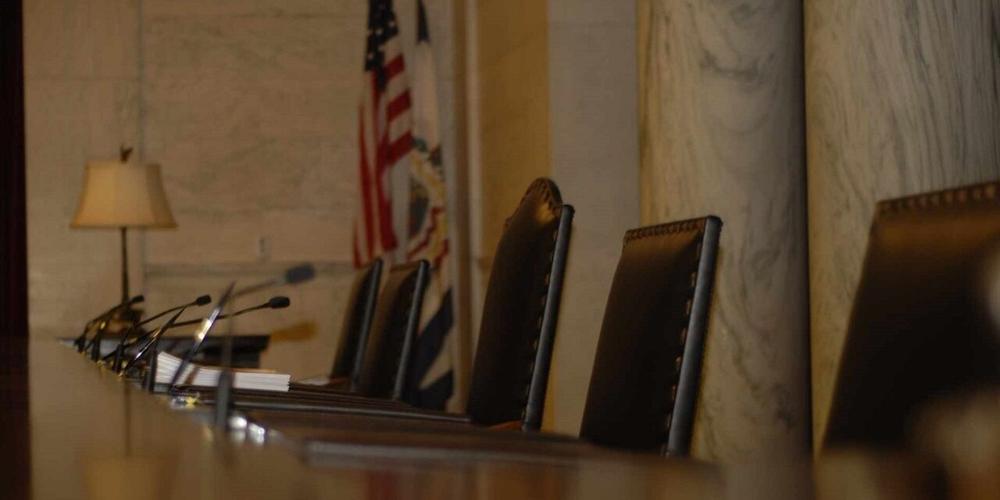





The chambers of the West Virginia Supreme Court of Appeals
CHARLESTON – The state Supreme Court has ruled a Brooke County circuit court judge exceeded his authority in dismissing a three-county felony indictment for a man failing to register as a sex offender.
Chief Justice Haley Bunn authored the petition filed March 6 in the case filed by the state against Brooke Circuit Judge Jason A. Cuomo and Thomas Anthony Smogonovich. The 15-page ruling also orders Cuomo to reinstate the failure-to-register indictment against Smogonovich.

Bunn
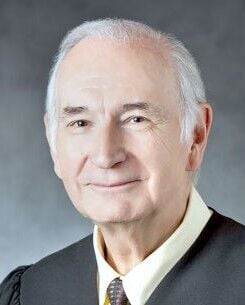
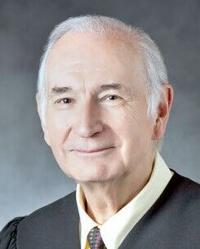
Wilson

Cuomo
Cuomo is listed in the case, but the actual order was signed by Judge Ronald E. Wilson issued the order before he retired. Cuomo then inherited the case.
The case was brought to the Supreme Court by Attorney General J.B. McCuskey’s office on behalf of the Brooke County Prosecuting Attorney.
The justices say Wilson exceeded his legitimate authority by granting a pretrial motion to dismiss Smogonovich’s indictment based on its view that his Ohio juvenile delinquency adjudication was not a qualifying conviction under West Virginia’s Sex Offender Registration Act.
Citing the 2024 ruling in State v. Gwaltney, the Supreme Court says a circuit court may not dismiss an indictment because the evidence is insufficient or if there is no factual basis for the charges. The justices say that kind of ruling impermissibly invades the grand jury’s province.
A Brooke County grand jury indicted Smogonovich in November 2023 on three felony counts of failure to register as a sex offender. The indictment alleged failure to report a move into Brooke County, failure to report his place of employment and failure to report obtaining an Instagram account all while being a person required to register for life due to an Ohio conviction for Gross Sexual Imposition.
Smogonovich moved to dismiss, saying his prior Ohio juvenile delinquency adjudication was not a conviction under SORA. The state responded that he had to register in West Virginia because Ohio required him to register as a sex offender for 20 years.
Wilson found the Ohio adjudication could not be treated as a conviction, concluded Smogonovich was not a registrant under SORA and dismissed the indictment.
The prosecutor then sought a writ of prohibition. Direct appeal was unavailable because the order did not find the indictment “bad or insufficient” on its face.
In its ruling, the Supreme Court reaffirms that a circuit court’s review of an indictment is limited to constitutional sufficiency and prosecutorial misconduct, meaning it may not assess evidentiary sufficiency or decide whether a factual basis exists.
“As we have recently explained in multiple cases, a court may not properly dismiss an indictment based on a perceived lack of evidence and has limited authority to dismiss indictments generally,” Bunn wrote. “We reject Mr. Smogonovich’s invitation to overrule them.”
By deciding the Ohio juvenile adjudication was not a qualifying conviction and then dismissing the indictment, the justices say Wilson effectively weighed the state’s facts against the elements of the charged offenses. That, the justices say, is something reserved for the grand jury initially and for the petit jury at trial.
The petition says that once a grand jury returns a true bill, courts cannot “go behind” the indictment to evaluate the weight or sufficiency of evidence except in narrow fraud or constitutional-defect circumstances.
The Supreme Court does not decide if SORA requires Smogonovich to register based on his Ohio juvenile adjudication or whether West Virginia Code is vague as applied. The court says those registration questions would require comparing SORA’s elements to evidence and are therefore beyond the scope of a pretrial motion to dismiss and beyond the narrow prohibition question here.
The justices grant the writ of prohibition and bar enforcement of Wilson’s order dismissing the three-count indictment. They also returned the case to circuit court for Cuomo to hold further proceedings on the indictment consistent with the opinion.
The state is being represented by Assistant Attorney General Holly M. Mestemacher of the West Virginia Attorney General’s office, and Smogonovich is being represented by John M. Jurco of St. Clairsville, Ohio.
West Virginia Supreme Court of Appeals case number 25-16