



CHARLESTON – The estate of a Kanawha County man says physicians ignored obvious signs of prostate cancer and failed to provide basic testing, leading to his death.
Carolyn L. James, as administratrix of the estate of Roger Guest, filed her complaint April 27 in Kanawha Circuit Court against Dunbar Medical Associates, Dr. Jeffrey S. Holmes, PA-C David S. Watkins and Dr. James C. Jensen. James was Guest’s wife.

diTrapano
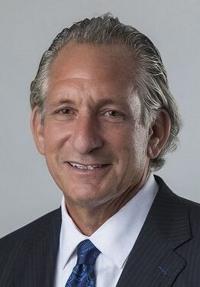
“This was inexcusable medical care,” attorney L. Dante diTrapano told The West Virginia Record. “Mr. Guest was not even provided basic testing, and it cost him his life.
“We look forward to litigating this case.”
According to the complaint, Guest moved to West Virginia from Texas and established himself as a patient of Watkins at Dunbar Medical Associates’ Hurricane location in January 2018.
Medical notes show Guest was 65 years old at the time and recently had been treated in the emergency room, but the records do not show any other medical history was obtained.
A February 2018 medical note says Guest had a Prostate-Specific Antigen (PSA) screening in the past that was within normal limits, but it says he was past due for another. Despite seeing Guest several times after that February 2018 appointment, Watkins didn’t order a PSA or prostate cancer screening until February 2019. The lab results for that test showed a PSA of 3.03. In June 2020, Guest’s PSA was 2.88.
In September 2020, Guest reports getting up to urinate four to five times per night for half a year. Watkins incorrectly noted the June PSA as 2.38 and adds benign prostatic hyperplasia associated with nocturia and BPH with lower urinary tract symptoms to the assessment lists as well as prescribes tamsulosin.
Watkins continues to treat Guest for nocturia through March 2021 and continues to prescribe tamsulosin. But the complaint says no imaging or PSA screenings were ordered to confirm the diagnosis of benign prostatic hyperplasia, and no referral to urology was made.
In April 2021 and October 2021, Guest continued to present with complaints of nocturia as well as erectile dysfunction. He was prescribed Viagra, but no imaging, PSA screenings or urology referrals were ordered.
In February 2022, Watkins ordered a prostate cancer screening and a PSA screening. On March 4, 2022, Guest was evaluated at Edwards Comprehensive Cancer Center in Huntington for urinary retention.
“Roger was unable to urinate following a knee procedure and was sent home with a catheter,” the complaint states. “He presented to Edwards Comprehensive Cancer Center for a voiding trial. Despite having a full bladder, Roger was unable to void requiring another catheter.”
Three days later, he went to the cancer center again to see Jensen with complaints of urinary retention following the knee surgery. A digital rectal exam revealed a hard, highly suspicious prostate, according to the complaint.
“Jensen appears to have diagnosed Benign Prostatic Hyperplasia (BPH) without conducting any testing to confirm this diagnosis,” the complaint states.
A few weeks later, Geust returned to Jensen for a transurethral resection of the prostate (or TURP) to treat the BPH and urinary obstruction. The complaint says there is no evidence Jensen performed a pre-operative screening for cancer, including MRI, CT or PSA.
Guest was discharged two days after the procedure and told to schedule a follow-up with Jensen.
“Jensen’s office would cancel and reschedule the follow-up appointment repeatedly,” the complaint states.
On April 1, 2022, Guest’s PSA screening was 6.9. A normal PSA range is 0.0 to 4.0. The complaint says Guest still didn’t have a follow-up appointment with Jensen, and it says Watkins didn’t instruct Dunbar Medical to help Guest in obtaining that appointment.
Guest saw Watkins again July 1, 2022, and complains again about the delay in seeing Jensen.
“Roger reports being irritable to the point of causing problems at work and home because he is worried about possibly having prostate cancer,” the complaint states. “Watkins notes that appointment with Jensen is scheduled for the following week.”
But in August, Guest told Watkins the Jensen appointment had been moved to September. That’s when Watkins ordered a PSA screening that showed a 12.1 level. The complaint says the September appointment with Jensen again was rescheduled for October 2022.
At that October appointment, Guest tells Jensen he had a PSA screening done at an outside facility that was “around 12.” Jensen noted that it “was not a concern at this time,” according to the complaint. Jensen did report a diagnosis of benign prostatic tissue with glandular and stromal hyperplasia, 14.2 grams.
At a November 2022 appointment with Watkins, prostate cancer was included in his assessment of Guest. But Watkins didn’t discuss the two high PSA screenings with Guest, according to the complaint.
On January 23, 2023, Guest is seen by Holmes, who notes mild edema of the lower extremities and orders brief emotional/behavioral assessment. Holmes also did not discuss the high PSA screenings, according to the complaint.
On March 29, 2023, Watkins performs Guest’s annual Medicare Wellness evaluation. On April 18, 2023, Guest saw Jensen. His PSA screening on that date was 328, and Jensen reports that the PSA is “highly unlikely to be correct.” He called Guest and told him to have it redone by Watkins the next week.
When he did that on April 27, 2023, the PSA was 293, which is far outside the normal 0-4 range. The next day, Guest had a telehealth visit with Jessica Adkins at the cancer center to schedule a prostate biopsy for May 5, 2023, with Jensen.
The biopsy revealed prostatic adenocarcinoma.
Guest started Eligard injections on May 17, 2023. Eligard is a hormone therapy injection used for pallative treatment of advanced prostate cancer.
A May 24, 2023, CT scan showed prostate cancer, left pelvic and retroperitoneal metastatic lymphadenopathy, osteoblastic skeletal metastases, left hydronephrosis, hydroureter secondary to a soft tissue mass in the left ureter in the pelvis and basilar lung noduled concerning for metastases. A whole body imaging that say day also showed extensive bony metastatic disease.
On May 26, 2023, Guest’s PSA was up to 426 after he began taking leuprolide. Chemotherapy was recommended.
In notes from May 30, 2023, Jensen reports Guest’s PSA going up to 428 over a two-year period is an indication of “a very rapidly progressive type of cancer” consistent with a neuroendocrine variant.
“Jensen reasons that the primary objective was (to) restore urinary function,” the complaint states, referencing Jensen’s reason for not performing a biopsy earlier. “He goes on to state that Mr. Guest had recently undergone an orthopedic procedure, and they were trying to minimize invasive procedures that would cause bacteremia. Dr. Jensen stated that this is consistent with American urological and also orthopedic standards. Dr. Jensen stated that he believes that a biopsy at that time would not have fundamentally changed the biology of the disease.”
The complaint continues to criticize Jensen.
“Dr. Jensen is not an orthopedist,” the complaint states. “Dr. Jensen did not explain why he failed to take immediate action in October 2022 when he learned about Mr. Guest’s PSA of 12.1. Dr. Jensen did not explain why he relied on a nearly two-year-old PSA in performing the TURP rather than obtaining a new PSA to rule out prostate cancer prior to performing the TURP.”
Guest’s PSA was 145.0 on July 7, 2023. At some point before July 18, 2023, Guest began chemotherapy. But that day, he was taken to Charleston Area Medical Center’s Teays Valley Hospital Emergency Room after being found unresponsive in the floor at his home.
A CT showed “diffuse multifocal too numerous to count ossific lesions through the regional skeleton consistent with metastatic prostate cancer,” according to the complaint.
A week later, Watkins evaluated Guest and noted the prostate cancer was being treated by Dr. Blankenship and Dr. Jameel, an oncologist. Watkins said he was “very angry with Dr. Jensen.”
Guest was treated at CAMC Teays and Cabell Huntington Hospital for a small bowel obstruction in September 2023. A few days later, Watkins noted palliative care was consulted.
On November 8, 2023, Watkins noted a PET scan showed the chemo was working, but Guest said the chemo drug was “too hard on him and has requested a different chemo medication.”
The next month, Guest went to CAMC Teays after falling at home the day after Christmas. He was discharged the next day. Two days later, he went to Cabell Huntington because he couldn’t walk and had increased confusion and weakness. He was admitted with a urinary tract infection and pneumonia. He stayed there until mid-January 2024 when he was transferred to Kanawha Hospice Care.
Guest died February 3, 2024, at Hubbard Hospice House.
The complaint accuses the individual defendants of medical malpractice and negligence and Dunbar Medical of vicarious liability.
The estate seeks compensatory damages for Guest’s pain and suffering before his death as well as for the emotional suffering, sorrow, loss of society and companionship of his wrongful death beneficiaries. The estate also seeks pre- and post-judgment interests, court costs, attorney fees and other relief.
James is being represented by diTrapano, Amanda J. Davis and David H. Carriger of Calwell Luce diTrapano in Charleston and by Dr. Richard Lindsay of Tabor Lindsay & Associates in Charleston. The case has been assigned to Circuit Judge Kenneth Ballard.
Kanawha Circuit Court case number 26-C-491