

Stop sign
CHICAGO — As debate intensifies across the U.S. over the ability of police and other government agencies to use license plate-reading cameras, a federal appeals court in Chicago later this month will serve as one of the latest flashpoints in the fight over whether the camera systems amount to unconstitutional and overreaching government surveillance.
On Sept. 29, a three-judge panel of the U.S. Seventh Circuit Court of Appeals will hear arguments over the hot legal questions, as civil liberties advocates ask the Seventh Circuit to become the first federal appeals court in the country to declare the growing use of so-called automated license plate reader (ALPR) camera systems amount to violations of Fourth Amendment protections against warrantless searches.
And at the center of the debate stand questions over whether one particular recent U.S. Supreme Court decision limiting police use of cell phone location data should also be read to flip the script on federal courts' longstanding permissive take on license plate reading cameras, too.
The arguments will determine the fate of a lawsuit lodged in mid-2024 by the formerly Chicago-based constitutional advocacy group, the Liberty Justice Center. The LJC has since relocated its headquarters to Austin, Texas.
The lawsuit was filed on behalf of named plaintiffs, Cook County residents Frank Bednarz and Stephanie Scholl. Defendants named in the action include the Illinois State Police, as well as Gov. JB Pritzker and Attorney General Kwame Raoul.
The lawsuit took aim at the networks of automated license plate readers installed first in Chicago and Cook County, and now cropping up in other communities throughout Illinois.
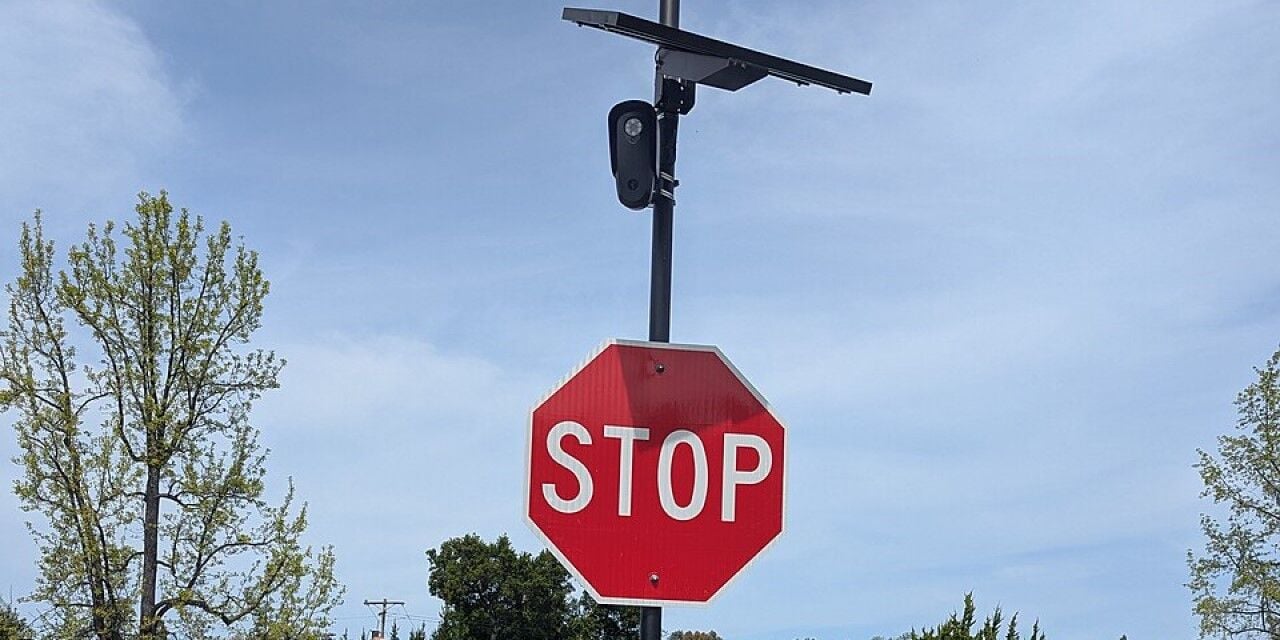
The ALPRs work through a network of cameras installed along roads and at intersections, where they record the license plates of vehicles passing by. That data is then uploaded into searchable databases available to law enforcement.
The license plate readers were first authorized in Illinois in 2019 under the state law known as the Tamera Clayton Expressway Camera Act. That law was enacted in response to a 2019 shooting of postal worker Tamera Clayton on Interstate 57.
In the years since, the number of ALPRs in Illinois have multiplied, by the hundreds and thousands. According to the Illinois State Police, more than 800 ALPR cameras are operated on behalf of the state.
Published reports indicated thousands more, however, are operated by local community police agencies and private organizations, such as homeowner associations, parking garage operators and others.
Millions more cameras have been installed in communities and along highways, at parking lot entrances, and elsewhere throughout the U.S.
The widespread use of the cameras have led privacy advocates and others to warn the ALPR network amounts to a surveillance blanket that police, big corporations and others can exploit or abuse to track, reconstruct and predict people's movements without a warrant.
In their lawsuit, for instance, the Liberty Justice Center and plaintiffs argue the ALPR systems amount to an unconstitutional "dragnet ... recording the whereabouts of (everyone) who drives a car or truck," whether or not they are accused or suspected of any criminal or suspicious activity.
Police and other advocates for the cameras have argued the cameras have rapidly become essential law enforcement tools, helping police better track the movements and whereabouts of criminal suspects and reduce crime.
For instance, in a brief filed with the Seventh Circuit in July, the U.S. Justice Department described ALPRs as "one of the most crucial investigative tools at the United States' disposal." The Justice Department noted ALPRs have been used in Illinois and elsewhere to locate and arrest bank robbers and gun traffickers, and to locate missing and abducted children, among other uses they say enhance public safety.
"... ALPR data plays a critically important role in keeping Americans safe, catching criminals, and honoring victims," the Justice Department wrote.
To this point, judges have primarily sided with the government and supporters of the use of ALPR cameras.
In the Chicago lawsuit, for instance, U.S. District Judge Martha Pacold ruled in 2025 that ALPRs don't violate the Fourth Amendment or other constitutional provisions. Like other judges, Pacold said the Fourth Amendment can't be read to prohibit ALPRs from capturing images of license plates on vehicles traveling along public roads.
Citing prior decisions by the U.S. Supreme Court and the U.S. Seventh Circuit Court of Appeals, Pacold said: "... As a general matter, 'a person travelling in an automobile on public thoroughfares has no reasonable expectation of privacy in his movements from one place to another.'
"To be sure, 'individuals have a reasonable expectation of privacy in the whole of their physical movements,'" Pacold continued. "But ... Illinois's use of ALPRs, as alleged in the complaint, is not so intrusive as to invade that expectation. It is not a search under the Fourth Amendment."
Pacold was appointed to the Chicago federal district court by President Donald Trump during his first term in office.
The Liberty Justice Center appealed Pacold's ruling to the Seventh Circuit.
It is not yet known which judges on the Seventh Circuit will serve on the panel hearing the appeal. However, oral arguments have been set for Sept. 29.
However, pre-hearing briefings indicate the case could turn on the question of how to apply a Supreme Court ruling issued more than a year after Pacold's decision.
In that decision, known as Chatrie v United States, the Supreme Court ruled police can't use so-called "geofencing warrants" to use cell phone location data to track down and prosecute suspects in criminal investigations.
In that particular case, police leaned on Google to provide them with cell phone location data related to 19 people whose phones showed them in the vicinity of a credit union robbery in Virginia in 2019. They then used that data to locate and arrest the man eventually charged with the crime.
The man charged with robbery moved to suppress the phone location data evidence, asserting it amounted to an illegal search under the Fourth Amendment. While lower courts disagreed, the U.S. Supreme Court ruled 6-3 that such geofence warrants can violate the Fourth Amendment.
Since that ruling, privacy advocates and government agencies have squared off in court over how that ruling should now apply to ALPRs.
On the pro-camera side, governments have argued the answer to the questions remains unchanged, arguing that the cell phone location data at the heart of the Chatrie case is far more "detailed" than ALPR snapshots.
Further, unlike people's cell phone data, the government argued the Fourth Amendment doesn't give people driving vehicles on public roads an absolute right to move about without being observed.
In the words of the Justice Department in its July brief to the Seventh Circuit in support of the Illinois State Police: "No one can drive on public roads and reasonably expect their license plate—the entire purpose of which is to identify vehicles to law enforcement officers and other government entities—to remain private."
The Justice Department has received permission from the Seventh Circuit to take part in the Sept. 29 arguments, in support of the state of Illinois.
Civil liberties advocates, however, have argued the same reasoning that the Supreme Court applied in Chatrie to cell phone location data should also apply to ALPR surveillance. Just as geofencing, they argue, the ALPR networks violate people's rights by allowing police to collect, track and reconstruct their movements.
In a brief filed at the Seventh Circuit in August, the Liberty Justice Center wrote: "The ALPR program at issue is a search. Its collection is indiscriminate, sweeping in every vehicle that passes rather than only those as to which police have any suspicion. Its record is retrospective, giving police the power to travel back in time and reconstruct where a driver has been, which was previously unknowable.
"The Government’s answer is that ALPR data points are less granular than cell-site location information."
But, they said, the Chatrie decision, in conjunction with other Supreme Court holdings, have "confirmed that a search does not cease to be one because the government gathers less than it might have."
The Liberty Justice Center urged the Seventh Circuit to overturn Pacold's dismissal to allow courts to grapple with the questions at the heart of the case.
"Let the court determine just how invasive ALPR technology is to our freedom," the Liberty Justice Center wrote in its brief.