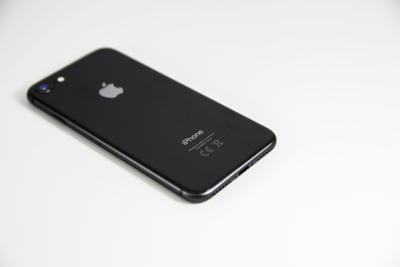



Apple iPhone
ROCKFORD — Apple has been hit with another class action lawsuit under Illinois' stringent biometrics privacy law, this time accusing the tech giant of allegedly improperly scanning iPhone users' eyes without their consent when verifying their identity.
The lawsuit was filed in the Western Division of the Northern District of Illinois on July 4 by attorney Blake Hunter Yagman, of Yagman PLLC, of Uniondale New York, on behalf of named plaintiff Samantha Mettler, of DeKalb County.
Should the court ultimately allow the lawsuit to advance, millions of people could be added as plaintiffs in the lawsuit, potentially putting billions of dollars at stake.
The lawsuit takes aim at Apple's face-scanning tech installed on its ubiquitous iPhone and other devices. Apple device users can deploy the tech, known as Face ID, to limit access to their devices.
Face ID has been offered on Apple devices since 2017, beginning with the iPhone X model.
Apple devices use Face ID to "unlock" the phone, offering access to its array of apps and other features, by scanning users' faces, rather than requiring users to input a passcode or satisy another gatekeeping security feature.
In the lawsuit, the plaintiffs note that Apple already requires users to consent to face scans before they can utilize Face ID.
However, the lawsuit asserts Apple's consent agreement falls short of what is required under the Illinois law known as the Biometric Information Privacy Act (BIPA), because the agreement doesn't also ask users to specifically consent to scans of their retinas or irises in their eyes.
"... One such collection of one form of biometric information does not garner consent for the collection of another - as is the case here," the lawsuit said.
"While Apple does inform Plaintiff and Class members of the collection of facial template data for facial recognition purposes through the Face ID feature, it never discloses to users that it is collecting iris and retinal scans while doing so - which is an entirely different and additional form of biometric information collection which was not consented to."
The plaintiffs assert Face ID or some other form of biometric information software is almost certainly scanning users' eyes, because Face ID requires users to open their eyes in order to unlock their iPhones.
"As Apple states, 'Face ID recognizes if your eyes are open and your attention is directed toward the device. This makes it more difficult for someone to unlock your device without your knowledge (such as when you are sleeping),'" the lawsuit says, quoting technical support materials posted by Apple in 2024.
"... This is not possible without monitoring the location of ones iris or retinal scans, it too is never disclosed to users - and it simply is not lawful under BIPA," the lawsuit said.
The plaintiffs assert this demonstrates that Apple is allegedly misleading its customers about its commitment to their privacy, calling Apple's marketing about the company's "respect for privacy ... demonstrably false."
The lawsuit asserts Apple has violated the BIPA law by allegedly not notifying users about the alleged eye scans, as well as not obtaining proper consent, as required under Illinois law.
The plaintiffs say this means Apple should owe damages of up to $5,000 per user, as permitted under the BIPA law.
Since their lawsuit likely includes millions of Illinois Apple customers using devices featuring Face ID, the total payout demands could easily reach into the many billions of dollars.
The lawsuit, however, is just the latest lodged against Apple under the Illinois BIPA law.
The company already faces dozens of such lawsuits, including claims accusing Apple of improperly scanning the faces of people imaged in photos uploaded to the Apple Photos app, and another class action accusing Apple of illegally collecting and storing the so-called "voiceprints" of Apple customers interacting with Apple's Siri digital assistant program.
Those claims cover up to 6 million Apple users each, according to court records.
Courts have greenlighted those other class actions, and the cases remain pending in federal court in southern Illinois and in Cook County Circuit Court.
And those lawsuits against Apple are just some of the thousands of class action lawsuits brought under the BIPA law that have piled into state and federal courts in Illinois and other jurisdictions in the past decade.
Those lawsuits all generally accuse companies of alleged unauthorized scans of people's so-called unique "biometric identifiers," including fingerprints, "voice prints" and facial geometry, among others.
The overwhelming bulk of BIPA litigation has landed on employers in Illinois, who have been routinely accused of wrongly scanning workers' fingerprints, faces, voices and other biometric characteristics, without first obtaining written consent or providing notices about how that information might be stored, used, shared and destroyed, among other technical provisions in the law.
The BIPA law, however, has gained notoriety, thanks to headline-grabbing settlements worth hundreds of millions of dollars apiece in lawsuits targeting tech giants, including Apple's rivals, Meta and Google, among others.
The law, to this point, however, has largely allowed trial lawyers to rake in hundreds of millions of dollars in fees paid by businesses targeted by the lawsuits, without ever having to prove any of their clients were actually harmed.