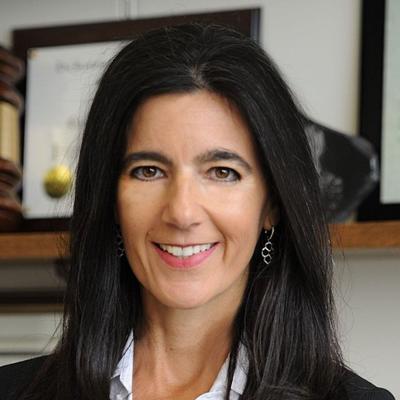



Illinois First District Appellate Justice Celia Gamrath
CHICAGO - Nearly two dozen lawsuits lodged by trial lawyers on behalf of out-of-state plaintiffs seeking to use Cook County's famously plaintiff-friendly courts to score potentially big judgments against baby formula makers don't belong in Illinois state court, a state appeals court has ruled.
On Dec. 12, a three-justice panel of the Illinois First District Appellate Court granted a win to pharmaceutical and nutritional supplement makers Abbot Laboratories and Mead Johnson & Company, agreeing that 23 lawsuits were wrongly filed against them in Cook County Circuit Court.
The First District ruling was delivered by Justice Celia Gamrath. Justices Sanjay Tailor and Carl A. Walker concurred in the decision.
The ruling comes as one of the latest in the rolling, multi-front, and multi-jurisdictional legal war trial lawyers have waged against the makers of Similac and Enfamil baby formula over claims the companies should be made to pay potentially billions of dollars for allegedly selling baby formula the companies allegedly knew substantially increased the risk of babies developing the illness known as necrotizing enterocolitis, or NEC.
NEC is a condition which results in the death of bowel tissue and can lead to severe illness and death in newborns, particularly if they are born premature. NEC carries a fatality rate of around 15-40% in infants suffering from the condition.
The lawsuits, which have poured into court since the end of 2020, claim Mead Johnson and Abbott Labs, the makers of Similac and Enfamil infant formulas, should be made to pay families with infants who died or were injured by NEC because the companies allegedly failed to warn the public about the alleged enhanced NEC risks posed by their cow's milk-based formulas, compared to human breast milk.
According to court documents, there are "thousands" of lawsuits pending in state and federal courts across the U.S., all leveling the same claims against Mead Johnson and Abbott Labs.
To date, Abbott and Mead Johnson have scored wins against the lawsuits in Chicago federal court. There, U.S. District Judge Rebecca Pallmeyer is presiding over a consolidated action involving at least 750 cases.
Out of those hundreds, Pallmeyer and attorneys for both sides selected four cases to move forward as so-called "bellwether" cases. Such bellwether proceedings are used to measure the validity and strength of the common claims that underlie all of the hundreds of similar cases.
However, in the first three cases, Pallmeyer has agreed with the formula makers that plaintiffs can't get past the benchmark holding that the benefits of their infant formula products - feeding newborns who would otherwise starve, for instance, in cases in which their mothers not be able to produce milk to feed their babies - outweigh the risks of possibly contracting NEC.
However, while federal courts have delivered victories, proceedings also continue in Illinois state courts.
Hundreds of such lawsuits filed in Illinois courts have landed in Madison and St. Clair counties. There, courts have repeatedly rejected attempts by Abbott and Mead Johnson to either dismiss or relocate the cases out of those courts.
At least 29 other cases, however, were filed in Cook County court in Chicago. Those cases were consolidated for the purposes of pre-trial proceedings, as all of the cases level similar failure to warn claims and rely on similar evidence.
Plaintiffs have fought efforts to move the cases out of Madison, St. Clair and Cook counties to keep them before juries renowned throughout the country for their willingness to deliver big verdicts to plaintiffs.
Indeed, those three counties collectively again landed on the American Tort Reform Association's list of the alleged most abusive civil court systems in the U.S., which ATRA calls "Judicial Hellholes." In no small part, the counties landed on the list thanks to their propensity for delivering so-called "nuclear verdicts," which have been defined as verdicts in lawsuits worth more than $10 million to plaintiffs.
In 2024, for instance, St. Clair County jury ordered the formula makers to pay $60 million to a family that claimed the formula fed to their child caused NEC.
In Cook County proceedings, Judge Brendan O'Brien also rejected Abbott's and Mead Johnson's bids to dismiss or relocate the cases to other courts.
On appeal, First District justices agreed with O'Brien's decision regarding six cases brought by Illinois residents who live in counties other than Cook.
But justices sided with the formula makers that the other 23 cases - brought by residents of Connecticut, Georgia, Tennessee, Florida, Texas, North Carolina, Massachusetts, New Jersey, Wisconsin, Washington, Pennsylvania, Virginia and North Dakota - should not remain in state court in Chicago.
The court noted that none of the 23 children who were allegedly harmed by the baby formula were born or live in Illinois. Nor do those children receive medical care in Illinois, the court said.
Plaintiffs had argued the cases should remain in Cook County court because the case is based on "product liability," and does not revolve around the medical care the children may have received.
The justices, however, said the plaintiffs' cases still rely heavily on evidence and testimony related to the children's medical care.
"Though this is a product liability case, the facts giving rise to plaintiffs’ claims are tied to the knowledge and conduct of healthcare providers who purchased and administered the infant formula and provided treatment to infants out of state," Gamrath wrote in the opinion.
And the appellate justices noted none of the work of manufacturing the formula happens in Illinois, even if the formula makers may have business operations here. Instead, the formula manufacturing happens in Ohio, Gamrath noted.
The appellate court dismissed those 23 out-of-state cases.
“'Time and again, this court has held that fairness requires resolving local controversies in
the forums most closely connected to the events,'" Gamrath wrote, quoting from a 2025 Illinois appellate ruling.
"Cook County is not the forum most closely connected to the 23 interstate infants’ injuries and claims against Abbott. It would pose an undue burden on Cook County resources and its residents to serve on a jury that will decide these cases, and potentially more."
Plaintiffs were represented by attorneys Ashley Keller and Ben Whiting, of the firm of Keller Postman, of Chicago; and Tor A. Hoerman and Kenneth J. Brennan, of TorHoerman Law, of Edwardsville.
Abbott and the other defendants were represented by attorneys Linda T. Coberly and Stephen V. D’Amore, of Winston & Strawn; Anthony J. Monaco, Robert E. Elworth and Michael W. Pennel, of Swanson, Martin & Bell; and Joel D. Bertocchi, of Akerman LLP, all of Chicago.