
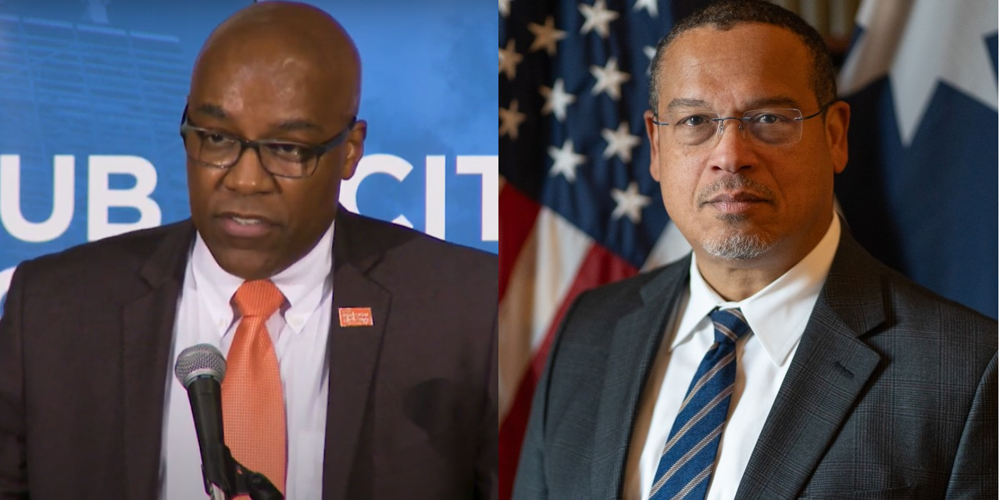


From left, Illinois Attorney General Kwame Raoul and Minnesota Attorney General Keith Ellison
WASHINGTON, D.C. — The U.S. Supreme Court is tackling the question of whether states have the constitutional authority to require Catholic and other religious schools to abide by state-written "nondiscrimination" rules as a condition of unlocking state education money, even if the religious school operators say the rules will force them to choose between accepting state money or violating their religious beliefs.
And on that question, a coalition of Democratic state attorneys general, including the chief legal officers of California, Illinois, New York, Minnesota, and 13 other states, have asked the high court to agree that states should be able force such a choice without violating the First Amendment.
On Nov. 3, the Supreme Court will hear oral arguments in the challenge brought by Catholic preschool operators to the "nondiscrimination" rules set by Colorado to govern that state's so-called universal pre-K (UPK) program.
The legal clash arose in 2023, after Colorado enacted a new funding program to provide families with more than $6,000 per year to send their children to a preschool of their choice for up to 15 hours of preschool per week at no cost to them, beyond the taxes they already paid.
The program allowed parents to choose public, private or parochial (religious) preschools, as the UPK program was classified as a "mixed delivery system."
However, the rules set up by the state of Colorado included a so-called "equal opportunity mandate," which requires participating schools to "provide eligible children an equal opportunity to enroll and receive preschool services regardless of race, ethnicity, religious affiliation, sexual orientation, gender identity, lack of housing, income level, or disability[.]”
Catholic schools sought to participate in the program, ostensibly to open their schools to more families. According to court documents, they particularly sought to do so in regions and communities in Colorado in which other quality pre-K opportunities are in shorter supply.
According to briefs filed with the Supreme Court, the Catholic schools sought an exemption from the nondiscrimination mandate, "that would allow its preschools to admit only families who agree with the Catholic Church’s teachings, including on gender and sexuality."

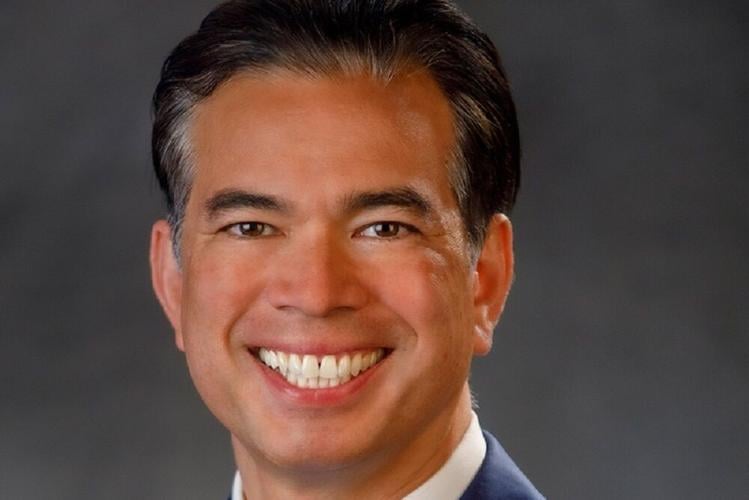
California Attorney General Rob Bonta
The Catholic schools asserted that requiring them to do otherwise would "severely restrict the ability of faith-based providers to participate in the program without compromising their sincerely held religious beliefs.”
The state, however, refused that request, asserting the rules should apply to everyone participating in the program, regardless of their religious beliefs.
The Catholic schools and parents seeking to use the Colorado UPK program to send their children to the Catholic preschools sued, arguing the denials trampled their First Amendment rights.
They pointed to the Supreme Court's 2022 decision, Carson v Makin, in which the high court ruled the state of Maine and other states can't exclude religious education providers from receiving state money given to other private educators.
However, in court, the U.S. Tenth Circuit Court of Appeals sided with the state, ruling the Carson decision doesn't apply in this instance, because the state isn't excluding any religious providers on the basis of religion. Rather, they are excluding only religious providers who refuse to abide by the state's "neutral" nondiscrimination rules, the appeals court ruled.
That prompted the Colorado Catholic schools to appeal to the Supreme Court, which agreed in April to hear the case, setting the stage for the Nov. 3 arguments.
In the meantime, parties have filed so-called amicus briefs, or "friend of the court" briefs, in support of either side.
And among those filing on the side of Colorado were the group of 16 Democratic state attorneys general, led by Minnesota AG Keith Ellison and Massachusetts AG Andrea Joy Campbell.
In their filing lodged in August, the Democratic AGs asserted that forcing Colorado to grant the Catholic schools' exemption request would undermine that state's UPK program and similar "mixed delivery systems" used to administer education voucher and grant programs.
Rather than Carson, they said, the Colorado case should be decided based on the court's 1990 decision, Employment Division v Smith, in which the Supreme Court ruled governments weren't required to honor all religious freedom-based exemption requests, provided the state did so on the basis of "neutral, generally applicable" laws or rules.
While the Catholic schools and other religious school operators may hold traditional Christian beliefs or similar beliefs regarding human gender and sexuality, that doesn't mean they should be free to use those beliefs to decide who attends their schools using state UPK funding, the Democratic AGs wrote.
They further assert that if states are not constitutionally allowed to force religious schools to set aside their religious beliefs and principles on gender and sexuality, then states may instead choose to shut down the programs altogether or limit the funding only to be spent at public schools.
"The inevitable result: instead of administering a single rulebook for their mixed-delivery programs, states would have to grapple with a provider-by-provider patchwork of rules and exceptions. Forced to choose between partnering with private providers and controlling how their money is spent, many states may opt to bring mixed-delivery services fully in-house, sacrificing the choice and flexibility that their residents have, until now, enjoyed," the Democratic AGs wrote.
"... If accepted, petitioners’ arguments will transform (religious) free-exercise arguments into constitutional aces, a significant advantage in any claim against a government entity. States will be pressured to choose, both unfairly and unnecessarily, between serving all people equally and partnering with private providers at all," they added.
Democratic state attorneys general who signed the brief included:
California AG Rob Bonta; Illinois AG Kwame Raoul; New York AG Letitia James; New Jersey AG Jennifer Davenport; Virginia Attorney Jay Jones; Washington AG Nicholas Brown; Oregon AG Dan Rayfield; Michigan AG Dana Nessel; Maryland AG Anthony Brown; Nevada AG Aaron Ford; and the attorneys general of New Mexico, Vermont, Rhode Island, Maine, Hawaii, Delaware and the District of Columbia.
The Catholic schools and parents are represented by attorneys from the Becket Fund for Religious Liberty, of Washington , D.C.
The federal Justice Department has also filed briefs in support of the Catholic challengers. The U.S. Solicitor General is scheduled to participate in the oral argument before the high court.
