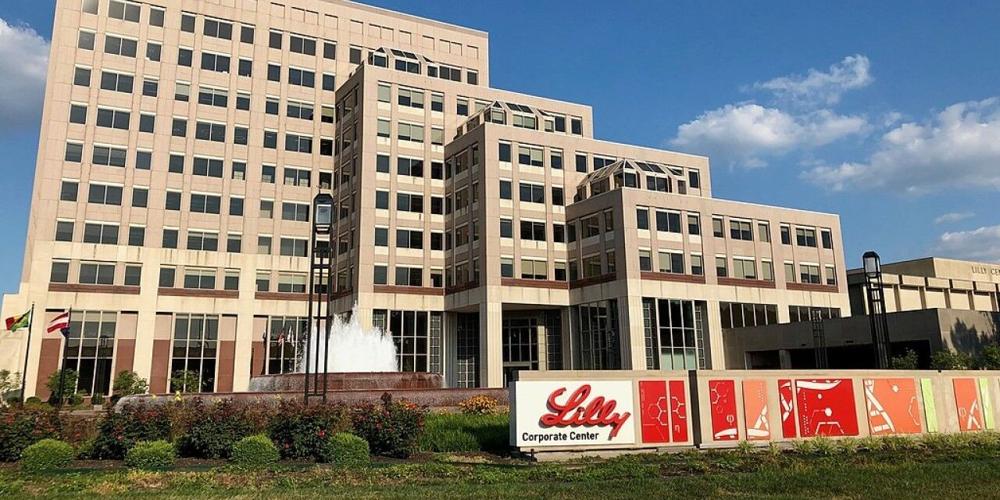




Eli Lilly headquarters, Indianapolis, Indiana
WASHINGTON, D.C. — Pharmaceutical maker Eli Lilly has asked the U.S. Supreme Court to toss out a $183 million judgment against it, saying the decision was the result of an unconstitutional system that allows "private bounty hunters" to advance questionable legal claims in the name of the government until they find a case that can extract a potentially big payday.
Eli Lilly filed the petition with the Supreme Court on March 21. Specifically, the petition asks the court to take up the company's appeal of a decision from the U.S. Seventh Circuit Court of Appeals in Chicago.
In that ruling, the Seventh Circuit upheld a federal court jury's verdict, ordering Eli Lilly to pay $183 million, purportedly to compensate the government for fraud allegedly committed by the drug maker by allegedly reporting false drug costs to Medicaid under a drug rebate program.
In that petition, however, Eli Lilly also directly asks the the Supreme Court to declare the law under which they were sued, the federal False Claims Act, to be unconstitutional, asserting the law effectively allows the federal government to create opaque regulations that leave businesses guessing, and then empowers "bounty hunting" trial lawyers to enforce them, using questionable legal theories of fraud that the government itself would be unwilling to advance in court.
"It is bad enough when the government engages in 'Calvinball,' where 'you make up the rules as you go,'" Eli Lilly wrote in its brief, citing the notorious and maddening fictional game invented in the frames of the iconic "Calvin and Hobbes" comic strip by cartoonist Bill Watterson.
"It is that much worse when the government never tells private parties they are wrong, and the surprise is sprung by an unaccountable relator purporting to stand in its shoes."
The filing landed at the Supreme Court about six months after a Seventh Circuit panel of judges ruled against Eli Lilly in the claims brought against them by alleged whistleblower Ronald Streck.
Streck and attorney Dan Miller and others from the firm of Walden Macht Haran & Williams, of New York, had filed suit in Chicago federal court in 2014, more than a decade earlier.
The lawsuit, however, did not accuse Eli Lilly of harming Streck. Rather, Streck brought the claims as a so-called qui tam action under the False Claims Act.
In such an action, a plaintiff, known as a "relator," files suit on behalf of the federal government, pressing claims of fraud against defendants. In the action, the plaintiff-relator seeks to recover money allegedly not paid to the government or allegedly paid out by the government as a result of alleged fraud.
Qui tam relator plaintiffs are then typically entitled to a cut of whatever sums may be ultimately recovered by the government through their lawsuit.
In this case, Streck claimed he, as an alleged knowledgeable whistleblower, was attempting to recover millions of dollars allegedly shorted to the federal government by Eli Lilly under the Medicaid Drug Rebate Program.
The lawsuit accused Eli Lilly of allegedly underreporting the price it charged for certain medications to the program. Under the program's rules, drugmakers are required to report to Medicaid the average price of drugs included in the program.
However, in the lawsuit, Streck, identified as a former executive of a network of regional drug wholesalers, asserted Eli Lilly reported only the drugs' initial price, and did not include later price increases in the calculations.
That allegedly allowed Eli Lilly to "claw back" those price increases, allegedly forcing the government to pay more, while allowing the company to allegedly pocket hundreds of millions more in profit over the years.
According to court documents, Eli Lilly reportedly stopped the practice in 2017, shortly after formally and clearly notifying the federal government of its clawback practices.
However, the jury still ordered the company to pay $183 million.
Under the False Claims Act, Streck would be entitled to claim as much as 25% of that amount, with his attorneys claiming still more.
And, on appeal, the Seventh Circuit judges agreed the verdict should stand.
In the September 2025 ruling, the judges acknowledged Eli Lilly may not have meant "to mislead the government," and relied on the company's best interpretations of a confusing government regulation. They noted that interpretation also never received pushback or raised questions from federal agencies, even when Lilly reportedly notified the government of its allegedly deceptive practices in a letter.
They further described the case as a "close call."

Dan Miller, of the firm of Walden Macht & Haran
However, the judges said the company should still be required to pay nearly $200 million, because jurors were not wrong to conclude "Lilly knowingly hid the truth" from the government, allegedly "amassing over $600 million in revenue," while it allegedly "deprived the government of over $60 million," allegedly as a result of the company's practices.
In their Supreme Court petition, Eli Lilly said the Seventh Circuit's holding runs counter to a decision from their counterparts in the U.S. Third Circuit Court of Appeals, which had earlier rejected the same False Claims Act reasoning advanced by Streck himself in a separate but similar case.
They said the competing rulings establish a split legal framework in the nation, which the high court must resolve.
Further, they said, if the Seventh Circuit's decision is allowed to stand, it would create a "powerful incentive" for the government to create complex and confusing laws and regulations, ignore pleas from the public and businesses to clarify, and then "reap massive windfall judgments procured by bounty hunters pressing theories that the government is unwilling to use its own resources to advance."
"That trap for the unwary — or, in this case, trap for manufacturers who begged regulators for guidance and hewed to judicially approved legal constructions — cannot be reconciled with the Constitution’s structural protections of liberty or bedrock principles of due process," Eli Lilly said.
Neither Streck nor the federal government has yet responded to the petition.
And the Supreme Court has not yet decided if it will accept the case. If it ultimately does not, the Seventh Circuit's ruling would stand.
Eli Lilly is represented before the U.S. Supreme Court by attorneys John C. O'Quinn and Luke P. McGuire, of the firm of Kirkland & Ellis, of Washington, D.C.; and Erin E. Murphy, Matthew D. Rowen and Julia R. Grant, of Clement & Murphy, of Alexandria, Virginia.