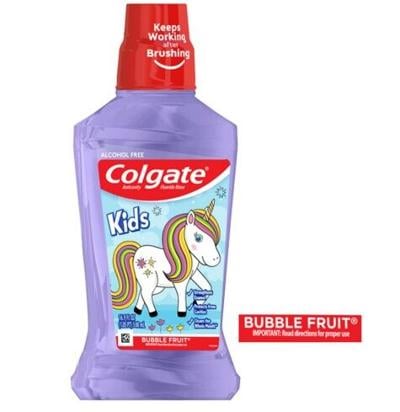



Colgate mouthrinse
CHICAGO – Lawyers can sue Colgate-Palmolive over fluoride-containing mouthrinse marketed as for children but can’t push similar claims over toothpaste, a Chicago federal judge has ruled.
Judge Andrea Wood reached that decision last week in three cases against Colgate and Tom’s of Maine that allege fluoride poses safety risks to children under the age of 6. Fluoride is part of the Make America Healthy Again agenda taken up by Texas Attorney General Ken Paxton, who is running for U.S. Senate.
His investigation led to Colgate and Tom’s introducing new packaging and marketing for children’s products. Last year, the U.S. Department of Health and Human Services and the U.S. Environmental Protection Agency Administration announced they would study the safety of fluoride, and HHS Secretary Robert F. Kennedy Jr. has said he plans to tell the CDC to stop recommending fluoride in drinking water.
Also last year, Utah became the first state to ban fluoride in public drinking water. The lawsuits allege Colgate and Tom’s violated consumer-protection laws with their packaging, which plaintiffs claim led them to believe products were specially formulated and safe for children.
Unicorns, Minions and Trolls on containers were blamed, and Colgate has stopped putting the latter two on bottles of mouthrinses. Flavoring like bubble gum also had parents believing the products were safe for their kids, the suits say.
Citing the FDA and other associations, Judge Wood wrote the fluoride in kids’ products makes them unsafe for young children to use. Colgate’s website tells parents not to give children under 6 mouthrinse, and the decision notes a small disclaimer on the front of bottles telling parents to read instructions before use.
“At bottom, the Court cannot conclude at the pleading stage that a reasonable consumer would, without more, know to draw a line at the age of six when shopping for children’s mouthrinse,” Wood wrote.
“It is not persuaded by Defendants’ insistence that a reasonable consumer would understand that mouthrinse is an over-the-counter drug, and therefore such a consumer would not purchase Defendants’ mouthrinses before consulting their back labels, all of which warn, as required by the FDA, that the product should be kept out of reach of children under six years of age and that children under six should not use without first consulting a dentist or a doctor.”
But the FDA has approved the toothpastes for use by children as young as 2, Wood added in tossing claims over those products. Allegations say parents were induced to give young kids more toothpaste than recommended.
The unicorns on the boxes and tubes and the flavors like “silly strawberry” would not trick a parent into putting more than a pea-sized amount on a toothbrush, Wood ruled.
“The Court does not believe it would be reasonable for a consumer to infer instructions on proper usage from words and images that simply represent that the product is for kids or describe its flavor,” she wrote.