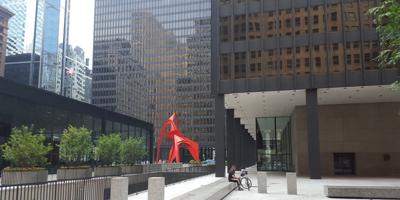


Dirksen Federal Courthouse, Chicago
CHICAGO — A federal judge has turned aside a bid by one of America's largest poultry producers to make one of the world's largest lawsuit investors pay for interfering in their negotiations with one of America's largest food suppliers to end a lawsuit over the price of chicken.
In the ruling, delivered Nov. 12, U.S. District Judge Thomas Durkin conceded that litigation funder Burford Capital, through its subsidiaries, almost certainly hijacked settlement talks between chicken producer Tyson Foods and food supplier Sysco Corp. in a bid to boost its return on investment for funding Sysco's lawsuit.
But the judge said that the obvious interference is "beside the point."
"Regardless of what specific contractual rights Burford possessed relative to the settlement with Tyson, Burford at all times had an economic interest in maximizing the settlement amount," Durkin wrote.
"For that reason, Burford was privileged to attempt to persuade, convince, or even force Sysco not to settle for an amount that Burford opposed, as long as Burford’s motive was not the corporate equivalent of personal animus towards Tyson, and as long as its actions were not legally anticompetitive."
The decision comes as the latest ruling amid a long-running and sprawling court fight not only over the price of chicken, but also the ability of third-party lawsuit investors to both direct and profit from such legal actions.
For more than a decade, Tyson and many of America's other large poultry producers have defended against and settled thousands of lawsuits accusing meat producers of violating federal antitrust laws by allegedly colluding to keep the prices of chicken, beef, turkey and pork artificially high.
While the claims related to other meats have been consolidated in federal courts elsewhere, the chicken price lawsuits have remained in Chicago federal court since 2016.
Sysco was among a litany of food buyers, distributors and sellers who lodged lawsuits seeking a share of whatever the meat producers may ultimately pay out.
In 2022, however, those claims by Sysco received significant attention, as in a rare moment of transparency, Sysco and Burford tangled in federal court over an otherwise secret financing arrangement that undergirded Sysco's lawsuits.
In that court fight, Sysco accused Burford of improperly using $140 million in lawsuit loans to improperly interfere with Sysco's attempts to settle its lawsuits and exit the litigation.
According to public reports, Burford annually invests billions of dollars into lawsuits targeting American companies.
According to court documents, Burford was unhappy with the deals Sysco had negotiated, apparently believing it should receive far more on its investment than what Sysco was willing to accept. Burford, through three subsidiaries, instead demanded Sysco continue suing until it could extract a bigger settlement or judgment at trial.
The court fight between Sysco and Burford ended in a settlement, under which Sysco agreed to sign over its legal claims to a Burford subsidiary company, Carina Ventures.
Tyson, Pilgrim's Pride and other poultry producers failed to snuff out that settlement, despite their claims that Burford and its affiliates should not be permitted to take control of the lawsuits, because those investors had no motive in the lawsuits other than a desire to maximize their return on investment.
The dispute over the settlement ultimately landed before a federal appeals court in Chicago, as Pilgrim's Pride sought a court order forcing Burford to accept a $50 million deal the chicken producer said it had reached with Sysco directly, prior to Burford's interference.
Judges there, however, rejected that deal, saying Sysco never fully executed the arrangement.
In the ruling, however, the judges blasted Burford's conduct in the litigation, saying the lawsuit funder's actions had "turned the courtroom into a trading floor."
"This case is a cautionary tale to any party who seeks to fund its litigation through a third party," wrote Seventh Circuit Judge Nancy Maldonado in a February 2026 ruling.
In the meantime, Tyson Foods took a different tact, attempting to countersue Burford for interfering in the talks with Sysco.
In the new ruling, however, Judge Durkin said Tyson's countersuit fell short of establishing Burford had done anything illegal or untoward, beyond attempting to maximize its profit from the talks.
"Tyson implies that Burford's desire to ensure greater settlements for Sysco's claims was somehow improper," Durkin wrote. "But that is simply everyday business decision-making, which is not improper.
"And it is not disputed that even before Burford gained control of settlement decision-making, it possessed a significant economic interest in the amount of Sysco's settlement as a result of the funding agreement.
"For this reason, even if, as Tyson alleges, Burford used Sysco's counsel to 'stymie' the settlement negotiations, Burford was privileged to do so because it was effectively Tyson's competitor with respect to the settlement amount."