


“What happens in Vegas stays in Vegas.”
That’s how the Cato Institute’s Matthew Cavedon describes the Constitutional protections that a criminal defendant be tried in and heard by a jury drawn from the state in which the crime was committed.
Cavedon, director of the Cato Institute’s Project on Criminal Justice, and Cato Legal Fellow Michael Fox filed a brief in the Supreme Court in Abouammo v. U.S. supporting Ahmad Abouammo’s challenge to his conviction under 18 U.S.C. § 1519 for falsifying records.
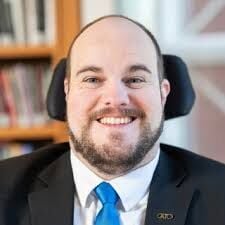
Cavedon
In October 2018, Abouammo was interviewed by two FBI agents in connection with an investigation into alleged efforts by the government of Saudi Arabia to obtain from Twitter the identities of Saudi citizens who had posted information critical of the Saudi government. The investigation was run out of the FBI’s San Francisco office, and the agents traveled from San Francisco to interview Abouammo in his Seattle home.
Abouammo
During the interview, Abouammo claimed he had worked for a Saudi official as a consultant. When asked for documents evidencing the consulting work, Abouammo allegedly created and emailed a fake invoice to the agents.
Abouammo was indicted in the Northern District of California on several counts, including acting as a foreign agent, wire and honest services fraud, conspiracy to commit wire and honest services fraud, money laundering, and falsifying records.
Abouammo moved to dismiss the count of falsifying records arguing that venue was improper in the Northern District of California. According to Abouammo and Cato, venue was proper only in the Western District of Washington where the alleged crime of falsifying records took place. The court denied his motion and Abouammo was convicted on six of the original counts, including the falsification of records count.
The U.S. Court of Appeals for the Ninth Circuit upheld the conviction.
The Supreme Court granted review December 5, and argument is set for March 30.
Abouammo’s appeal turns on the reading of Article III of the Constitution’s guarantee that the “Trial of all Crimes ... shall be held in the State where the said Crimes shall have been committed” and the Sixth Amendment’s requirement that a criminal defendant be tried by a jury “of the State and district wherein the crime shall have been committed.”
Abouammo argues that the proper venue for a criminal trial depends on the nature of the crime and the location of the alleged acts. The entire alleged act of falsifying records, Cavedon noted, took place within Abouammo’s home in Seattle and not in the Northern District of California.
The government argues, and the Ninth Circuit agreed, that the nature of the crime for falsifying records contemplates the effect of obstructing a federal investigation and, because the investigation was being handled in San Francisco, a fact known to Abouammo, venue was proper there.
In their brief, Cavedon and Fox warn that the government’s view would open the door to forum shopping by prosecutors – a harm, they note, the Constitution was in part drafted to prevent.
Worse yet, the government could intentionally staff investigations with agents from multiple districts precisely to establish venue in favored districts, according to Cavedon. “Because federal agencies maintain a nationwide presence and personnel in many different places, the government could funnel prosecutions into forums where the jury pool is most ideologically aligned with its efforts,” Cavedon and Fox argue in their brief.
“The location of a trial was never a mere procedural technicality,” they state. “Article III and the Sixth Amendment were designed to ensure that a defendant was judged by members of the community where the alleged harm occurred.”
Upholding the Ninth Circuit’s ruling would weaken these Constitutional protections, they assert.
This case, according to Cavedon, presents a “great opportunity” for the Court to affirm the importance of “treating venue as jurisdictional.”