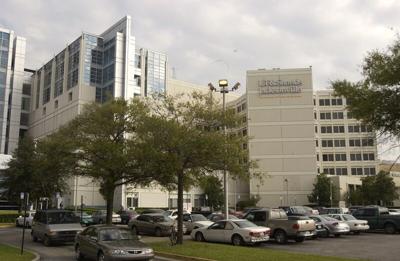



JACKSONVILLE, Fla. – A Florida nurse who opposed and reported a co-worker’s discrimination and harassment at a Jacksonville-area hospital claims she was forced to quit her job due to retaliation.
Plaintiff Kristin Bowlin filed her lawsuit last month in U.S. District Court for the Middle District of Florida, Jacksonville Division, Feb. 24.
She claims defendant Shands Jacksonville Medical Center Inc., doing business as UF Health Jacksonville, violated Title VII of the Civil Rights Act of 1964, the Florida Civil Rights Act, and the Family and Medical Leave Act.
“The cumulative effect of the retaliation, false allegations, disciplinary actions, hostile work environment, and fear of termination rendered Plaintiff’s working conditions intolerable,” Bowlin’s complaint states.
Bowlin, a St. Johns County resident, started working for Shands on May 8, 2022 as a registered nurse in the pre-admission testing unit.
According to her filing, she “consistently exceeded” performance expectations, was considered the most efficient PAT RN, her interview techniques were “highly effective,” and was told she was “an invaluable asset to the organization.” Also, prior to her protected activity, she had never received discipline, she noted.
In August 2024, Bowlin and other nurses reported to human resources that Marleana Hayes, a charge nurse, was engaging in harassment and discriminatory treatment toward a Nepali co-worker.
“Plaintiff opposed this conduct and refused to ostracize or isolate her Nepali coworker,” the complaint states. “Plaintiff submitted documentation evidencing a pattern of harassment and discriminatory treatment.”
Immediately after, Bowlin alleges she was stripped of training responsibilities she previously performed, and was subjected to “heightened scrutiny” and additional logging requirements not imposed on other nurses.
In October 2024, human resources determined that corrective action was warranted regarding Haynes’ conduct. After Haynes was briefly reassigned, management reinstated her. Bowlin claims her “targeting” resumed.
In December 2024, Bowlin claims she participated in a union meeting with human resources leadership regarding ongoing retaliation and a hostile work environment.
Bowlin again reported retaliation to Lesli Ward, vice president of human resources at the hospital, in April 2025.
“Within days of Plaintiff’s April 17, 2025 HR complaint, management initiated a disciplinary process based on alleged patient and workplace incidents,” her complaint states.
“Despite Plaintiff’s documentation and available witnesses contradicting the allegations, Plaintiff was not interviewed as part of Defendant’s ‘investigation.’”
The retaliation escalated, Bowlin alleges, when she was issued an Employee Performance Log, or EPL, on May 6, 2025. The EPL contained false allegations, including alleged insubordination and alleged threats to cancel surgery, she claims.
“The EPL warned that further occurrences could result in termination,” the filing states. “Management refused to review Plaintiff’s exculpatory documentation during the disciplinary meeting. Plaintiff submitted written rebuttals detailing the inaccuracies.”
Bowlin, in an July 2, 2025 email, informed hospital leadership that she had consulted counsel and would contact the U.S. Equal Employment Opportunity Commission, or EEOC, if the retaliation continued.
On July 25, 2025, Bowlin alleges the hospital issued her a written reprimand characterizing her protected complaint as “grossly inappropriate conduct.”
She noted in her complaint that during the same period, she applied for a promotional role as a diabetes educator and was denied.
Bowlin also claims in her lawsuit that she suffers from stress-induced migraines, which qualify as a serious health condition under the FMLA.
“Plaintiff obtained intermittent FMLA certification, and her symptoms worsened as retaliation escalated,” her filing states. “Plaintiff sought emergency and follow-up medical treatment for severe migraines and anxiety during this period.”
However, she claims Shands failed to timely approve her properly-documented FMLA requests and “created obstacles,” including requiring repeated follow-ups to secure approval for excused absences related to the migraines.
“Defendant’s interference was undertaken as part of its broader pattern of retaliation against Plaintiff for engaging in protected activity in opposing discrimination,” her lawsuit states.
Due to the stress, Bowlin claims she was forced to seek employment elsewhere; she resigned from Shands in September 2025.
She seeks compensation for lost wages and benefits; reinstatement; back pay with interest, pension rights, and all benefits; in the alternative, judgment in her favor for the monetary losses she suffered as a result of Shands’ FMLA violations; front pay; liquidated damages; prejudgment interest; and attorneys’ fees.
Tampa law firm Cantrell Schuette PA is representing Bowlin in the action.