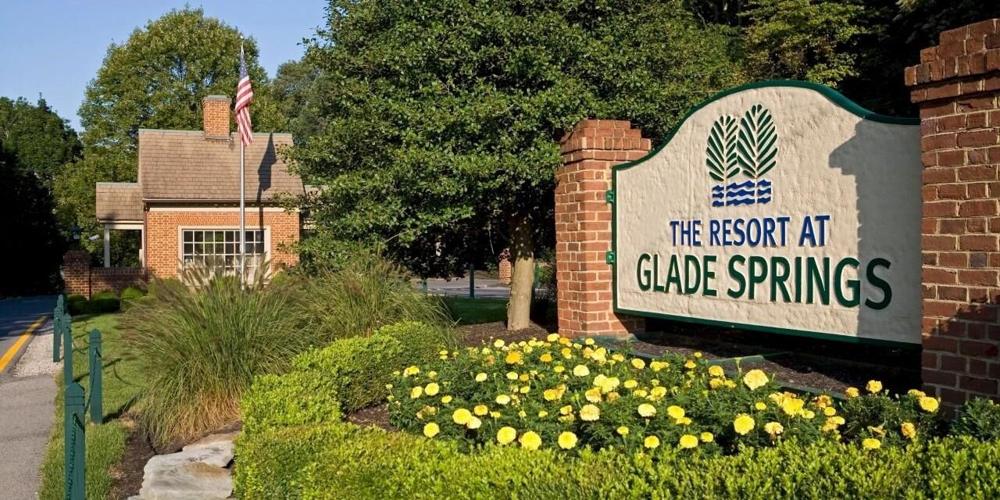



The Resort At Glade Springs
CHARLESTON – The state Supreme Court has asked a Raleigh County judge to better explain his decision authorizing the foreclosure sale of Glade Springs Village properties owned by one of U.S. Senator Jim Justice’s family businesses.
In a May 22 memorandum decision, the court granted “extraordinary relief, as moulded,” by converting Justice Holdings’ request for a writ of prohibition into a writ of mandamus. Rather than immediately halting the foreclosure, the court directed Circuit Judge Todd A. Kirby to enter a new order with “more detailed findings of fact and conclusions of law sufficient to allow this court to conduct meaningful appellate review.”
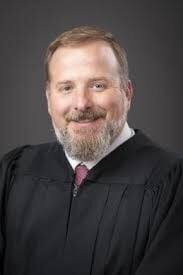
Kirby
The ruling comes in response to Justice Holdings’ challenge to a Dec. 5, 2024, “Final Order and Decree of Judicial Foreclosure and Sale of Real Estate” that authorized the sale of its Glade Springs Village properties to satisfy millions of dollars in unpaid assessments claimed by the Glade Springs Village Property Owners Association Inc.
The company asked the justices to prohibit enforcement of that order, arguing the underlying liens are invalid because they were not created and imposed in compliance with the state’s Uniform Common Interest Ownership Act, or UCIOA.
The foreclosure fight is part of a long dispute between Justice Holdings and the Glade Springs association over assessments on hundreds of lots in the gated resort community near Beckley. The controversy traces back to a 2019 Raleigh County case in which Justice Holdings sued the association over a utilities loan agreement and the association counterclaimed for nonpayment of assessments dating back more than a decade.
In that case, the circuit court in 2021 granted summary judgment to the association on assessments for fiscal years 2010–2011 through 2020–2021, entering a judgment of just more than $6 million against Justice Holdings. The company appealed, and the Supreme Court vacated the monetary judgment in 2023 and remanded, holding that Glade Springs is governed by UCIOA and that the trial court had not made sufficient findings to show the assessments complied with statutory requirements.
While that appeal was pending, the association in March 2022 filed a separate civil action to enforce the monetary judgment alleging “statutory assessment liens” for fiscal years 2019–2023. After the Supreme Court’s 2023 opinion, the association amended its complaint in October 2023 to drop enforcement of the vacated judgment and proceed solely on the statutory liens, then sought appointment of a special commissioner to determine lien priority and conduct a sale of Justice Holdings’ properties.
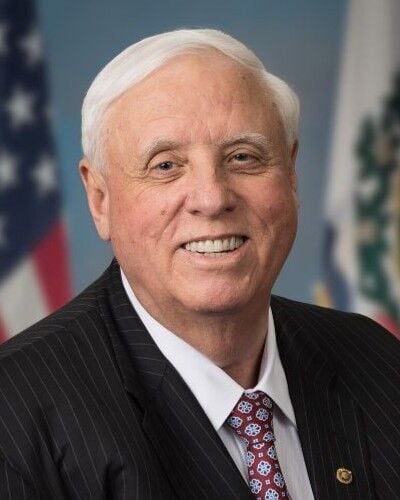
Justice
Justice Holdings opposed the sale, saying the liens were invalid because of alleged defects in the 2001 Declaration that created Glade Springs Village. The company argued that under UCIOA, the original declaration included only a single one‑acre lot and that roughly 2,800 additional lots were never properly added, meaning there were no validly created units on which to levy common assessments.
At an October 2024 hearing, the company also argued the UCIOA‑compliance questions, including the validity of liens, should be addressed in the remanded 19‑C‑481 case, in line with the Supreme Court’s directive. The company claimed the association was attempting to “sidestep” that mandate and “ignore” UCIOA constraints on the declaration.
Justice Holdings brought the matter to the Supreme Court after Kirby entered the December 5 foreclosure order and then declined, despite a written request, to either certify it as final and appealable or expand it into a detailed order. The company specifically asked for findings of fact and conclusions of law “necessary for the defendant to seek an extraordinary writ,” but “no amended order has been made available to the court,” the justices wrote.
The December 5 order said the association complied with requirements for preparing and adopting annual budgets, assessed common expenses against “all of the lots” in accordance with the declaration and had no surplus funds for the years at issue. But it did not identify or analyze the alleged declaration defects.
The court concluded Justice Holdings had shown clear legal error in the circuit court’s failure to supply an adequate order after a proper request, warranting issuance of a writ of mandamus. The court granted the writ “as moulded,” directing Kirby to issue a new order “containing sufficient detail and exposition of its analysis such as to permit review of the substance of its December 5, 2024, ruling ordering the sale of Justice Holdings’ properties.”
The justices stressed that they were not, at this point, deciding whether the liens are valid or whether foreclosure is appropriate. They also noted that nothing in the mandamus ruling bars the possibility the circuit court could instead certify a revised order allowing a direct appeal so long as any eventual appellate review is supported by “adequate findings of fact and conclusions of law.”
Justices Bill Wooton and Gerald Titus were disqualified from the case. Serving as temporary justices were Circuit Judges Matthew Delligatti and Michael W. Asbury Jr.
Justice Holdings is being represented by Ronald H. Hatfield Jr. and Steven R. Ruby. Glade Springs Village Property Owners Association is being represented by Mark A. Sadd of Lewis Gianola.
West Virginia Supreme Court of Appeals case number 25-401 (Raleigh Circuit Court case number 22-C-57)