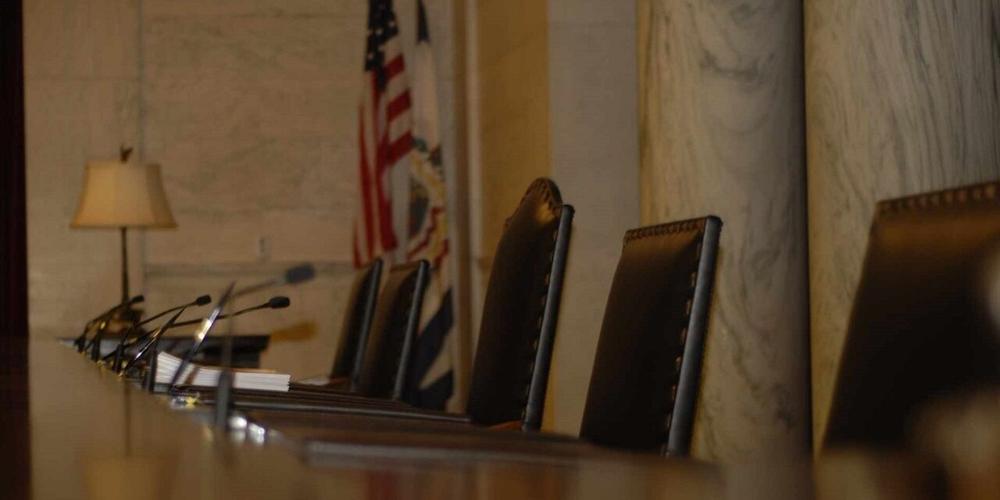



The chambers of the West Virginia Supreme Court of Appeals
CHARLESTON – The West Virginia Supreme Court of Appeals has revived a wrongful death lawsuit accusing a Wheeling opioid treatment clinic and its medical director of negligently handling a suicidal young man’s intake assessment, ruling that the clinic did owe him a legal duty of care during that evaluation.
In a signed opinion filed May 18, the justices unanimously reversed both the Intermediate Court of Appeals and the Ohio Circuit Court, which had granted summary judgment to Wheeling Treatment Center and medical director Dr. John Schultz on the ground that no health care provider–patient relationship ever existed with 24‑year‑old Austin Nickalus Ghaphery.
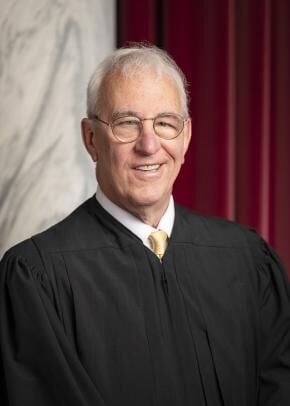
Writing for the court, Justice Charles Trump said the lower courts erred by focusing on the clinic’s decision not to admit Ghaphery into its medication‑assisted treatment (MAT) program, rather than on the services actually provided during his pre‑admission assessment on Sept. 28, 2017.
The Supreme Court held that, as a matter of law and undisputed fact, a provider‑patient relationship was formed during that assessment, triggering a duty to exercise reasonable care under the state Medical Professional Liability Act.
“The respondents owed a duty of care to Mr. Ghaphery during the initial assessment process,” the opinion states, sending the case back to Ohio Circuit Court for further proceedings on standard of care, breach and causation.
The case stems from the death of Austin Ghaphery, who began exhibiting signs of substance abuse in late 2016 and admitted to his father in September 2017 that he was using illicit drugs. His father, Dr. Nicholas A. Ghaphery, searched for treatment options and arranged for his son to be evaluated at Wheeling Treatment Center, which offers MAT services for opioid addiction.
On Sept. 28, 2017, Austin Ghaphery appeared at the center for the required pre‑admission assessment, where counselor Jamie Coen‑Pickens conducted an intake, including a urine drug screen. The test was positive for THC and amphetamines, but negative for opioids. Coen‑Pickens testified Ghaphery showed no signs of withdrawal, leading staff to conclude he was not a candidate for the clinic’s opioid‑focused program.
During the assessment, however, staff became concerned Ghaphery might be suicidal. Coen‑Pickens summoned Schultz, who said he spoke with Ghaphery and assessed him for suicide risk.
According to contemporaneous medical notes, Ghaphery reported being depressed, having recently ended a long‑term relationship, and having suicidal ideations “with a plan to follow through with utilizing a gun.”
Clinic staff attempted multiple times to contact his emergency contact and his mother but were unsuccessful, the note states. Ghaphery then disclosed he had been prescribed the antidepressant Lexapro by the family physician and agreed to follow up with that doctor the following week. The counselor provided him phone numbers for individual counseling, and “under this agreement with staff Pt. was allowed to leave the facility.”
Thirty‑six days later, on Nov. 3, 2017, Ghaphery was found dead. An autopsy by the state Medical Examiner’s Office attributed his death to intoxication from fentanyl, norfentanyl, heroin, amphetamine and cocaine, ruling the manner of death an accident.
In July 2019, Ghaphery’s father filed a wrongful death action under the MPLA and the state Wrongful Death Act against WTC and Schultz alleging non‑physician staff and Schultz failed to meet the applicable standard of care by inadequately evaluating Austin’s condition, failing to arrange for his transport or admission to a psychiatric facility despite suicidal ideation, proximately causing his death.
The defendants moved for summary judgment, arguing they had no duty to accept Ghaphery as a patient, no obligation to seek his voluntary or involuntary psychiatric commitment once they declined to admit him to MAT, and no act or omission by them proximately caused his death. The circuit court initially denied summary judgment in 2021, finding genuine issues of material fact, but later revisited the question at the defendants’ urging.
In a revised order entered Sept. 21, 2022, the circuit court granted summary judgment and expressly held that “no patient‑health care provider relationship was established upon which liability can be based.” The court deemed critical WTC’s refusal to admit Austin into its MAT program and found, although he was “technically a ‘patient’ while he was there for the pre‑admission assessment,” he was not accepted as a patient thereafter and the clinic therefore had no duty to attempt to prevent his death.
In a November 2023 memorandum decision, the ICA affirmed and characterized the health care provided as “extremely limited” and “incidental” to eligibility screening, and concluding there was no express or implied contract to treat and thus no duty under the MPLA.
The Supreme Court rejected that reasoning and found the record contained “sufficient undisputed evidence” that Ghaphery was a “patient” under the MPLA during his initial assessment.
Under the 2017 version of the MPLA, a “patient” is defined as a natural person who “receives or should have received health care from a licensed health care provider under a contract, expressed or implied,” and “health care” includes acts or services performed by a provider or supervised person “for, to or on behalf of a patient during the patient’s medical care [or] treatment.” The court noted that WTC’s own medical case note for Sept. 28, 2017, labeled Ghaphery as a “Patient” in the caption and referred to him as a patient 11 times in the body of the note.
The opinion also relied heavily on the then‑effective state Medication‑Assisted Treatment Program Licensing Act regulations, which required an initial physical and psychosocial assessment before admission and repeatedly referred to the person undergoing that assessment as a “patient.” Those rules mandated elements such as a brief physical exam, history of medical conditions, substance use evaluation, drug testing, screening for communicable diseases and psychiatric comorbidities, and assessment of social supports – procedures the Supreme Court characterized as health care within the meaning of the MPLA.
“Regardless of whether WTC ultimately denied Mr. Ghaphery admission to its MAT program based upon its initial assessment of him, the circuit court correctly concluded that Mr. Ghaphery ‘was technically a “patient” while he was [at WTC] for the pre‑admission assessment,’” Trump wrote, before holding that this status carried legal consequences. Because a health care provider–patient relationship existed for that limited purpose, the court held, WTC and Schultz owed a duty to perform the assessment in a non‑negligent manner.
In their defense, WTC and Schultz relied on the court’s 1995 decision in Gooch v. West Virginia Department of Public Safety, where a hospital was found not liable for failing to diagnose pneumonia in a DUI arrestee who had only been brought in for a forensic blood draw. There, the court held a hospital‑patient relationship cannot be created “merely by virtue of an arrestee being presented to a hospital for a drug and alcohol blood test.”
The justices found Gooch “fundamentally different” and not controlling. Austin voluntarily went to WTC seeking treatment options; he underwent a regulated, multi‑component clinical assessment; and the clinic’s own documents, as well as governing rules, treated him as a patient during that process. Unlike Gooch, the court said, this record showed both an implied contractual relationship and the provision of health care services sufficient to trigger a duty.
“Whether Dr. Ghaphery can otherwise meet the remaining elements of his medical malpractice claims against the respondents … is not before this court, and we leave those issues for resolution in the circuit court in the litigation process,” Trump wrote.’
Ghaphery is being represented by Patrick Cassidy of Cassidy Law in Wheeling, by Robert P. Fitzsimmons of Fitzsimmons Law in Wheeling as well as by Greg Gellner of Gellner Law in Wheeling. The defendants are being represented by Rita Massie Biser and Lynnette Simon Marshall of Moore & Biser in South Charleston.
West Virginia Supreme Court of Appeals case number 24-52 (ICA case 22-ICA-150 and Ohio Circuit Court case number 19-C-182)