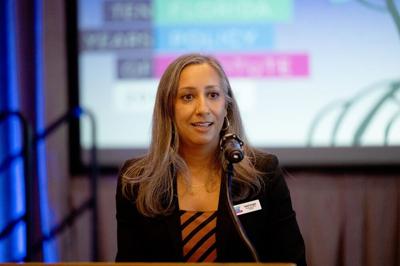



Sadaf Knight, CEO of the Florida Policy Institute, said Amendment 3 fails to address real affordability concerns.
Plaintiffs who prevailed in a lawsuit alleging that the ballot description of a Florida property tax relief measure on the fall ballot was misleading and inaccurate have expressed support for the state attorney general’s recent rewrite of Amendment 3.
Second Judicial Circuit Judge David Frank earlier this month concluded that plaintiffs in the case, including the group Save Our Voters From Misleading Ballot Language Inc., had provided sound evidence that the original wording of the title and ballot summary was “clearly and conclusively defective.”
In an Aug. 13 letter to Secretary of State Cord Byrd, Attorney General James Uthmeier outlined new wording for the Amendment 3 summary that he said corrected deficiencies identified by the court. Instead of the original title that read, “Save Our Homes From Excessive Property Taxes,” Uthmeier has proposed “Increased Homestead Exemption; Lower Cap on Increases in Non-Homestead Property Assessments.”
The proposed amendment, which has been criticized by law enforcement associations and other groups, would increase the state’s homestead exemption for non-school taxes to $150,000 next year and to $250,000 in 2028. Amendment 3 would also require state lawmakers to draw up uniform procedures for local governments to further increase the exemption up to the full assessed value.
“The rewritten ballot question addresses the issues we raised, and is now fair and accurate,” the plaintiffs’ attorney, Jamie A. Cole, told the Florida Record in an email. “We commend the attorney general for doing so. The new language accomplished what we set out to do, and we will not be objecting to the new ballot language. Now it is up to the voters to become fully informed and decide this important issue.”
Frank said the previous ballot summary language amounted to sloganeering and departed from legal requirements that the language be fair and neutral. Amendment 3 would not save all homeowners from “excessive taxation,” the judge said in his Aug. 3 decision. Instead, the property tax break could be offset by higher millage rates or special assessments in certain jurisdictions, according to Frank.
Sadaf Knight, CEO of the Florida Policy Institute, called Amendment 3 “a cost shift that would erode the property tax base, open the door to new tax increases or fees and leave renters behind.” The revised ballot language more accurately describes the measure for voters, but its potentially harmful effects remain a concern, according to Knight.
“While Judge Frank was not specifically tasked with evaluating the merits of Amendment 3 – only the way it will appear in front of voters – he nonetheless repeatedly mentions throughout his ruling that the amendment would discriminate against renters, do nothing to protect small businesses and make it harder for local governments to fund core services,” she said.
The measure could eventually leave a $12 billion hole in Florida’s annual local government budgets and lead to cuts in services such as hospitals, parks and libraries, according to Knight.
The proposed amendment would reduce the current annual cap on the assessed value of non-homestead properties, such as commercial establishments, from 10% to 5%. School districts would be exempt from its tax-relief provisions.
The Florida State Fraternal Order of Police (FOP) has expressed concern that public safety could become “collateral damage” as a result of the fiscal uncertainties the measure would bring.
““We oppose the current Amendment 3 because it creates far too much uncertainty about how local governments would continue to fund law enforcement, fire rescue, emergency medical services and other critical public safety functions,” the FOP said in a statement.