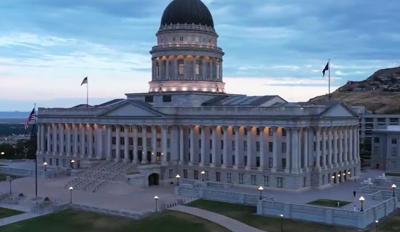


Utah State Capitol
SALT LAKE CITY – Utah lawmakers will not give personal-injury lawyers new legislation that could have increased jury awards, deciding instead to keep things the way they are.
Senate Bill 211 was marked “not passed” at the conclusion of the legislative session last week, despite calls from plaintiff lawyers for legislators to react to an October decision from the state Supreme Court on how clients can ask for compensation for medical expenses.
When a plaintiff has health insurance, those expenses could have already been paid. Under the ruling, juries don’t see the full amount of a victim’s medical bills and instead see how much has been paid by their insurer.
And some insurers are better at negotiating those bills down than others, so the Utah Association for Justice – the state’s plaintiff lawyer group – sought to have the full medical-bill record revealed so jurors could see the entire scope of alleged injuries.
That won’t happen this year, even though SB 211 did make it out of committee and passed on its second reading in February.
While the Utah Association for Justice went to Instagram and opinion pieces to urge citizens to voice their support to legislators, a group fighting the bill - Protecting American Consumers Together - also spread its message to the public with more than 100,000 text messages and a digital campaign.
“Utah lawmakers recognized that SB 211 would have been a step backward for consumers and families across the state,” said Lauren Zelt, executive director of PACT.
“Lawsuit abuse already drives up costs for families and small businesses, and proposals that open the door to more excessive litigation only make those costs worse. We’re grateful legislators listened to the concerns of their constituents and chose not to move this bill forward.”
The issue revolved around the “collateral source rule,” which was addressed on Oct. 30 in a unanimous opinion by the state Supreme Court.
The case was filed by Troy Gardner, who was rear-ended by a Salt Lake City police officer. A hospital billed $7,175.55 for an emergency room visit, but thanks to an agreement with that hospital, the insurer settled the debt for $4,395.75.
Still, Gardner’s lawyers sought the gross amount of medical expenses, which, including an eye exam, came to $7,267.77. A trial court awarded that amount in special damages, but the Supreme Court vacated that award.
The gross amount, it reasoned, did not reflect what the actual damages were.
“That matters because non-economic damages — pain, loss of normal life, emotional distress — are often anchored to medical expenses. If jurors see only a fraction of the bills, they inevitably anchor their understanding of the injury to a fraction of the harm,” Jake Lee of the Utah Association for Justice wrote in an op-ed.
Senate Majority Leader Kirk Cullimore, a Republican, took up the lawyers’ cause in introducing SB 211. It passed in a 16-10 vote on its second reading Feb. 23, but a third reading for ultimate approval never occurred.