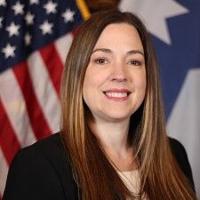


Nicole Blissenbach, commissioner of the Minnesota Department of Labor & Industry, was named as a defendant in a lawsuit challenging state law.
MINNEAPOLIS – Nursing-care groups say a recent Minnesota law is unconstitutional and placing the elderly at risk and have gone to court to fight it.
Leading Age Minnesota, Care Providers of Minnesota and Yona Northstar sued the State last week in federal court over the Minnesota Nursing Home Workforce Standards Act, which was signed into law in 2024 and created a board of nine members to oversee the industry.
Minnesota is the only state with a “centralized nursing home workforce board with binding rulemaking authority,” the lawsuit says. The board is designed to adopt employment standards to protect workers on issues like pay and training.
The board is requiring at least $22.50 per hour for certified nursing assistants and higher minimum wages for other positions – figures set to increase in 2027. Those amounts must be approved by the federal Centers for Medicare and Medicaid Services because of the significant funding it provides to Minnesota’s Medicaid program.
The industry is already upset with lawmakers, criticizing the budget reached last year as harmful to an elderly population needing care while putting financial barriers on operating in the way.
Raising the minimum wage exacerbates those difficulties, the groups say.
“The members and Yona now must modify how they pay their workers covered by the Wage Standards and how they increase the covered workers’ wages – i.e., going from merit-based increases or cost-of-living adjustments to increases set by law,” the suit says.
“One estimate puts the cost of compliance with the Wage Standards for an individual member at over $500,000.”
Nursing homes have reduced raises to long-term workers and have not been able to recover increased costs from programs like Medicaid, they say. They also must hire administrative staff to help them comply with the new standards while delaying improvements at their facilities, the suit says.
For patients, the staff-to-resident ratios have skewed and some elderly applicants have been denied admission.
The suit also bemoans money spent on new training requirements – another mandate coming from a board filled with unelected members with little to no legislative oversight.
“(D)ue process guarantees, among other things, a neutral decisionmaker,” the suit says. “It guarantees that a person will not be subject to state power wielded by a self-interested regulator.
“The Act denies the members and Yona that right. The Act places state power in the hands of self-interested Board representatives who can exercise – and have exercised – that power to benefit themselves.”