

Grassley
WASHINGTON – U.S. Senate Republicans have introduced a bill targeting companies that invest in lawsuits, proposing rules that would force them to identify themselves and refrain from interfering with settlements.
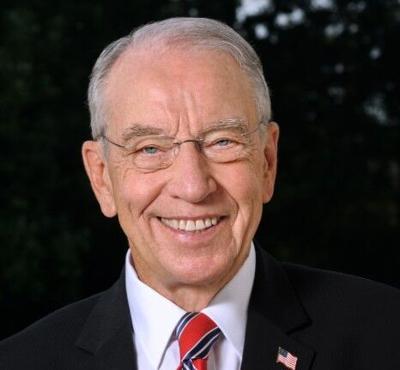
Sens. Chuck Grassley of Iowa, Thom Tillis of North Carolina, John Kennedy of Louisiana and John Cornyn of Texas on Tuesday submitted the Litigation Funding Transparency Act. The businesses that would be affected are called third-party litigation funders and provide money up-front to plaintiffs lawyers in exchange for a percentage of whatever is recovered in court.
These arrangements worry some who feel they give investors who aren’t parties in court proceedings control over them. For example, Burford Capital is now allowed to challenge a $50 million settlement between Sysco Corp. and poultry producer Pilgrim’s Pride.
The U.S. Court of Appeals for the Seventh Circuit last week found problems with the execution with the settlement, which Burford felt wasn’t large enough. The company is the world’s largest third-party lawsuit investor, and its fight with Sysco, its own client, has complicated the case for years.
"... But for this legal maneuvering, this litigation could have been resolved long ago," Seventh Circuit Judge Nancy Maldonado said. "This case is a cautionary tale to any party who seeks to fund its litigation through a third party."
The Senate bill would keep funders from influencing litigation strategy and settlement negotiations. It would also prevent them from viewing any evidence that is subject to a protective order.
A recent study showed the costs TPLF imposes on American families through inflated prices. Oklahoma and Georgia passed measures targeting TPLF last year, joining Wisconsin, Indiana, Montana, West Virginia, Louisiana and Kansas.
In federal courts, Delaware, New Jersey and the Northern District of California require disclosure of TPLF agreements. The Senate bill’s disclosure requirements apply to federal class actions and mass torts that are grouped in multi-district litigation proceedings.
The majority of pending federal civil cases are in those MDLs. Among the largest, according to the research firm KCIC, are 67,000 lawsuits against Johnson & Johnson over talcum powder and 24,000 over hernia mesh.
Outside funding became an issue during J&J’s attempt to settle those talc cases, which ultimately failed and put the company in the position of spending a massive amount in lawyers fees and court costs to defend itself in court.
“The American people deserve to know when corporations and foreign states pour money into class action lawsuits to influence outcomes,” Kennedy said.
Other Republicans are concerned TPLF allows foreign interference in the U.S. energy and technology markets. In a hearing last year, Sen. Ted Cruz accused environmental activists and their Democratic supporters in Congress of using Chinese money to undermine the U.S. economy.
In January, the House Judiciary Committee took up H.R. 1109, which similarly requires disclosure of TPLF agreements. But the mark-up session was interrupted when committee members were needed on the House floor for votes on other legislation, and the discussion on the bill ended.
Bill sponsor Darrell Issa, R-Calif., then introduced the Protecting TPLF From Abuse Act, which currently sits in the Judiciary Committee.