

LAKE CHARLES, La. – A Lake Charles woman diagnosed with bipolar disorder is suing her employer, claiming it is discriminating against her by revoking medically-supported accommodations.
Plaintiff Alyiah J. Dargin filed her lawsuit in U.S. District Court for the Western District of Louisiana, Lake Charles Division.
The named defendant is Caesars Entertainment Inc., doing business as Horseshoe Lake Charles.
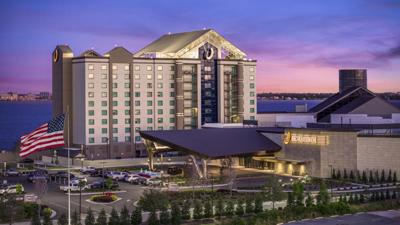
Dargin works at the Horseshoe Lake Charles casino in Westlake in Calcasieu Parish.
She began her employment as a beverage server at Isle of Capri Lake Charles, the defendant’s predecessor, in November 2017. Her formal employment with Horseshoe began in December 2022.
“Despite honoring Plaintiff’s flexible schedule accommodation request for over a year without any issues whatsoever, Defendant unilaterally revoked the accommodation without notice or explanation on or about June 8, 2024, and it has refused to reinstate the same since that time, despite Plaintiff’s repeated and medically supported requests that it to do,” her 15-page complaint states.
Dargin explains that her bipolar disorder, when in an active episode, substantially limits her brain function and emotional regulation and her ability to concentrate, sleep, and work.
She contends Horseshoe is violating the Americans with Disabilities Act, or ADA.
The ADA prohibits covered employers from “discriminat[ing] against a qualified individual on the basis of disability.” Discrimination includes failure to make “reasonable accommodations to the known physical or mental limitations of an otherwise qualified individual with a disability… unless such a covered entity can demonstrate that the accommodation would impose an undue hardship.”
In September 2023, Dargin’s treating psychiatrist, Jeremy Sanders, submitted formal documentation to Horseshoe on Dargin’s behalf. Sanders indicated she needed a reasonable accommodation in the form of intermittent leave and flexible scheduling due to the “varying and unforeseeable nature” of her chronic, episodic condition and the side effects of the medication prescribed to help her symptoms.
Horseshoe readily made the requested accommodations from September 2023 through May 2024, and permitted Dargin to work a modified, flexible work schedule during this time.
In the event she suffered an episode, she also was permitted to come in later than her scheduled shift without any negative repercussions.
Things shifted in June 2024, when General Manager Russell Deavers verbally reprimanded Dargin for allegedly failing to appear cheerful and for “lacking emotion” while serving a casino patron.
Dargin explained that the prescribed medication she takes to mitigate the effects of her bipolar disorder affects her facial expressions and makes her appear to be subdued.
Deavers allegedly dismissed her explanation, saying it “did not matter.” Soon after, she was issued a formal disciplinary write-up.
Shortly after the write-up, Horseshoe revoked – without any prior notice or explanation – the workplace accommodation it had previously approved and enacted.
About this time, Dargin also requested to have Sundays off so she could manage any lingering side effects of her bipolar medication; Horseshoe also denied this request.
Horseshoe’s Human Resources Supervisor Montee Miller then informed Dargin that moving forward she would have to call out entirely for any shift she could not report to on time due to her disability.
“Defendant’s instruction for Plaintiff to call out for the entirety of shifts placed Plaintiff at a significant risk, given that each call-out automatically results in the issuance of disciplinary points for attendance, the accumulation of which subjects an employee to disciplinary action, leading up to termination,” her complaint states.
“Not only that, but to the extent Defendant began forcing Plaintiff to call out for an entire shift when she could have easily appeared for work for some of the shift, Defendant’s action deprived Plaintiff of several hours of compensable work and commensurate pay.”
On June 21, 2024, Dargin and Sanders submitted a new job accommodation questionnaire to Horseshoe, with the same detail that the casino had previously accepted in 2023.
“Despite the fact that Plaintiff had provided identical support for this request as the one previously approved by Horseshoe, Horseshoe now claimed – for the first time – that the paperwork was ‘ambiguous’ and refused to renew the accommodation,” the filing states.
Also, Horseshoe demanded for the first time that Sanders specify a duration for Dargin’s restrictions “not to exceed three months.”
Sanders, understanding the unforeseeable, chronic, episodic nature of Dargin’s bipolar disorder, stated “unknown.”
“Defendant’s insistent [sic] on a fixed end-date for this type of chronic, episodic condition indicates a reckless indifference to Plaintiff’s protected rights under the ADA, as well as a fundamental lack of understanding surrounding bipolar disorder and its disabling impacts,” the complaint states.
In September 2024, during a Zoom meeting with corporate personnel, Dargin claims she was informed that Horseshoe would not honor any of her requested accommodations.
Since then, Dargin has continued to work for Horseshoe at a significantly reduced schedule.
“Given that Defendant’s action represented an overt revocation of an accommodation Defendant had previously afforded Plaintiff for her bipolar disorder, and given Defendant’s knowledge that Plaintiff’s chronic condition would force her to call in moving forward, there exists a clear, causal connection between Defendant’s decision and Plaintiff’s disabling condition,” the lawsuit states.
“In other words, Plaintiff’s disabling condition motivated Defendant’s adverse employment decision.”
She seeks compensatory damages, punitive damages, attorney’s fees, pre- and post-judgment interest, medical care and expenses in the past and future, mental anguish damages, and injunctive relief.
Sudduth & Associates LLC in Lake Charles is representing Dargin.