
U.S. Supreme Court
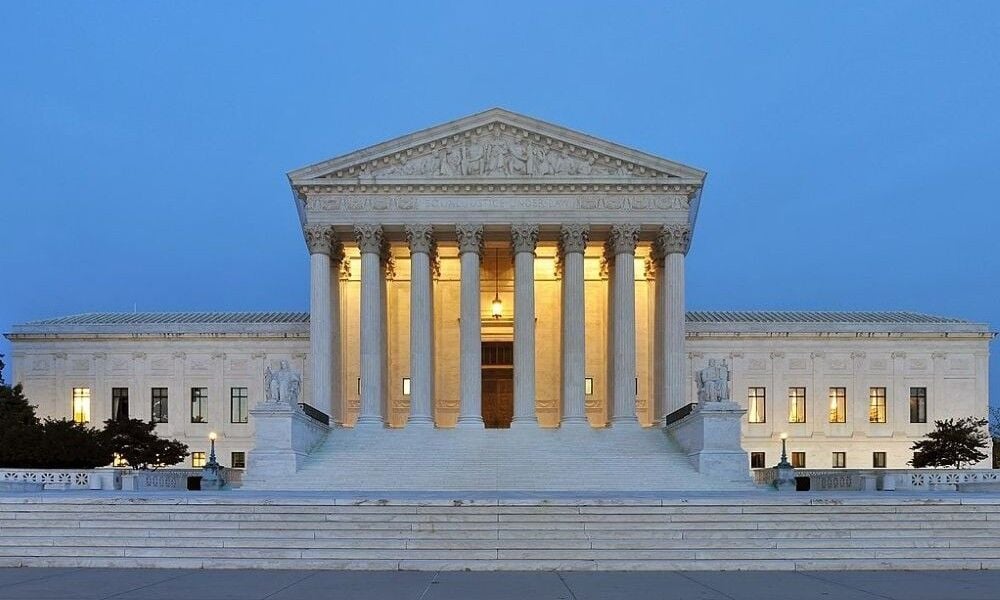
WASHINGTON – The U.S. Supreme Court has ruled lawsuits filed by Louisiana officials against oil and gas companies for alleged damage to the state’s coast should be heard in federal court.
The 8-0 decision, authored by Justice Clarence Thomas and released April 17, says an appeals court was wrong to deny Chevron’s request to move its case into federal court from state district courts. The outcome affects more than 40 lawsuits filed more than a decade ago by several Louisiana coastal parishes and the state’s attorney general seeking billions in restoration and remediation costs.
Friday’s opinion is on a technical legal issue, but it will have an impact on many other similar Louisiana lawsuits that claim companies should pay for alleged pollution and hastened erosion along the coastline. Federal removal law says companies should be protected from local bias for damage caused in local communities.
Louisiana Oil & Gas Association President Mike Moncla hailed the ruling.
“This is a huge, but incremental win for our industry,” Moncla said. “For far too long, frivolous lawsuits, whether it be coastal or legacy, have pushed investment out of our state.
“Decades ago, the defendants of these lawsuits invested in drilling in our coastal region after the state encouraged, incentivized, and gave permits to do so, all the while the state raked in billions of dollars in severance and royalty collections.”
Moncla said oil and gas activity in Louisiana’s state leases and inland waters has declined to nearly nothing since these lawsuits began a decade ago.
“Drilling is nil, production is a shadow of its former self, and service companies have been starved into bankruptcies,” Moncla said. “This case is as frivolous as the ones by liberal cities like Baltimore who sue oil and gas for climate change – while they sit in their air-conditioned offices.
“Today’s ruling from the Supreme Court is the first step toward justice.”
Chevron spokesman Bill Turenne also praised the opinion.
“Chevron applauds the Supreme Court’s unanimous judgment recognizing that these lawsuits belong in federal court,” Turenne said. “As the court recognized, the plaintiffs’ claims are related to activities that Chevron and other energy companies performed under federal supervision during World War II.
“Those claims are flawed as a matter of both state law and federal law, and Chevron looks forward to litigating these cases in federal court, where they belong.”
The majority ruling said lower federal courts and the Fifth Circuit Court of Appeals were wrong regarding federal removal law. The case is being sent back to the Fifth Circuit. Justice Samuel Alito did not participate in the case because he owned stock in one of the energy companies.
The court didn’t focus on the $745 million state court verdict in the case Plaquemines Parish filed against Chevron USA. But the federal removal law means it likely will be retried in federal district court first.
In September, Chevron and several other major oil companies asked the Supreme Court to overturn a lower court ruling that allowed Plaquemines Parish’s coastal erosion lawsuits against the companies to be tried in Louisiana state courts. The companies say such lawsuits should be removed to federal court, and they say the Fifth Circuit Court of Appeals’ ruling to allow them to be heard in state courts used the wrong standard with regard to the federal-officer removal statute.
That law had allowed federal contractors to remove lawsuits from state to federal courts provided they show that the government directed the contractors to engage in the conduct or activities in question. Chevron argues that the petitioners were under contract to provide aircraft fuel for the war effort at the time, leading the companies to ramp up crude oil production in a number of Louisiana parishes.
The federal contractor removal statute permits a defendant to remove a case from state court to federal court if the conduct complained of “arises under” and “relates to” the federal contract.
Specifically, the Supreme Court decided the case filed under the Louisiana Coastal Zone Permitting Act, which became effective in 1980, should be removed to federal court.
In conducting operations to produce oil and gas, which began during World War II and continued into the 1990s, Chevron and the other petitioners claim they were “acting under” a federal contract to supply the federal government with high-octane aviation gasoline and these activities are “related to” it. The contracts to buy avgas did not contain any explicit directive pertaining to petitioners' oil production activities.
Last April, a state jury found Chevron owed $744.6 million to Plaquemines Parish.
Louisiana Association of Business and Industry President and CEO Will Green called the decision “an important win for legal clarity and for Louisiana’s economic competitiveness.”
“The court sent a clear and unmistakable message that these cases belong in federal court,” Green said. “The court correctly recognized that complex questions involving federal law, interstate commerce and national energy policy must be addressed within the proper federal jurisdiction.
“Forum shopping and the weaponization of our legal system has real -world consequences for capital investment, insurance markets and job growth throughout Louisiana. Today’s ruling restores a measure of confidence that the rule of law will be applied consistently and fairly.”
Louisiana Attorney General Liz Murrill, who has maintained the cases belong in state court, remains confident in the final outcome.
“A jury in one of the most conservative, pro–oil and gas communities in the country found that Chevron was liable for billions of gallons of toxic waste dumped into the Louisiana marsh,” Murrill said. “It doesn’t matter whether this case is in state court or federal court—I am confident the outcome will be the same.”