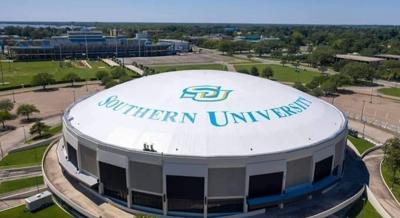



Southern University and A&M College in Baton Rouge
BATON ROUGE, La. – A Southern University and A&M College employee claims she was denied compensation for the extra work she performed due to her gender.
Plaintiff Michelle Briscoe-Long filed her lawsuit in U.S. District Court for the Middle District of Louisiana.
In her 11-page complaint, she alleges that defendant Board of Supervisors of Southern University and Agricultural and Mechanical College violated the federal Civil Rights Act and Equal Pay Act by sexually discriminating against her in denying her requests for “overload” compensation.
The public, historically black land-grant university is located in Baton Rouge. The board supervises and manages the Southern University System, which includes the agricultural extension and research programs administered by the board.
“Defendant’s stated reasons for denying Plaintiff overload compensation are false and are a pretext for sex discrimination,” her lawsuit states. “Plaintiff’s sex was a motivating factor, and the but-for cause, of Defendant’s decision to deny her the overload compensation it paid to each of the three men.”
Briscoe-Long, who has been employed by the university since April 2004, contends she was qualified for and performed additional Office of Research work for which the defendant paid her three male coworkers.
Briscoe-Long served as the special assistant to the executive vice chancellor at the Southern University Agricultural Research and Extension Center, or SUAREC, in Baton Rouge beginning in September 2021.
Her immediate supervisor was Dr. C. Reuben Walker, SUAREC’s executive vice chancellor, who also oversaw SUAREC’s facilities.
Effective Aug. 1, 2024, Walker was appointed to serve as SUAREC’s interim vice chancellor for research, in addition to his position as executive vice chancellor. The interim assignment was designated to run for eight months and end March 31, 2025.
In connection with that interim assignment, four SUAREC employees took on additional work for the SUAREC Office of Research, including Briscoe-Long. The other three were men.
According to the lawsuit, on Oct. 3, 2024, SUAREC’s Chancellor-Dean, Dr. Orlando F. McMeans, submitted memoranda to Southern University System President Dennis J. Shields seeking approval of overload compensation for the three men effective Aug. 1, 2024, for eight months and at 25 percent of their base salaries.
Walker submitted a separate written memorandum to McMeans requesting overload compensation for Briscoe-Long at the same rate the men received: 25 percent of her base salary for eight months, or $9,774, retroactive to Aug. 1, 2024.
“The memorandum listed Plaintiff’s additional duties and informed Dr. McMeans that, of the four individuals performing interim work in the SUAREC Office of Research, all were receiving an overload except Plaintiff,” the suit states.
McMeans denied Briscoe-Long’s overload request. No one approved the request, and the defendant gave her no reason for the denial, she claims.
“Plaintiff later asked the Chancellor’s office in writing for a status update on her overload request,” the suit states. “She received no response.”
On June 5, 2025, Briscoe-Long filed a charge of discrimination alleging sex discrimination, dual-filed with the U.S. Equal Employment Opportunity Commission and the Louisiana Commission on Human Rights.
According to her filing, the university submitted a position statement to the EEOC on Aug. 22, 2025 admitting that the three male employees received additional compensation.
However, it asserted those individuals were “executive administrators” in supervisory roles whose workload was expected to increase. It contends Briscoe-Long was ineligible because she was not.
The university, in its statement to the EEOC, also allegedly asserted Briscoe-Long did not work beyond her regular schedule.
“Defendant gave Plaintiff no explanation when it denied her request. It offered the ‘executive administrator’ explanation only after Plaintiff filed her EEOC charge,” her suit states.
Briscoe-Long seeks back pay, including the overload compensation the defendant denied her in an amount of no less than $9,774; liquidated damages under the Equal Pay Act in an amount equal to her unpaid compensation; compensatory damages; attorney’s fees; and pre-judgment and post-judgment interest.
The Minias Law Firm in New Orleans is representing her in the suit.