
U.S. Supreme Court
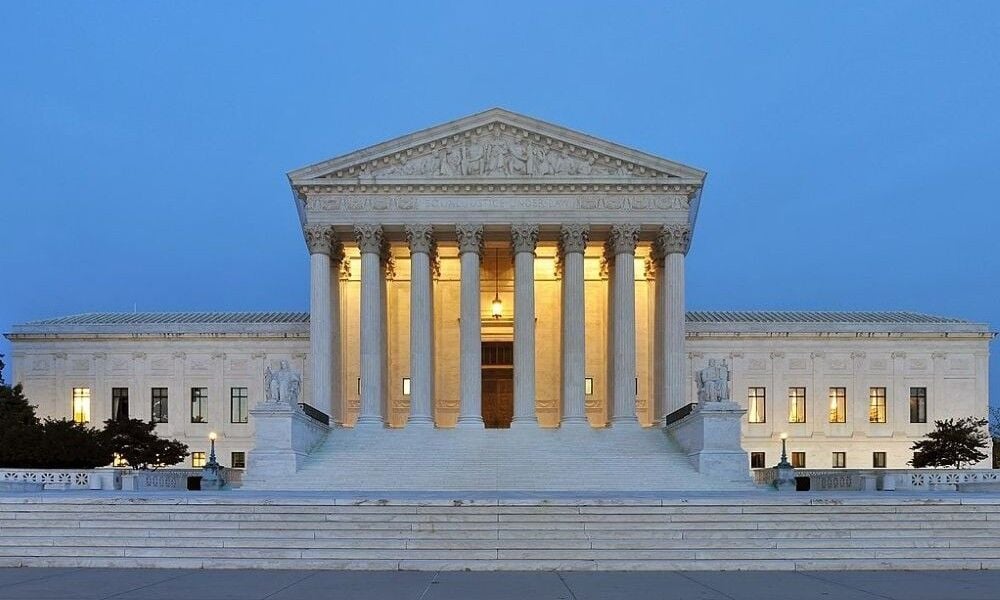
WASHINGTON – The U.S. Supreme Court heard oral arguments Monday in a case regarding whether lawsuits filed by Louisiana officials against oil and gas companies for alleged damage to the state’s coast should be moved to federal court.
The justices heard more than an hour of oral arguments. The outcome could affect more than 40 lawsuits filed more than a decade ago by several Louisiana coastal parishes and the state’s attorney general seeking billions in restoration and remediation costs.
Louisiana Association of Business and Industry President and CEO Will Green said today’s arguments show “just how significant these coastal lawsuits are for Louisiana’s economic future and our national energy leadership.”
“For years, LABI has been clear: these lawsuits don’t fix coastal land loss,” Green said. “Instead, they create uncertainty for employers, investors and job creators at a time when Louisiana should be focused on growth, competitiveness and long -term stability. How and where these cases are handled matters — not just for the energy industry, but for the signal it sends to businesses nationwide considering investing here .
“Louisiana’s coast is critical to our entire nation, and protecting it requires collaboration, innovation and sustainable funding solutions — not lawsuits built on redefining legal standards decades after lawful conduct took place.
“LABI remains closely engaged on this issue and will continue advocating for a fair, predictable legal system that supports investment, job creation and a stronger future for Louisiana’s communities and economy.”
In September, Chevron and several other major oil companies asked the USSC to overturn a lower court ruling that allowed Plaquemines Parish’s coastal erosion lawsuits against the companies to be tried in Louisiana state courts. The companies say such lawsuits should be removed to federal court, and they say the Fifth Circuit Court of Appeals’ ruling to allow them to be heard in state courts used the wrong standard with regard to the federal-officer removal statute.
That law has allowed federal contractors to remove lawsuits from state to federal courts provided they show that the government directed the contractors to engage in the conduct or activities in question. Chevron argues that the petitioners were under contract to provide aircraft fuel for the war effort at the time, leading the companies to ramp up crude oil production in a number of Louisiana parishes.
The federal contractor removal statute permits a defendant to remove a case from state court to federal court if the conduct complained of “arises under” and “relates to” the federal contract.
Specifically, the Supreme Court will be deciding whether cases filed under the Louisiana Coastal Zone Permitting Act, which became effective in 1980, should be removed to federal court.
In conducting operations to produce oil and gas, which began during World War II and continued into the 1990s, Chevron and the other petitioners claim they were “acting under” a federal contract to supply the federal government with high-octane aviation gasoline and these activities are “related to” it. The contracts to buy avgas did not contain any explicit directive pertaining to petitioners' oil production activities.
In April, a state jury found Chevron owed $744.6 million to Plaquemines Parish.
“These cases belong in state court,” Louisiana Attorney General Liz Murrill said. “The federal government is a sophisticated contractor – it knows how to contract for exactly what it wants. It did not contract for the production of oil and gas – this was a supply contract.
“While most people know this already, it is also important to note that WWII ended in 1945. Texaco/Chevron’s activities did not. Evidence in one case alone showed 4 billion gallons of toxic production wastewater was continually dumped into our marsh and that it caused long-term damage.”
The New Orleans-based Pelican Institute for Public Policy filed an amicus brief with the court supporting Chevron’s position and also criticizing the state’s use of private attorneys to advance the coastal erosion lawsuits.
“Louisiana has privatized sovereign enforcement of its coastal statute by ceding core decisions to private lawyers operating under fee-shifting arrangements, who steer suits into locally elected courts while state officials agree not to endorse defendants’ substantive defenses,” the amicus brief states. “That model erodes due process, undermines legislative control over public funds, and invites local partiality. …”
Last month, Louisiana was listed fourth on the American Tort Reform Foundation’s annual Judicial Hellholes report because of the coastal erosion litigation and the $744 million verdict.
Paul Clement of Clement & Murphy argued for Chevron, and Louisiana’s Solicitor General Ben Aguinaga argued for the state. A decision is expected by June.
United States Supreme Court case number 24-813