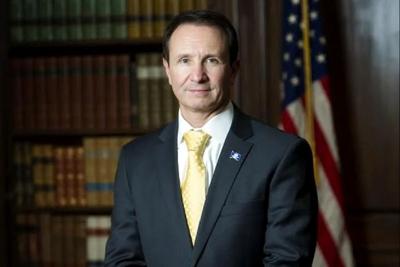


Gov. Jeff Landry
Louisiana’s coastal erosion litigation, which resulted in a $744 million jury verdict against Chevron companies, ranks No. 4 on the 2026 Judicial Hellholes report, leading tort reformers to conclude the state’s legal climate remains problematic.
The report released this week by the American Tort Reform Foundation (ATRF) identified eight jurisdictions nationwide that have become known for nine-figure verdicts, expanding avenues for civil litigation and other related issues, such as high insurance rates. Louisiana was also placed on the ATRF’s watch list after staged accident schemes targeting big-rigs spread beyond New Orleans to St. Martin Parish.
“In addition to multiple indictments in the Orleans area, a new scheme was uncovered in St. Martin Parish earlier this year, resulting in an arrest by Louisiana State Police,” Louisiana Lawsuit Abuse Watch (LLAW) said in a statement about the Judicial Hellholes report. “This is exactly the kind of environment that drives insurance costs up and existing trucking businesses out of the state.”
The LLAW said the more than 40 coastal erosion lawsuits filed by parishes in a bid to extract compensation for environmental damage caused in past decades by energy companies have been souring Louisiana’s ability to attract new businesses.
“The eye-popping first judgment in the queue of 40-plus lawsuits was handed down earlier this year, in a nearly $745 million verdict against Chevron,” LLAW’s statement says. “These kinds of nuclear verdicts send the wrong message to current and future investors, cementing Louisiana's reputation as one of the worst places to do business in the country.”
Although Louisiana lawmakers enacted some legal reforms this year, more work is needed to improve the state’s legal climate and create a more stable platform for economic growth, according to LLAW. The ATRF report said the current legal climate forces residents of the state to pay a “tort tax” of $1,011 annually and leads to job losses of nearly 40,000 per year.
The coastal erosion lawsuits, which were first advanced in 2013, have been moving forward in state courts, but Chevron appealed the $744 million Plaquemines Parish verdict to the U.S. Supreme Court, which will likely address the issue of whether the cases should be tried in state or federal courts.
Energy companies have argued that any environmental damage in coastal Louisiana was at least partly the result of directives from the federal government to ensure that adequate supplies of aviation fuel were available to Allied powers during World War II. Other contributing factors include hurricanes, sea-level rise, changes to the Mississippi River and natural subsidence, according to the testimony of a government witness earlier this year.
“These lawsuits lack legal basis, inflict economic harm and should not be heard in state courts, where the Louisiana trial bar exerts an outsized influence,” LLAW said in its statement. “... Louisiana’s citizens will be on the wrong side of this ‘lawsuit lottery’ if this suit is upheld and others move forward at the state level.”
The ATRF report puts blame on Gov. Jeff Landry for supporting the coastal erosion litigation as attorney general and notes that the trial attorney who filed the 43 lawsuits on behalf of parishes, John Carmouche, and his law partners have been financial backers of the governor’s political campaigns, to the tune of giving $300,000 to a pro-Landry political action committee (PAC) in 2023.
Landry later named Carmouche to the Louisiana State University Board of Supervisors, according to the report.
Carmouche’s firm and PAC also donated $10,500 to re-elect the judge who handled the Plaquemines Parish case involving Chevron, Michael Clement, the report said.