
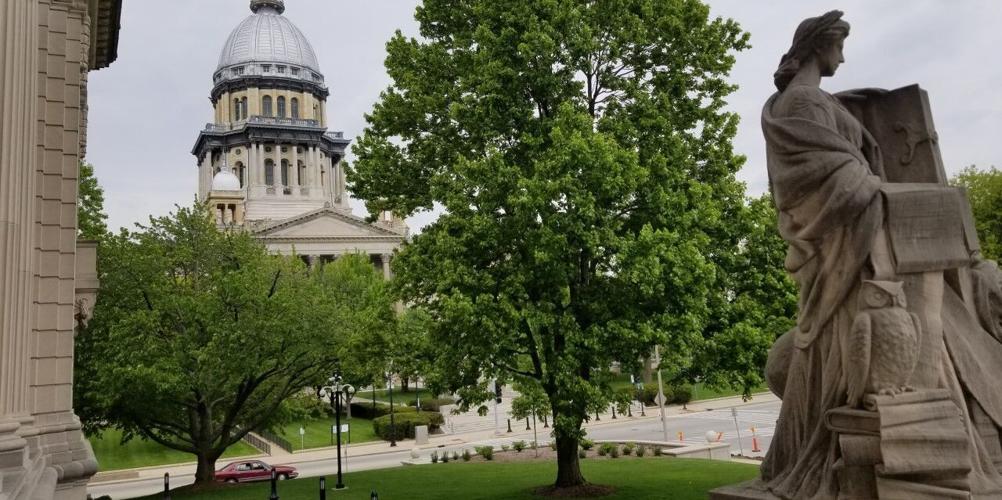


Illinois Capitol, seen from steps of Illinois Supreme Court, Springfield
SPRINGFIELD — Illinois election officials can keep Illinois voting records away from federal officials, even if the federal officials wish to make sure Illinois election officials are properly maintaining state voter rolls in accordance with federal law, a federal judge has ruled.
On July 31, a Springfield federal judge granted judgment against the U.S. Justice Department in its bid to force the state of Illinois to turn over the state's full list of registered voters to federal officials, who have argued the turnover and inspection is needed to ensure "election integrity and transparency."
In the ruling, however, U.S. District Judge Colleen R. Lawless said the Justice Department overreached in demanding the state turn over its voter roll.
Particularly, Lawless asserted the Justice Department under President Donald Trump is misusing a federal law meant to help federal officials combat "racial discrimination in voting," by instead attempting to ensure states are properly removing registered voters who have died or moved away from the voter rolls in a timely fashion, as federal law otherwise requires.
While the law requires the state to turn over voting materials and documents it "receives," Lawless asserted that requirement does not extend to voter lists that state election officials create themselves.
"Allowing the Attorney General to review everything the state itself generates serves as an expansive grant of authority and is one such grant that is not clear from the text of the statute," Lawless said.
Lawless has served as a judge in the U.S. District Court for the Central District of Illinois since she was appointed in 2023 by Democratic former President Joe Biden.
Lawless' ruling sets up a likely appeal to the U.S. Seventh Circuit Court of Appeals, which handles appeals from federal courts in the states of Illinois, Indiana and Wisconsin.
The Justice Department has not yet signaled its intent to appeal.
That filing had come amid a wave of such legal filings in states across the U.S., particularly those led by Democrats, who have resisted efforts by the Trump Justice Department to gain access to state voting records.
At the time, the Justice Department had sued 21 states and the District of Columbia.

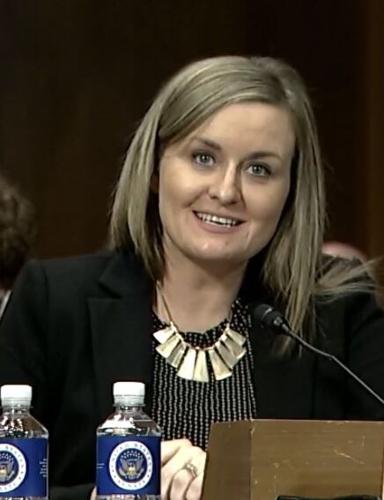
U.S. District Judge Colleen Lawless
The actions all leveled similar claims: That state election authorities were violating federal law by refusing to allow federal officials to review state voting records to ensure the state officials were living up to their obligations under federal law to properly inspect and maintain its roster of eligible voters and remove those have died, moved out of state or otherwise had become ineligible to vote.
At the time, the Justice Department indicated 10 states had complied with the federal demands.
The Justice Department said federal law requires the state to produce a list that also includes more specific individual identifying information, including driver's license numbers, the last four digits of their Social Security numbers and date of birth.
The state has refused to turn over that information.
The Justice Department said this refusal violates federal law, including the Civil Rights Act, which requires state election authorities to retain and preserve records from federal elections and to turn over that information upon request from the U.S. Attorney General, who heads the Justice Department.
Illinois Attorney General Kwame Raoul, however, pushed back on that assertion, saying the state has no obligation under any law to give federal officials full access to state voter records, upon demand.
To this point, such arguments have held sway throughout the country, as federal judges have sided with state election officials in 19 states who have resisted the federal demands.
In the Illinois case, Lawless went on to rule that the Justice Department failed to identify a "factual basis" for the turnover demand. While the Justice Department claimed they needed to inspect the voter rolls to determine if the state was in compliance with federal law, the judge said ensuring compliance with federal law doesn't qualify as "legitimate purpose" under the law.
Rather, the judge said the Justice Department can only demand to see voter records if they can show that "individuals' voting rights" have been violated by state election officials.
"Congress did not confer a general auditing power to the DOJ over state election officials," Lawless wrote.