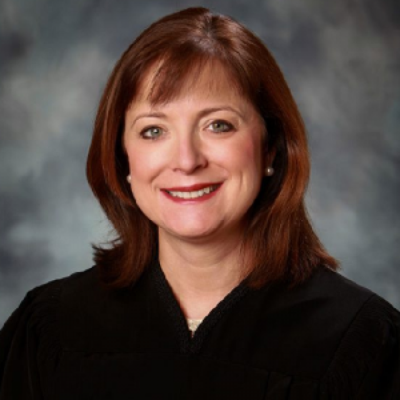


Illinois Southern District Judge Nancy Rosenstengel
EAST ST. LOUIS — Two law firms — one from Chicago, the other from Mississippi — and hundreds of their clients are coming under scrutiny from a southern Illinois federal judge, who has launched special proceedings into determining why virtually of their clients are refusing to agree to settlement offers from Syngenta and Chevron, slowing the process of resolving sprawling litigation accusing the makers of commercial weed killer Paraquat of allegedly causing Parkinson's disease.
On June 2, U.S. District Judge Nancy Rosenstengel ordered "initial limited discovery," including depositions, into nearly 75 Paraquat cases, accounting for about 10 percent of the cases in which plaintiffs are represented by the Smith Law Firm, of Mississippi, and the DiCello Levitt firm, of Chicago.
That special order comes even as the judge had paused such discovery across more than 6,500 cases currently pending against Syngenta and Chevron in the consolidated proceedings before Rosenstengel in southern Illinois federal court. That pause had come to allow the sides to complete work on a settlement deal to resolve most, if not all, of the cases.
The potential terms of the settlement have not yet been made public and remain "confidential," according to court documents.
However, the potential settlement was first announced in an April 14, 2025, filing before the U.S. Seventh Circuit Court of Appeals, in which the parties asked the court to put an appeal on hold while a settlement was worked out.
Rosenstengel followed that with several orders in the ensuing months pausing discovery across the consolidated cases to "allow the settlement process to unfold."
Those settlement talks appeared to have found traction after Rosenstengel took actions harmful to plaintiffs' cases, including excluding key expert testimony plaintiffs had hoped to use to support their claims.
That decision was appealed in April 2024, and was the subject of the April 14, 2025, motion in which the possible settlement was first made public.
Rosenstengel has also lopped hundreds of potentially specious lawsuits from the Paraquat docket, as well, mostly for failure to complete a required plaintiff assessment questionnaire.
In February 2026, the plaintiffs, with Syngenta and Chevron USA, asked Rosenstengel for an order to establish a "qualified settlement fund," which would move forward the finalization of the potential settlement. According to that motion, the fund would be set up under the terms of a "confidential settlement agreement," signed Aug. 4, 2025.
The motion was presented by attorneys Rosenstengel had appointed to serve as lead counsel for the thousands of Paraquat plaintiffs. These included attorneys from the firms of Levin Papantonio Proctor Buchanan O'Brien Barr & Mougey, of Pensacola, Florida; Walkup Melodia Kelly & Schoenberger, of San Francisco; and Meyers & Flowers, of Chicago.
While they served as the lead counsel in the cases, thousands of plaintiffs continue to be represented by other firms from throughout the country, including the Smith Firm and DiCello Levitt.
In the more than a year since the parties first indicated a mass settlement was in the works, the judge noted attorneys for the parties have worked "diligently to present settlement offers to individual plaintiffs."
"While slow, there has been progress," Rosenstengel wrote.
While the terms of the settlement remain secret, court documents indicate plaintiffs are being given the choice to opt out of the deal and continue to pursue their claims individually in the future.
While the judge indicated many plaintiffs are settling, others continue to opt out.
However, the judge said a "significant" share of those opt-outs appear to be centered in cases in which plaintiffs are represented by the Smith Law Firm and DiCello Levitt.
The judge noted "100% of Plaintiffs represented by DiCello Levitt LLP refused to accept the settlement offer they received, while over 90% of Plaintiffs represented by The Smith Law FIrm PLLC did the same."
"The Court would like to gain a better understanding of the possible reasons for these exceedingly high opt-out rates," Rosenstengel wrote.
The order does not state how many plaintiffs represented by those firms have opted out of the settlement, nor how many total plaintiffs those firms are representing in the Paraquat litigation.
However, in her order, Rosenstengel said she was, for now, ordering special discovery proceedings into 47 cases in which the Smith Firm is acting as counsel, and 27 cases being handled by DiCello Levitt, which she said represented about 10% of the Paraquat cases those firms were handling.
The judge said the plaintiffs singled out for the limited discovery, including testimony under oath, were determined randomly.
The judge said the special discovery will "assist ... in facilitating the expeditious, economical, and just resolution of this litigation, which has been the Court's goal since" consolidated proceedings began.
The judge ordered that attorneys would conduct depositions and then file reports that include "details" about the plaintiffs' cases, including when they were allegedly exposed to Paraquat; when they were diagnosed with Parkinson's disease; "description of current Parkinson's Disease symptoms and other health concerns;" and other information pertinent to their cases.
The judge said more discovery may be ordered following the completion of the depositions and filing of the reports.
In her order, the judge further specifically reminded the law firms that the reports must be signed "under penalty of perjury" and "the Court takes these attestations seriously."