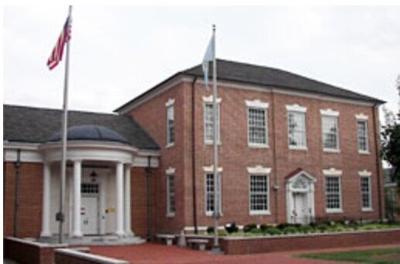

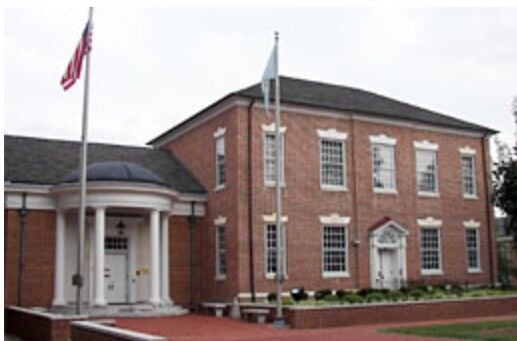
Delaware Supreme Court in Dover
DOVER, Del. – Against the wishes of 11 state attorneys general, the Delaware Supreme Court has green-lit the deletion of documents vital to companies facing asbestos lawsuits.
The court on July 31 found plaintiffs like Johnson & Johnson, J-M Manufacturing and The Dow Chemical Company lacked the right to seek the preservation of asbestos claims made in various bankruptcy courts. It is a ruling that will hurt defense efforts to show asbestos plaintiffs lawyers can double-dip by blaming various companies for the same injuries.
A vice chancellor in the state’s Chancery Court had written this information is the “only realistic source” for companies to show plaintiffs told different stories against solvent firms than what they claimed when receiving checks from bankruptcy trusts. For example, a plaintiff with mesothelioma could conceivably blame J&J’s talc products while simultaneously pinning liability for that illness on a manufacturer of an asbestos-containing product like automotive brakes.
The appeal asked whether the Chancery Court should issue relief to preserve documents for use in other litigation. It can, Justice Gary Traynor wrote, but not here.
“The court may not… order such relief as was requested in this case – a broad preservation order constraining third parties – when, as here, the requesting party does not identify a pending or imminent action at law to which the documents are relevant and unavailable through discovery in such action or other legal proceeding,” Traynor added.
There are two avenues for asbestos victims to be compensated – sue companies in court and/or submit claims to companies that have already established bankruptcy trusts. There are dozens of these trusts.
Exposure evidence is key in court. Should someone sue a solvent defendant, that company would want to be able to show whether the plaintiff also blamed other products in claims with bankruptcy trusts.
But last year, 10 of those trusts announced plans to delete resolved claims. Companies went to court in Delaware to block that move, arguing asbestos lawyers had an ulterior motive – destroying the bankruptcy records to help their active and future lawsuits. Trusts are operated by boards that are aided by advisory committees often featuring plaintiffs lawyers.
Vice chancellor J. Travis Laster ruled for the companies in October, saying it was “reasonably conceivable that without access to the claims data, the repeat litigants will lose more cases and settle more claims for larger payouts.”
On appeal, a group of 11 state attorneys general – led by South Carolina’s Alan Wilson – said preservation of the data was critical and deletion of it threatened “corrupting the legal process.” One issue presented to the Supreme Court was the “equitable bill of discovery” issued by the Chancery Court that allowed the companies to search the claims data.
That mode of granting the companies’ requested relief had been “long-dormant,” Justice Traynor wrote. “And in this Court, the Manufacturers have not identified, nor can we put a finger on, a legal theory that would justify the Court’s entry of a broad preservation order to facilitate their defense of a multitude of unidentified pending and anticipated claims,” he added.
Before Garlock Sealing Technologies convinced a judge in 2014 that double-dipping by plaintiff lawyers was happening, companies facing lawsuits had no way to prove the same clients were telling different exposure histories in claims made to bankruptcy trusts and in lawsuits filed in various courts.
After the Garlock ruling, which came after the company showed exposure history contradictions in the 15 cases it was permitted to investigate, 16 states passed laws requiring automatic disclosure of trust claims to civil defendants so they could find out who was being blamed for what.