

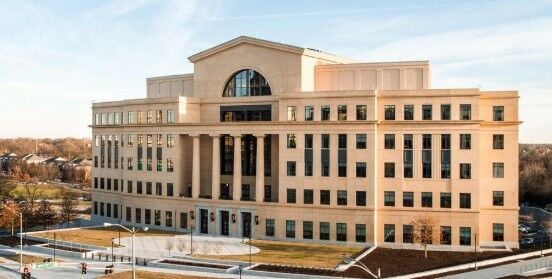
Nathan Deal Judicial Center in Atlanta
ATLANTA - In a case resembling the opening of the George Clooney-led film Michael Clayton, a lawyer and member of the Georgia legislature may be in legal trouble for going to meet a man who fatally struck a bicyclist with his car instead of immediately calling 911.
Attorney Othel “Trey” Kelley III may be liable for wrongful-death damages under the “voluntary undertaking doctrine,” which applies to people who negligently help out in a situation even though they had no duty to intervene, the Georgia Court of Appeals ruled Wednesday. The appellate court reversed a lower court’s dismissal of the case against Kelley based on its determination Georgia’s wrongful-death statute applies only to the driver of a vehicle.
In September 2019, Ralph Dover attended a county fair, then while driving home his car struck Eric Keais on his bicycle from behind. Keais was thrown onto the hood and shattered the windshield. Instead of stopping or calling 911, Dover, much like a client in Michael Clayton who calls his lawyers instead of the police after a hit-and-run, phoned Kelley, a lawyer and member of the Georgia House of Representatives, and asked Kelley to meet him at a gas station.
The two traveled to the scene of the accident and saw a bicycle by the side of the road, but again didn’t call 911, instead calling a senior partner at Kelley’s law firm. Kelley also called James Newsome, the Cedartown Chief of Police. Kelley told him Dover hit “something” with his car and saw a bicycle in the ditch.
Cedartown’s standard operating procedures require officers to notify dispatch when alerted about a seriously injured person, but Newson instead called another officer and told him to meet Kelley at the scene of the accident. They discovered Eric in a ditch, dying of his injuries.
Dover was convicted of hit-and-run and sentenced to five years. Two years and two days after the accident, Manfred Keias sued Dover, Kelley and Newsome along with the City of Cedartown.
A trial court dismissed Manfred’s case, ruling among other things that Kelley had no duty to render aid. The appeals court accepted an interlocutory appeal and reversed the dismissal of claims against Kelley.
While Georgia’s wrongful-death statute appears to apply only to the driver of a vehicle, the appeals court ruled, Kelley could still be liable under the “voluntary undertaking doctrine.” That doctrine, as explained in the Restatement (Second) of Torts, extends liability to people who voluntarily help someone else and cause harm.
Keais claims Kelley “assumed control over the incident” and negligently handled it by delaying reporting to authorities or rendering aid, though criminal charges against Kelley were dismissed.
“Kelley was not required to have a personal or financial interest to be liable on his wrongful death claim, and Kelley voluntarily assumed Dover’s duties to render aid and report the collision,” the appeals court ruled.
The court upheld the dismissal of claims against Newsome for technical reasons involving how the case was filed. The two-year statute of limitations didn’t apply to any of the claims because they were filed during a window the Georgia Supreme Court opened due to the COVID pandemic.