
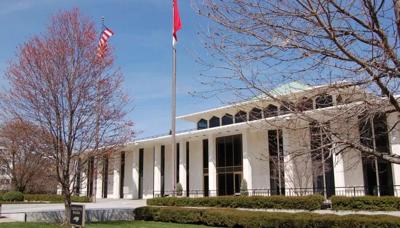



The North Carolina Legislative Building in Raleigh, N.C.
RALEIGH, N.C. – North Carolina Gov. Josh Stein has signed into law a landmark bill that forbids investors from using the state’s court system to make money on lawsuits.
Democrats and Republicans were aligned on House Bill 315, which prohibits the practice of third-party litigation investment – funders who front money to plaintiffs and their lawyers to pursue cases in exchange for a percentage of what is recovered.
Though other states have passed measures that require plaintiffs to disclose if someone is funding their case, North Carolina is the first to pass an outright ban. The bill nearly passed unanimously in both houses of the legislature, with only Sen. Jonah Garson voting against it.
That means 66 of the 67 Democrats in the legislature were on board, as well as the Democrat governor Stein, who signed the bill on Monday.
“Today, North Carolina took a historic step to protect the integrity of its civil justice system and preserve the legal certainty that supports economic growth and investment across our state,” said Gary Salamido, president and CEO of the NC Chamber.
“By becoming the first state in the nation to ban third-party litigation investment, North Carolina is further strengthening the competitive legal and business climate that has made our state one of the nation’s top places to live, work, and do business.”
The practice has increasingly drawn attention, with some Republicans in Congress worrying that foreign money is controlling American cases that can weaken the country’s economy. They held a hearing last year to discuss whether Chinese companies have an interest in cases around the U.S. that blame Exxon, Chevron and others for climate change.
Third-party litigation finance has exploded into a multibillion-dollar business, with advocates claiming it gives individuals in dire financial straits the opportunity to seek justice in court for their injuries.
But critics point out the chunk often taken out of the settlement or verdict by the funder usually far exceeds the limits of state usury laws. Previous Legal Newsline reporting noted an illegal immigrant who won a $3.75 million settlement only took home about 13% after the lender grabbed $1.8 million.
“For too long, these outside groups have walked away with massive profits while families and local businesses have paid the price,” said Stephen Waguespack, president of the U.S. Chamber Institute for Legal Reform.
“We are grateful to North Carolina lawmakers for drawing a line against shadowy investors who bankroll litigation for profit, and the North Carolina Chamber for championing this critical reform. The state has joined the growing nationwide momentum calling for transparency in our civil justice system, and this effort to prohibit litigation funding raises the bar even higher.”
Federal legislation targeting TPLF has had trouble moving forward as, unlike in North Carolina, Democrats in Congress and state legislatures have resisted reforming the practice. The U.S. International Trade Commission has proposed its own rule to do so, though it simply requires funders to show themselves during patent-dispute proceedings there.