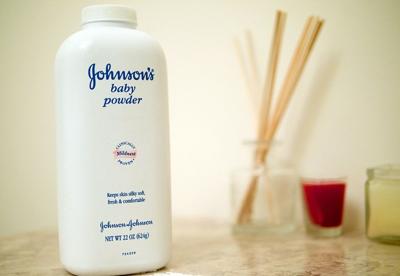


Johnson & Johnson Baby Powder no longer contains talc powder.
Johnson & Johnson’s proposed $5.5 billion settlement of claims talcum powder causes ovarian cancer is more than $3 billion less than the company offered previously and reflects several key courtroom losses and a conflict-of-interest scandal that could have cost the lawyers hundreds of millions in fees.
Don’t cry for the lawyers, though. They still will likely split more than $2 billion in fees if they can convince most of their clients to accept J&J’s deal, which would pay plaintiffs about $70,000 apiece before their lawyers’ 40% cut.
It’s a decent return on an investment in litigation which, from the beginning, had little support in science or common sense. Plaintiff experts claimed cosmetic talc somehow migrated up women’s reproductive tracts and reacted in some unknown way with ovarian tissue to cause cancer.
Their theories flew in the face of the fact that the reproductive tract prevents exactly this sort of migration of anything other than sperm, which have a tail and can swim. Otherwise, as a J&J expert testified in a recent trial, we would see an epidemic of sterility in women. Another fact undermining the talc-causes-cancer theory: The rate of new ovarian cancer cases has declined steadily over the last 20 years, despite ubiquitous use of cosmetic talc.
None of that stopped the plaintiff lawyers, who tried multiple approaches to convince jurors talc is deadly, from claiming it was contaminated with asbestos to using internal documents to portraying J&J as shaming minority women into using a product that would kill them. The result was several blockbuster verdicts, including the $4.7 billion attorney Mark Lanier won in a Missouri trial involving 22 plaintiffs, living and dead, in 2018. (It was reduced to $2.1 billion on appeal.)
Those verdicts prompted J&J to try to settle talc litigation through a specially formed subsidiary it put into bankruptcy, a maneuver known as the “Texas Two-Step.” Judges repeatedly rejected the approach, however, ruling J&J had plenty of assets to cover judgments and couldn’t justify using bankruptcy court to force a settlement.
Financing all this litigation cost money, of course, and there are signs hedge funds and other outside entities provided much of the money for the blizzard of TV ads and other marketing the lawyers used to recruit more than 75,000 ovarian cancer clients.
Johnson & Johnson briefly tried to convince the federal judge overseeing multidistrict litigation in New Jersey to force plaintiff lawyers to reveal their sources of finance, but gave up after the judge refused to go along. A lawsuit in federal court in Mississippi illustrates how central it may be to financing mass-tort litigation like talc, however.
The Smith Law Firm accuses lenders including Ellington Financial and Stifel of reneging on a commitment to lend it $30 million it needed to buy thousands of talc suits from another law firm, in what it calls a “loan to own” scheme to seize control of its talc litigation.
Ridgeland, Miss.-based Smith claims to have filed the first talc lawsuit in South Dakota in 2009 and won the first trial victory in 2013, after which it formed a joint venture with Beasley Allen and a third law firm to pursue more talc cases. They went on to screen more than 70,000 cases and file lawsuits in 11,500 of them, Smith says.
It was an expensive business, Smith says, with the cost of hiring lawyers, expert witnesses, litigation management technology “and nationwide travel expenses.” To cover costs, Smith borrowed “tens of millions of dollars” from several lenders including Ellington, a publicly traded lender in Greenwich, Conn.; and Stifel in St. Louis. The loans were secured by Smith’s fees from talc litigation.
After the litigation was delayed during J&J’s repeated attempts to settle it through, Smith says it was forced to borrow more money from ICG Investments in New York. Now Smith accuses its lenders of fraudulently inducing it to take out loans they knew it couldn’t repay.
“The defendants’ motivation was pure greed, realizing the billions of dollars at stake in the talc litigation and in the SLF case portfolio,” Smith says in its lawsuit. The defendants have not yet filed a response.
In the end, J&J “won” by forcing a settlement on relatively favorable terms that it hopes will end talc litigation forever. (It has worked out a similar agreement with the leading plaintiff firms with mesothelioma cases, which are based on claims talc contained asbestos, which J&J denies.) It did so by taking the risk of damaging jury verdicts at trial while attacking the foundation of the litigation, which is expert witnesses who are willing to testify talc causes cancer.
The combination may have worn down plaintiff lawyers who rely on contingency fees for income and thus can’t afford to wait years for a payoff. The final catalyst may have been revelations that Beasley Allen had worked with a former J&J attorney to try to negotiate settlements, which multiple judges found to be a violation of legal ethics rules. When Beasley Allen told a judge in Florida that other leading plaintiff lawyers had also worked with the former J&J lawyer, endangering their fee arrangements, the plaintiff lawyers came to the table soon thereafter.
Plus, it was a real possibility that in federal court, where most lawsuits were filed, testimony from plaintiff experts was about to be found unreliable. Lawyers had withdrawn two researchers from the first federal trial, and a magistrate judge expressed concern that anyone could sufficiently tie talc to ovarian cancer.
Now lawyers must convince 95% of their clients to accept J&J’s offer. Having recruited tens of thousands of women through mass marketing, it will be a challenge just getting the paperwork in front of them to sign. Then there’s the question of whether other lawyers, seeing the billions of dollars in fees being made in this settlement, will find new experts and new cases. Since annual diagnoses of ovarian cancer run about 21,000 a year in the U.S., and virtually every adult woman can plausibly claim exposure to cosmetic talc, the litigation could continue for decades.
Except for one more trick plaintiff lawyers have to protect their talc payday. If past mass settlements are any example, they will likely encourage judges to enter “Lone Pine” orders that require future plaintiffs to supply detailed evidence to support their claim, including medical reports and expert opinions that talc caused their disease. The cost of complying with those orders, which can be thousands of dollars per case, has in the past discouraged follow-on litigation. J&J and the lawyers on the other side of the table must be hoping that pattern continues.