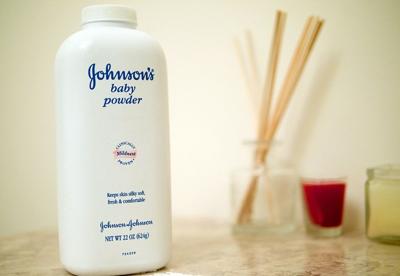


Johnson & Johnson Baby Powder no longer contains talc powder.
TRENTON, N.J. – Plaintiff lawyers pushing the idea that talc in products like Baby Powder causes ovarian cancer will have to show they have the science to back it up.
U.S. magistrate judge Rukhsanah Singh on Wednesday issued an order directing attorneys leading nearly 70,000 lawsuits against Johnson & Johnson and others to show why they shouldn’t be dismissed – the result of lawyers withdrawing causation experts from six plaintiffs picked for the first federal trials.
Ruing the decade the case has been active as a multidistrict litigation (MDL) proceeding, Singh said his order is an opportunity to reassess the cases, which could have been resolved had J&J’s plan to establish a $9 billion settlement fund through bankruptcy court been accepted.
But that plan was defeated by the firm Beasley Allen, which wanted more but now finds itself disqualified from the MDL and various state courts for collaborating with a former J&J lawyer.
“The visceral reaction to J&J’s Motion may be that it seeks instant dismissal of all cases in this MDL. The undersigned views it differently,” Singh wrote.
“The Motion presents an opportunity for the parties and the Court to review the status of the record to, perhaps, re-evaluate a better way to manage an aged and complex mass tort MDL, such as this one.”
Whether plaintiffs could get their experts past motions to exclude their testimony as scientifically unreliable was always going to be key. Without testimony that talc contained asbestos and asbestos can cause ovarian cancer, their cases would be doomed. But should those experts be allowed, it would trigger the next step of the MDL – bellwether trials whose results would impact the value of a future mass settlement.
A special master has already made her recommendations to U.S. District Judge Michael Shipp, telling him that one key expert’s “methodology lacks nearly all of the traditional indicia of reliability.”
Drs. Judith Wolf and Daniel L. Clarke-Pearson were originally picked to testify for the six bellwether plaintiffs, but after a May evidentiary hearing they were removed by plaintiff lawyers from their roles, though “without prejudice,” which means they could be reinstated.
J&J argues that their testimony during that May hearing showed that no MDL plaintiff could sufficiently allege talc caused ovarian cancer, considering the two doctors could not distinguish talc from any other factors as the cause for the disease.
The Plaintiffs’ Steering Committee, now led by Ashcraft & Gerel after the disqualification of Beasley Allen, says the experts just need to show talc was a “substantial contributing factor.” Putting forth in court a differential diagnosis, in which a doctor lists all possible factors then rules some out to arrive at a causation conclusion, is a two-step process under New Jersey law. The state Supreme Court recently imposed gatekeeping standards for judges in both steps – the “rule in” of plausible causes and the elimination of them.
Dr. Wolf did not perform the second step, and Dr. Clarke-Pearson “could not justify his determinations as to whether to rule out a particular risk factor,” Singh wrote.
“This,” she added, “then begs the critical question of whether any expert would be capable of reliably evaluating the risk factors for a woman’s specific ovarian cancer to determine which risk factor(s) ‘substantially contributed’ to the disease and which risk factor(s) did not.”
Of course, this could have all been avoided had J&J’s $9 billion settlement plan been accepted. Beasley Allen pointed to flaws in the vote by clients on whether to take that money, and a Houston bankruptcy judge agreed in rejecting the plan. Later, a client would claim Beasley Allen tried to trick her into signing a retroactive power of attorney giving the firm the power to vote against the settlement.
Beasley Allen voted against the bankruptcy plan on behalf of some 11,500 clients, claiming they were better off negotiating a settlement or suing in court. The client says she stood to gain money under the bankruptcy plan but nothing if she sued in court, since plaintiff experts back claims Baby Powder can cause ovarian cancer, but not uterine cancer.
Rather than appeal the rejection of the settlement, J&J vowed to fight the claims aggressively. One step was getting Beasley Allen disqualified after it found lawyer Andy Birchfield had worked with a former J&J lawyer, James Conlan, on a mass settlement that included Conlan creating a company that would buy the talc liabilities.
New Jersey’s Appellate Division booted the firm from 3,600 cases pending in state court there, and Singh did the same from the federal MDL. J&J has also sued plaintiff experts it said published research that blamed talc for cancer while hiding other factors.
State court verdicts are inconsistent. For example, there have been two bellwether trials in Los Angeles state court, with the first a $40 million verdict against the company and the second a verdict in favor of it.