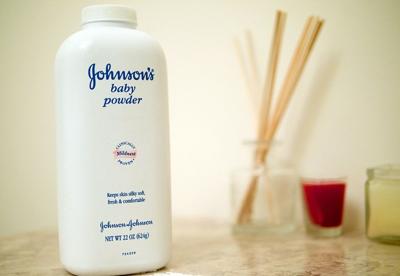


Johnson & Johnson Baby Powder no longer contains talc powder.
Judges in Miami and Chicago have revoked permission that allowed the firm Beasley Allen to pursue talc lawsuits because it collaborated with a lawyer who once billed Johnson & Johnson, his former client and the main target in those cases, more than $2 million in fees.
The recent orders are similar to decisions in New Jersey and Pennsylvania state courts, plus the massive consolidation of cases being tried in federal court. There, Beasley Allen was found to have strategized too closely with the former J&J lawyer on a plan to craft a mass settlement of claims alleging talc in products like Baby Powder contained asbestos and caused ovarian and other cancers in women.
The Chicago ruling affects one case that is scheduled for trial in September. Beasley Allen had asked to appear in only that lawsuit out of the more than 70 that are pending in Cook County Circuit Court, and the plaintiff will need to find new representation.
“(T)he Court is mindful that a litigant’s choice of counsel is given substantial deference and that disqualification of counsel is a drastic measure because it deprives a litigant of his choice of counsel,” Judge Patrick Heneghan wrote.
“Moreover, this Court is loath to deprive a party of his choice of counsel by disqualifying counsel in a proceeding. But where, as here, there has been a substantial breach and violation of the Code of Professional Conduct, the Court is left with little choice but to address the violation and grant the requested relief.”
In Miami, Beasley Allen represented Bob Sugarman, who blamed J&J for the death of his life. After trials were stayed while J&J tried to use the federal bankruptcy system to establish a settlement fund, Sugarman’s case went to trial in 2024. It resulted in a mistrial, and a second trial scheduled for March never happened.
Three weeks before its start, J&J moved to revoke the admissions of Beasley Allen’s attorneys, including Andy Birchfield. On April 1, Judge William Thomas granted that request, though his order was vacated when the firm agreed to voluntarily step down, presumably giving up a fight in appellate court.
Beasley Allen led the fight against Johnson & Johnson’s plan to settle claims for $9 billion in bankruptcy court. The firm was successful and forced J&J back to New Jersey federal court, where Beasley Allen hoped for jackpot verdicts that would boost its clients’ position for larger settlements than the previous plan would have provided.
But along the way, it and Birchfield worked with a former J&J lawyer on a mass settlement plan – an arrangement J&J called “shocking and deeply troubling.”
New Jersey’s Appellate Division found Beasley Allen violated professionalism rules when it consulted with James Conlan, who had represented Johnson & Johnson in court, on a mass settlement of talc claims. It disqualified the firm from more than 3,600 lawsuits.
The ruling escalated the disqualification push in the tens of thousands of cases in federal court, where a disgruntled former client of the firm, Aletha Wilson, said Beasley Allen tried to trick her into signing a retroactive power of attorney giving the firm the power to vote against the $9 billion bankruptcy plan.
Beasley Allen voted against the bankruptcy plan on behalf of some 11,500 clients, claiming they were better off negotiating a settlement or suing in court. Wilson says she stood to gain money under the bankruptcy plan but nothing if she sued in court, since plaintiff experts back claims Baby Powder can cause ovarian cancer, but not uterine cancer.
Conlan was a partner at Faegre Drinker Biddle & Reath who defended J&J in talc litigation. He left the firm to start Legacy Liability Solutions, where he attempted to buy the company’s talc liabilities and opposed the company’s ultimately unsuccessful plan to settle all cases in bankruptcy court.
He worked with Beasley Allen’s Birchfield to craft a settlement outside of the bankruptcy process, which was J&J’s preferred avenue. Conlan and the firm wanted the talc liabilities bundled to an offshoot company that would be sold to him.
Conlan even wrote an op-ed in Bloomberg touting that strategy. Court records show 8,000 Beasley Allen clients who, through Beasley Allen, voted against J&J’s bankruptcy settlement but never actually told the firm what their position on that plan was.
“There can be no question that Mr. Birchfield and Mr. Conlan, an ‘ex-lawyer’ with significant experience in the complexities of mass tort litigation, knew or should have known of their professional obligations, and that their collaboration (i) jeopardized Mr. Conlan's duty of confidentiality to J&J; and (ii) potentially allowed Mr. Birchfield access to that information,” Philadelphia judge Joshua Roberts wrote this month.
“Mr. Birchfield and Beasley Allen ratified Mr. Conlan's conduct by using that information in mediations and/or to negotiate directly with J&J.”
Beasley Allen was successful in fighting a disqualification push in Los Angeles and has defended its conduct, writing in the federal court that it never employed or controlled Conlan. Affirming its disqualification would chill participation in mediation efforts, the firm said, and discourage “creative approaches to dispute resolution.”
The federal talc MDL is one of the largest in the country and was organized in 2016. There are more than 67,000 claims, and the promise of a large payout when it is resolved led to attorneys spending on advertising and some firms taking money from litigation funders who were promised a share of the recovery.
Still pending are motions to disqualify experts who testify there is asbestos in talc, the talc made its way into plaintiffs’ bodies and it caused their cancers. J&J calls those claims “junk science,” and a ruling preventing those experts from telling it to jurors could doom the cases.
J&J has won plenty of defense verdicts in trials that hinge on expert testimony regarding whether there is asbestos in the talcum powder, but when it loses, jurors aren’t shy about delivering massive verdicts. In December, one woman won $1.5 billion in Baltimore, and two women in Los Angeles won $40 million.