
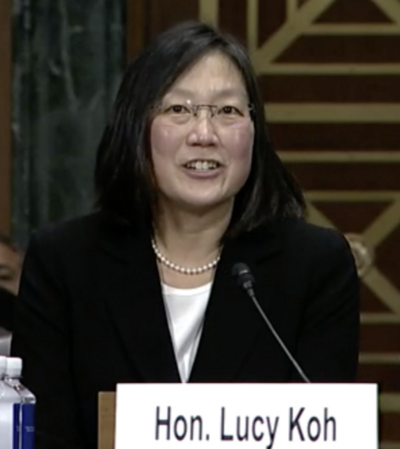


Senate Judiciary Committee, Public domain, via Wikimedia Commons
LOS ANGELES — Just three years after ruling federal law blocks California governments from using building codes to ban natural gas appliances, a federal appeals court has ruled California agencies may be able to ban the appliances after all, only by using emissions standards instead.
On July 2, a divided three-judge panel of the U.S. Ninth Circuit Court of Appeals sided with the South Coast Air Quality Management District, an L.A.-area pollution control agency which is seeking to impose new emissions rules that would prohibit all emissions of nitrous oxide (NOx) from water heaters and other home appliances in the name of fighting smog.
The 2-1 ruling rejected a challenge to those rules launched by a collection of appliance makers and groups representing a range of industries, including home builders, restaurant owners, hotel operators and others.
In their challenge, the industry groups argued the local emissions regulations should be blocked by a federal law that prohibits governments from banning natural gas appliances.
In the ruling, the panel's majority, including judges appointed by former Presidents Barack Obama and Joe Biden, acknowledged the federal Energy Policy and Conservation Act (EPCA) doesn't allow local governments to ban natural gas appliances outright.
But the judges said that prohibition shouldn't be read to block environmental regulators from setting emissions standards they believe are needed to comply with air quality standards under the federal Clean Air Act, even if those emissions standards ultimately result in a de facto ban on natural gas appliances.
The majority decision was authored by Ninth Circuit Judge Lucy Koh. Judge Ana de Alba concurred.
"Pursuant to the CAA (Clean Air Act), the District and numerous other states and local regulators have long regulated appliance emissions, and the EPA (U.S. Environmental Protection Agency) has routinely approved such regulations," Koh wrote in the majority opinion. "Nothing in the text, structure, or history of EPCA suggests that Congress intended to interfere with states’ ability to use these well-established methods to achieve compliance with federal air quality standards under the CAA."
Ninth Circuit Judge Kenneth Lee dissented from the decision.
In his dissenting opinion, Lee said it should be obvious that allowing air regulators to refuse to allow any emissions from natural gas appliances amounts to a ban, which is outlawed by the EPCA.
"The whole point of the rule is to prohibit NOx emissions from water heaters and other approved appliances," Lee wrote. "Under current technology, the zero NOx rule means no natural gas appliances. Be it banning gas piping into the appliance ... or necessary emissions from the appliance as here, the situation is the same — state law 'rendering the gas appliances useless.'"
Further, Lee said the new Ninth Circuit ruling directly contradicts an earlier Ninth Circuit ruling.
That 2023 decision had knocked down the city of Berkeley's attempt to use building codes to ban the installation of natural gas piping into new residential construction, also in the name of protecting air quality and combatting so-called climate change.
Despite the Berkeley ruling, environmental activists and their allies in state and local governments in Democrat-dominated states like California have continued their efforts to use new laws and regulations to achieve their ultimate goal of prohibiting homeowners and business owners alike from installing and using natural gas-powered water heaters, furnaces, stoves, ovens and other appliances.
In 2022, the South Coast Air Quality Management District advanced such an initiative for the L.A. region.
Under California state law, the SCAQMD sets local air quality and pollution standards for Southern California's most populated region, including all of Orange County and the urbanized portions of Los Angeles, Riverside and San Bernardino counties.
The district's directors are appointed by Gov. Gavin Newsom, as well as California's state legislative leaders, the elected leaders of the covered counties, the mayor of L.A., and other cities within the district.
The SCAQMD has set local emissions standards for the region since the 1970s, particularly aimed at combatting the region's notorious smog, which is worsened by emissions of NOx.
After years of tightening those standards, the district in 2022 set rules setting the allowed emissions of NOx at zero for "all stationary sources," including residential water heaters and other appliances.
Other local air regulators in California have followed suit.
The L.A.-area regulations, however, drew the primary court challenge. That lawsuit was led by appliance maker Rinnai America and industry groups, including the National Association of Home Builders; the California Restaurant Association and the Restaurant Law Center, the legal arm of the National Restaurant Association; the California Lodging and Hotel Association ; and the California Apartment Association, among others.
The lawsuit, filed first in Los Angeles federal court, sought a court order declaring the new L.A.-area NOx zero emissions rules should be prohibited by the federal EPCA law, which prohibits governments from banning the use of appliances based on the kinds of energy they use.
The plaintiffs pointed to the decision in the Berkeley case to argue the Ninth Circuit should similarly snuff out the L.A. emissions rules.
But in the majority opinion, the Obama- and Biden-appointed judges said the Berkeley ruling shouldn't apply. They said that decision should only be read narrowly, to block the use of building codes to prevent the installation of natural gas piping into new homes.
They said neither the the Berkeley decision nor the EPCA be used to stop government regulators from using emissions standards to effectively ban natural gas appliances, because otherwise the judges said those regulators would be unable to comply with the requirements of the Clean Air Act.
"... Unlike Berkeley’s ordinance, which banned the natural gas infrastructure that supplied gas into appliances, the Rule regulates the output of appliances by limiting the harmful NOx pollutants they emit," the majority said.
And since Congress didn't clearly state that EPCA should preempt other federal laws, the majority said it believed the Clean Air Act should prevail in the apparent conflict between the two laws brought about by the imposition of new rules setting zero emission NOx standards that manufacturers agree are impossible for natural gas appliances to achieve and which would effectively end the use of such appliances in the L.A. area and anywhere else such zero emission standards are imposed.
Lee, however, said it is the majority misreading the laws. He said nothing in the Clean Air Act requires states and local governments to set such draconian standards. Rather, Lee said, the Clean Air Act requires state and local air quality regulators to develop standards that "comply with other federal laws — like EPCA."
"There are many potential ways the AQMD and California can try to improve air quality in the South Coast region— without violating federal law through the imposition of a zero NOx rule," Lee wrote. "Put another way, there is no inherent tension between the CAA and EPCA. The only tension here is between federal law and state law. And when faced with this conflict, federal law preempts state law under the EPCA."
The companies and groups challenging the zero NOx rules have not yet publicly responded directly to the Ninth Circuit's ruling. Nor have they indicated how they may further appeal.
However, in a blog post on its website, the National Association of Home Builders called the case "a strong candidate for U.S. Supreme Court review,” particularly since a different federal appeals court had upheld another de facto natural gas appliance ban in New York using a different legal theory to similarly cabin the reach of the EPCA.
"Builders operating in multiple states may continue to face varying rules, complicating compliance and limiting appliance choices for home buyers," the NAHB wrote. "NAHB has long opposed state and local bans on gas-powered appliances because they reduce consumer choice and can increase construction costs."
The NAHB further noted it is supporting the passage of federal legislation, known as the Energy Choice Act, to explicitly forbid any effort to use state laws or regulations to ban the use of natural gas in homes.