
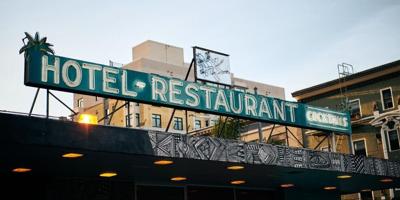


Phoenix Hotel
SAN FRANCISCO - In coming weeks, a federal judge will decide if a group can use a lawsuit to force the city of San Francisco to take stronger actions to eliminate fentanyl use in the city's beleaguered Tenderloin neighborhood.
But for now, that group of plaintiffs against the city will no longer include some of its most prominent members, the owners of San Francisco's iconic Phoenix Hotel.
Since last year, the Phoenix Hotel has been on what ownership has labeled its "farewell tour."
Since the late 1980s, the Phoenix cemented a reputation as a favorite of touring rock 'n' roll artists and others looking for a party or offbeat getaway or a quirky wedding destination in the city's notoriously gritty Tenderloin. The hotel arguably had its heyday in the 1990s, playing host to some of the biggest artists in rock and grunge at the time.
Published reports, however, have indicated the hotel has suffered more recently, and particularly since 2020, ultimately leading to the owners' decision to sell the hotel in 2024 to the San Francisco Baking Institute and French pastry chef Michael Suas for $9.1 million.
In June 2025, Phoenix and its longtime ownership face, hotelier Chip Conley, announced the hotel would close its doors at the end of 2025, after months of parties and other events to formally bid goodbye, in the Phoenix's own way. Most recently, on Jan. 30, the Phoenix wrote on its Facebook page that it was still accepting reservations "for the time being." The hotel has not yet publicly indicated a final closing date.
While some reports have pinned much of the blame for the hotel's closure on the hotel's inability to recover from the Covid pandemic, the hotel owners themselves in court filings have asserted a different cause for their prolonged troubles - namely, the city's lax response to crime, public drug use, homelessness and other societal ills that engulfed the city, but the Tenderloin, particularly, as part of the push by left-wing activists and progressive city officials for less strict policies and laws.
In March 2024, the Phoenix was one of the most publicly prominent plaintiffs that signed onto a lawsuit seeking a court requiring the city to address rampant crime and sanitation issues in the Tenderloin and to end what they asserted was an unwritten policy allegedly treating the Tenderloin as an escape valve, of sorts, for the rest of the city. Essentially, they accused the city of allowing open air drug dealing, rampant homelessness and other dangerous behavior to continue with little interruption in the Tenderloin to prevent their spread to other parts of San Francisco.
In the lawsuit, the Phoenix specifically asserted the dangerous and unsanitary conditions outside its doors contributed to a loss of two-thirds of its income since 2020. In the filing, they said patrons repeatedly praised their actual hotel property, but declined to return to stay at the hotel so long as the sidewalks and streets in the surrounding neighborhood remained dangerous and unsanitary.
The lawsuit was filed in San Francisco federal court by attorneys with the firms of Walkup Melodia Kelley & Schoenberger, of San Francisco, and Kline & Specter, of Philadelphia.
To this point, the city has failed to beat the lawsuit, as a federal judge ruled the plaintiffs had done enough to back their claims concerning the city government's role in causing the current conditions in the Tenderloin.
Most recently, the plaintiffs - then, including the Phoenix - have tacked on a new motion, seeking a court order specifically barring the city government from enabling the distribution and use of fentanyl in the area.
The new motion, filed in August 2025, accused the city of "directly or indirectly supplying fentanyl or methamphetamine-related drug paraphernalia to any individuals, groups, organizations, or entities within the Tenderloin neighborhood."
The motion alleged San Francisco’s “conduct attracts hardcore fentanyl and methamphetamine drug addicts” so the government and vendors can provide what it calls housing first shelter options and harm reduction services.
“Foreseeably, drug addicts swarmed the Tenderloin in response to the city’s offers of drug paraphernalia, drug consumption sites and shelter spaces that impose little to no rules with respect to behavior,” the Phoenix and other plaintiffs said in their motion. “Equally foreseeable, violent, gang-affiliated drug dealers also converged on the neighborhood. As a result of the city’s recent change to its policies with its contractors distributing drug paraphernalia, the city has designated approved sites for its contractors to continue to furnish drug paraphernalia to the addicts who now habituate the Tenderloin’s sidewalks, or otherwise frequent the neighborhood. Tenderloin residents and businesses, including plaintiffs, have borne the brunt of this influx of addicts and dealers.”
The city has asked a federal judge to reject that motion, arguing in a December motion that the plaintiffs can't legally force the city to change its policies; they can't prove the city engaged in the behavior they claim; and the plaintiffs "cannot establish that the City’s involvement in the lawful distribution of safer smoking supplies led to any alleged nuisance conditions impacting Plaintiffs."
The judge has not yet ruled on the motion.
However, as they await the decision, the Phoenix has indicated its impending closure will draw its involvement in the litigation to a close.
In a Jan. 30 court filing in the case, lawyers for the Phoenix and the city indicated they had reached a deal to allow the Phoenix to exit the legal action by dismissing their claims against the city in exchange for a pledge from the city to not later demand the Phoenix pay any of its defense costs, should the city prevail.
It is not yet known how the Phoenix's exit from the case will affect the ability of plaintiffs to continue the action.