
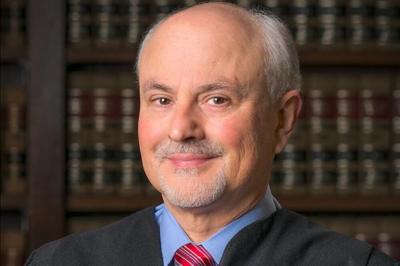



U.S. District Judge James Donato
SAN FRANCISCO — A group of private trial lawyers will need to do more work to justify their attempt to claim $85 million in fees out of a $630 million pot paid by Google to settle a lawsuit lodged by and led by state attorneys general from throughout the country, accusing the company of anticompetitive conduct within its Google Play Store.
In the ruling, U.S. District Judge James Donato appeared highly skeptical of the fee request presented by attorneys from the firms of Bartlit Beck LLP, of Denver, and Kaplan Fox & Kilsheimer, of New York.
The judge indicated he believed the private attorneys made too much of the parts they played in helping the states secure the landmark deal.
“The lawyers asking for fees here were far from the only attorneys who worked to obtain the $630 million common fund settlement,“ Donato wrote. “Every state and equivalent entity in the Union had attorneys who participated in the litigation leading to the settlement.
“It may be that some lawyers put in more work than others, but even so, ‘the entire fund was not brought about solely through the efforts of ’ consumer plaintiffs’ counsel, and the individual consumer plaintiffs and their attorneys may ‘only be partly credited with conferring the benefit achieved.’”
The ruling landed Oct. 15, more than 10 months since the private attorneys filed their petition.
That petition, in turn, had come nearly two years after a coalition of U.S. state attorneys general had announced the $700 million settlement, ending the state antitrust actions against Google.
Under the deal, Google would pay $630 million in restitution, minus costs and fees, to consumers who made purchases on the Google Play Store between August 2016 and September 2023 and were harmed by Google’s alleged anticompetitive practices.
Google will pay the states an additional $70 million for their sovereign claims.
The AGs sued Google in 2021 alleging it unlawfully monopolized the markets for Android app distribution and in-app payment processing.
Specifically, the states claimed Google signed anticompetitive contracts to prevent other app stores from being preloaded on Android devices, bought off key app developers who might have launched rival app stores, and created technological barriers to deter consumers from directly downloading apps to their devices.
However, the state legal actions were just part of a larger campaign waged against the tech giant based on similar claims.
The fight began in 2020, when the private lawyers, among others, sued Google on behalf of consumers.
Other lawsuits were also filed by major app developers Epic Games and Match.
Match eventually settled, while Epic took their antitrust claims to trial and secured a verdict in their favor.
The consumer plaintiffs, however, have far more mixed results. In his new ruling, Donato specifically noted they failed to win approval to advance their claims in a class action that could have leveraged a potentially lucrative settlement.
Despite their own lackluster results, the consumer plaintiff lawyers still petitioned for an order awarding them 13.5% of the $630 million set aside for consumers under the states’ settlement.
In that petition, the class action lawyers asserted their work prosecuting their case on behalf of consumers was key to enabling the states’ settlement through “close collaboration“ and a “landmark public-private partnership.“
They further claimed credit for enabling Epic’s victory.
For their part, the state attorneys general who led the case, from California, New York, North Carolina, Utah and Tennessee, credited the private lawyers for aiding their case and did not object to the petition. They did not, however, express an opinion on any specific amount the court may allow the private lawyers to claim.
Donato, however, questioned just how reasonable the consumer plaintiff attorneys’ request was, in light of the results.
The judge said he believed “the heavy lifting to establish Google’s liability for anticompetitive conduct, and fashion a remedy for it, was done by the attorneys for Epic in its separate case.“
“The Court appreciates the cooperation of the different plaintiff groups in this multidistrict litigation and the extent to which counsel’s work may have helped to create benefits to the public,” Donato wrote. “But a ‘jealous regard’ for the interests of the consumers commands the question of whether legal work that directly benefitted Epic should be paid for by Epic rather than from the (states settlement) fund.”
Donato further cast doubt over the records the lawyers submitted to support their petition.
“The billing records filed with the fees request are utterly lacking in information demonstrating what work was done and for what purpose,“ Donato wrote.
“... Attorneys’ fees cannot be fairly evaluated or awarded on this paltry record.“
However, Donato will allow the private lawyers “another chance to fix the shortfalls in an amended request for fees.“
The judge urged the lawyers to “think carefully” about their request and to consider reducing it.
Donato gave them until Nov. 13 to file what he said will be their final chance to seek a cut of the $630 million from the states’ settlement.
