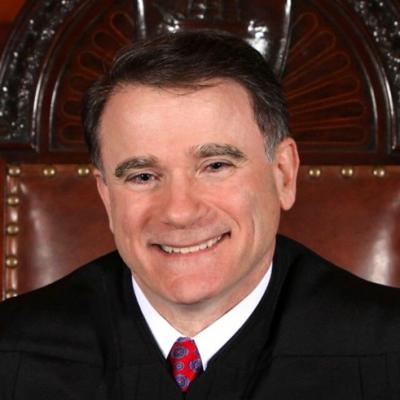



Pennsylvania Superior Court Judge Victor Stabile
HARRISBURG — A state appeals panel has ruled a woman who settled a wrongful death lawsuit for one of her children can shield the funds from that settlement from being reduced to pay child support obligations to a man who holds primary custody and care duties for another child they birthed together.
In May 2025, an Erie County Juvenile Court judge ordered Jennifer Zeppieri to pay monthly child support to Jeffrey Birkmire, who has primary custody of a child the court identifies as H.B.
Prior to that ruling, Zeppieri did not owe child support. But Birkmire had sought a portion of a $1.69 million settlement Zeppieri secured in a lawsuit after the December 2022 death of her oldest child, A.H., who died in a car crash while she was en route to her school bus stop.
According to court records, Zeppieri netted a bit more than $1 million from the settlement. After spending $300,000 on a house and car, she put the remainder into two trust accounts from which she draws $1,940 monthly. Birkmire filed his motion in October 2024, at which time the judge determined the trust payments were part of Zeppieri’s monthly income. Considering several factors, the judge determined she owed $2,305 per month effective October 2024 until H.B. turns 18 in June 2027.
Zeppieri challenged that ruling before the Pennsylvania Superior Court. Judge Victor Stabile wrote the panel’s opinion, filed Oct. 1; Judges Timika Lane and John Bender concurred.
On appeal, she questioned the determination of her settlement proceeds as income, as well as suggested an abuse of discretion in annualizing the principal.
Regarding the settlement money, Zeppieri pointed to a 2002 Pennsylvania Supreme Court opinion, Humphreys v. DeRoss, to frame her proceeds as an inheritance from her late child’s estate. Birkmire didn’t challenge that legal principle, but instead argued Zeppieri failed to show the proceeds passed through an estate because her attorneys directly gave her the money less their fees.
Stabile noted Zeppieri styled the underlying claims “as a wrongful death and survival action,” the latter part of which technically had A.H.’s estate as the plaintiff and Zeppieri as the administrator. Therefore, “the purpose of the survival suit was to compensate A.H. for her own damages.”
The panel further noted the court order approving the settlement specifically stated “100% of the gross settlement to the estate will be deemed survival damages.” It also said the legal record included an inheritance tax return showing A.H.’s estate had over $1 million, the amount of the settlement less funeral expenses. That return describes the estate’s value as “Proceeds of Survivor action” and cites taxable distributions, to Zeppieri, as the “entire residuary estate.”
“Thus, in Humphreys, as in the instant matter, the support defendant received a cash distribution from an estate. That (Zeppieri) received a disbursement check from her attorneys does not change these facts and is not surprising, given that (her) attorneys were handling all of these interrelated matters for her. The trial court did not acknowledge the import of the settlement order or the inheritance tax filing, nor did the court analyze these facts under Humpreys. In concluding that the Settlement Proceeds were income, the trial court erred by overriding the applicable law.”
Since it resolved the dispute on Zeppieri’s first question, the panel didn’t consider the propriety of annualizing the money she owed under the juvenile court order. However, Stablie noted, Zeppieri “acknowledges that the income from the trusts she created with her inheritance is not exempt under Humphreys” and further said that opinion held “an upward deviation in support may be warranted based on” a party’s assets and the best interests of involved children.
The panel vacated the May 2025 order and remanded the matter for further proceedings.