
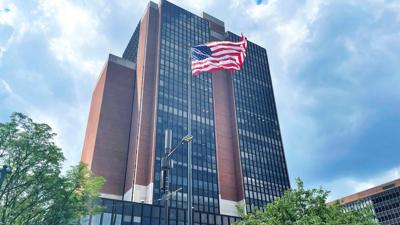



James A. Byrne U.S. Courthouse in Philadelphia
PHILADELPHIA – A lawsuit blaming DraftKings and others for furthering the gambling addictions of their users has failed in Philadelphia federal court.
Judge Joseph Leeson, Jr. on Monday threw out a proposed class action case that said DraftKings and its subsidiaries targeted vulnerable customers with marketing strategies and loyalty programs. But the gamble taken by lawyers at Loevy & Loevy went bust, as Leeson said DraftKings owed no duty of care.
“(W)hether to create a duty of care for online sportsbooks to design their interfaces differently to prevent plaintiffs from gambling compulsively is best left to the Pennsylvania General Assembly,” Leeson wrote.
“The Court previously found that casinos have no duty toward compulsive gamblers.”
The DraftKings app, its VIP loyalty program and other promotions do not comprise a single product that could be found to violate products liability laws, Leeson added.
The suit was filed in April 2025 by a group of gamblers. Over 99 pages, it alleged DraftKings preyed on and created addicts to dominate a Pennsylvania online-gambling market that reported more than $2 billion in revenue in 2024.
DraftKings is alleged to use data to create profiles of gamblers based on their demographic and financial information, plus their betting behavior. It then allegedly markets to them to maximize the amount of money it can take from them.
One plaintiff, Avi Setton of Allentown, says he lost more than $350,000 over four years on DraftKings before it closed his account – years after he had requested it do so.
Promotions like risk-free bets and bonus bets kept users gambling, the suit said. But none of this rose to a viable legal action, Leeson decided.
He rejected various claims made by the plaintiffs, like negligence, breach of fiduciary duty and intentional infliction of emotional distress. He refused to become the first federal or state judge in Pennsylvania to rule casinos or online sportsbooks owe a duty of care to compulsive gamblers.
A 2013 federal court ruling said casinos did not owe a duty of care for the emotional wellbeing of a gambler. The Third Circuit found the same in a New Jersey case last year.
And without guidance from the Pennsylvania Supreme Court, Leeson predicted it would find the same, given the strong regulations the legislature has imposed on online sportsbooks without establishing that duty of care to users.
“Moreover, this Court sitting in diversity, will not expand on existing duties in Pennsylvania by creating a new duty of care that could have far-reaching public policy consequences,” he wrote.