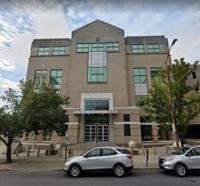


Philadelphia City Hall
PHILADELPHIA – A Philadelphia judge can’t justify a $1 billion verdict against Mitsubishi that features $800 million as a punishment, business and legal reform groups have told a Pennsylvania appeals court.
Briefing is complete in the case of Francis Amagasu, who was left paralyzed when his vehicle rolled over after attempting to pass another car in Bucks County in 2017. The 2023 verdict was one of Philadelphia’s many recent whoppers that helped contribute to this year’s ranking as the No. 5 “Judicial Hellhole” in the country by the American Tort Reform Foundation, which released its annual report Tuesday.
Only about $20 million of the verdict actually went to compensate Amagasu for financial damages. The rest was $156,488,384 for noneconomic damages like pain and suffering and $800 million in punitive damages.
The practice of pinning random numbers on noneconomic damages has led to a rise of what are called “nuclear verdicts,” especially in the Philadelphia Court of Common Pleas. Those slowed in 2025, ATRF said, because corporate defendants are settling instead of risking trial.
“Whether this lower level of activity will continue remains to be seen, as plaintiffs’ lawyers look to take advantage of the Philadelphia Court of Common Pleas’ Complex Litigation Center with the creation of several new mass torts,” the report says.
In Amagasu’s case, he alleged his seatbelt released an additional four inches of slack when his car rolled over. That allowed his head to hit the roof, he says, and he is paralyzed from the neck down now.
The 1992 Mitsubishi 3000GT had a defective design, the ensuing lawsuit argued. Testimony said webbing folded over itself and was sewn together, and the stitching would rip during a collision and release that extra four inches.
The jury quickly ruled against Mitsubishi at the conclusion of a 2023 trial after Judge Sierra Thomas Street did not allow the company to tell the jury its design met safety standards and did not require plaintiffs lawyers to show a safer alternative design was available.
A brief in the Superior Court by the Product Liability Advisory Council, the U.S. Chamber of Commerce and the Pennsylvania Defensive Institute, Association of Defense Counsel, Coalition for Civil Justice Reform and Chamber of Business & Industry argues against a punitive damages award that is 4.5 times higher than the compensatory verdict.
“First, the gigantic punitive award should be vacated and judgment n.o.v. entered because plaintiffs’ evidence suggesting that defendant Mitsubishi should have done more testing – specifically, dynamic rollover testing that the National Highway Traffic Safety Administration does not impose because such tests cannot reliably replicate real-life crash conditions – amounts only to negligence, if that, as the trial court’s opinion demonstrates,” the brief says.
“The record lacks evidence of intent to injure or of the conscious disregard of a known risk that Pennsylvania law requires in a case involving mere omissions.”
Judge Street rejected post-trial motions from Mitsubishi last year when she held that the 4.5 multiplier was not out of bounds because of the severity of the injuries Amagasu suffered. She said the jury’s damages award “correspond with and properly reflect its analysis of the facts presented at trial.”
Around the same time the Superior Court heard oral arguments, it affirmed a $200 million verdict for a child born with cerebral palsy that included $100 million for a life care plan and $80 million in noneconomic damages.
Also on its docket is a $725 million verdict largely made up of noneconomic damages for a mechanic who blamed benzene in Exxon gasoline for his leukemia. The same groups who filed the amicus brief in Amagasu’s case chimed in on that one too, arguing there are no guidelines for jurors when they decide those types of figures.
Studies have shown that large verdicts are only getting larger. In Philadelphia, a jury gave out more than $2 billion in a case alleging Roundup weedkiller causes cancer, though it was later reduced by the trial judge. Lawsuits alleging talc in products like Baby Powder contains asbestos have also produced multimillion-dollar verdicts.