
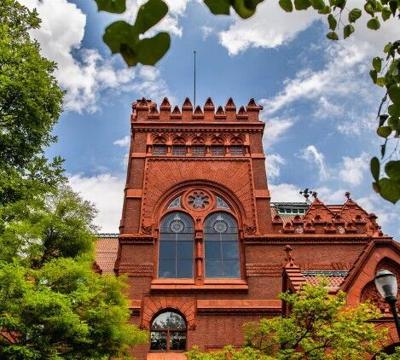


University of Pennsylvania
PHILADELPHIA – An antisemitism investigation into the University of Pennsylvania is a case of President Donald Trump pushing his conservative agenda on America’s schools, the nonprofit Public Citizen is claiming.
The group has organized protests of the president, including at one of his private golf clubs, and has now turned its attention to the case of UPenn, which is resisting a subpoena about potential unlawful employment practices.
The Equal Employment Opportunity Commission says it is looking into complaints from Jewish faculty over a hostile work environment.
“The subpoena, and the investigation from which it stems, is part of a broad campaign by the Trump Administration to weaponize claims of anti-Semitism to suppress protests about Israel by arguing that universities’ failure to take sufficiently punitive action against protestors has caused emotional harm to Jewish students and faculty and hence allowed anti-Semitism to flourish on campus,” Public Citizen wrote Wednesday in an amicus brief filed in Philadelphia federal court.
The subpoena seeks information “about victims of and witnesses to an alleged antisemitic hostile work environment.”
Jewish students and a group called Students Against Antisemitism sued UPenn in 2023 but recently lost their civil rights case. Judge Mitchell Goldberg dismissed the case in June, curious as to why the 111-page complaint contained allegations of antisemitism in places all over the world.
The suit said UPenn refused to punish slurs and chants including “F--- the Jews” since 2023, when the latest conflict between Israel and Palestine began.
UPenn says it has received three antisemitism complaints out of 20,000 employees. It has claimed some of the information sought by the EEOC is confidential and irrelevant.
The EEOC charge cites public statements of antisemitism directed at Jewish faculty. Incidents include a swastika painted on an academic building, disturbing emails and pro-Hamas rallies.
Trump has issued an executive order that required executive agencies to submit reports on antisemitism at colleges since October 2023, threatening that federal funding will stop for schools that allow “illegal protests.”
UPenn is now in the federal government’s crosshairs. A student group in 2024 called “Penn Against the Occupation” on social media criticized 29 faculty members who traveled to Israel. The subpoena seeks information about those members of the UPenn staff, identities of anyone who reported the post and the school’s investigation into the post.
Public Citizen calls it protected political speech and condemns the EEOC for trying to use its power to compel the identification of anonymous speakers.
“(T)he First Amendment protects academic freedom, including the freedom to articulate views at odds with opinions favored by government officials,” the amicus brief says, citing the U.S. Supreme Court’s history of affirming the right to express unpopular views “under the rubric of academic freedom.”
“Here, the only basis for compelling identification of Penn’s students and employees in connection with the social media post is the possibility that Penn could be found liable under the civil rights laws for failing to suppress that post—a statement consisting of purely political speech. The First Amendment, however, bars that theory of liability.”