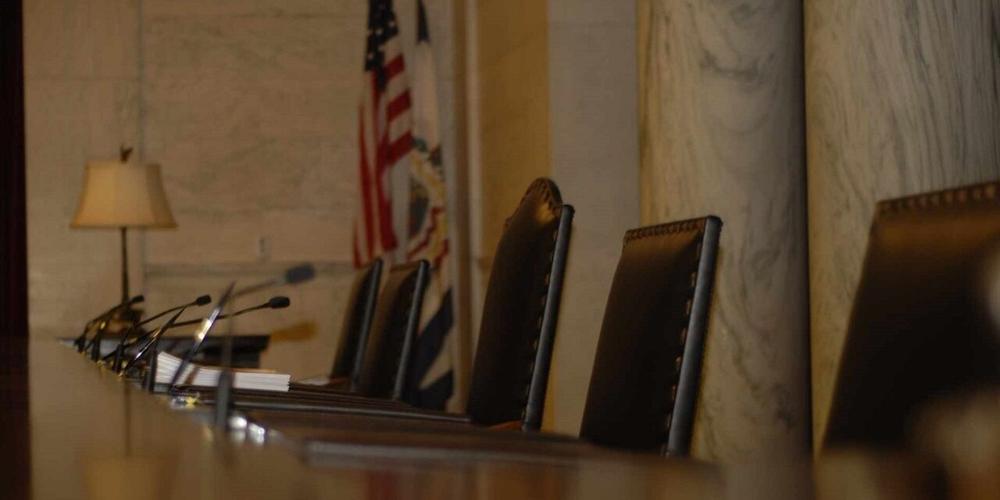


The chambers of the West Virginia Supreme Court of Appeals
CHARLESTON – A West Virginia Supreme Court candidate has filed a lawsuit seeking to overturn state rules that regulate what judicial candidates can say during an election.

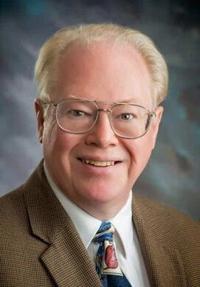
Sheehan
Martin P. Sheehan filed his complaint March 9 in federal court in Charleston against the West Virginia Judicial Investigation Commission and Teresa Tarr, counsel to the JIC.
A Wheeling attorney, Sheehan claims certain parts of the West Virginia Code of Judicial Conduct violates the First Amendment by restricting a judicial candidate’s ability to speak freely while campaigning.
Sheehan specifically mentions the rules regarding making any statement that would reasonably be expected to affect the outcome or impair the fairness of a matter pending or impending in any court as well as statements in connection with cases, controversies or issues that are likely to come before the court, make pledges, promises or commitments that are inconsistent with the impartial performance of the adjudicative duties of judicial office.
“Enforcement of such rules would adversely affect the First Amendment rights of the plaintiff in an election campaign,” Sheehan wrote in his complaint, noting the rules “appear unenforceable” based on a 2002 U.S. Supreme Court decision regarding a case of a candidate for Associate Justice of the Minnesota Supreme Court.
He also says the rule is inconsistent with a 1983 West Virginia Supreme Court ruling regarding former Supreme Court Justice and state Attorney General Darrell McGraw.
“There the Supreme Court, in an opinion by Justice Miller, held that public statements of Justice Darrell McGraw about the judiciary’s independence in the budget making process did not require him to recuse” himself from a 1978 case which “concerned the subject matter of Justice McGraw’s statements.”
Sheehan says the existence of the rules “constitutes a threat of enforcement” against him.
“Were enforcement of these rules not enjoined, the plaintiff would suffer a restriction on his ability to communicate with voters before a statewide election to be held in May of 2026,” Sheehan wrote. “Enforcement of such prohibitions is unlikely to require recusal on any manner covered by said comments in light of the McGraw precedent.”
Sheehan seeks a declaration that the rules are unconstitutional. He also seeks injunctive relief, including a temporary restraining order, a preliminary injunction and permanent injunction against the JIC and Tarr prohibiting enforcement of these rules.
“The plaintiff should not have to face the risk of any sanction for exercising a well-established First Amendment right to campaign free of the threat of any such sanction,” Sheehan wrote.
Sheehan has practiced law for more than 45 years. He previously applied for Supreme Court openings in 2018 and 2025, and he previously ran for a seat in the House of Delegates. He also is a former assistant U.S. attorney.
He is running for one of two state Supreme Court seats on the May 12 ballot against sitting Justice Gerald Titus, Berkeley Circuit Judge Laura Faircloth, Raleigh Circuit Judge Todd Kirby and retired Raleigh Circuit Judge Harry Kirkpatrick. Judicial elections in West Virginia are non-partisan, so the justice will be selected in the May 12 election.
U.S. District Court for the Southern District of West Virginia case number 2:26-cv-00180