


V-22 Osprey
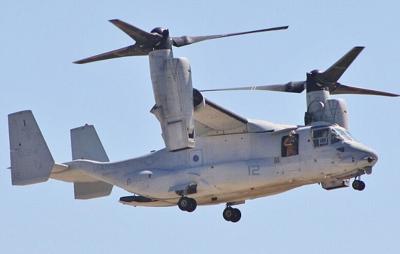
PHILADELPHIA – Attorneys can’t use Pennsylvania law to recover more money in a lawsuit over the fatal 2023 crash of a military Osprey aircraft in the East China Sea, a Philadelphia federal judge has decided.
Judge John Murphy ruled last week that the complaint, filed by the estates of the eight crew members who died when the Osprey suffered mechanical failure, can’t avoid restrictions in the federal Death on the High Seas Act by instead making claims under Pennsylvania state law.
Damages under the DOHSA are limited to relatives’ monetary losses, so Newtown Square lawyer John Gagliano and attorneys at Wisner Baum in California pursued claims for negligence, product liability, civil conspiracy and violations of the state Unfair Trade Practices and Consumer Protection Law. They also sought punitive damages.
“But if we adopt plaintiffs’ preferred interpretation, this would largely return wrongful death actions on the high seas to the purview of the states, since prospective plaintiffs could almost always point to some tortious conduct that had its inception on land to escape DOHSA’s reach,” Murphy wrote.
“Agreeing with plaintiffs here would not only run contrary to the text and unanimous consensus of the courts, but it would also undercut every explanation of the statute’s purpose.”
The Osprey crashed into water a half-mile off the coast of Yakushima Island in Japan while performing an exercise. Five crew members, a direct support operator and two medical personnel died.
A “Land as Soon as Possible” warning alerted the Air Force members to a problem, later determined to be failure of the left-hand Proprotor Gearbox. The investigation also faulted inadequate risk management and ineffective crew resource management.
The August 2025 lawsuit blames companies that manufactured the Osprey – Bell Textron, Boeing and Universal Stainless & Alloy Products. When they argued DOHSA preempted the state-law claims, plaintiffs lawyers countered that they were suing over conduct that had occurred on land.
Murphy wrote that they “make the best of their arguments,” but a reading of the law and other cases weighed in the defendants’ favor. The U.S. Supreme Court held in 1978 that in DOHSA cases, plaintiffs can not seek loss of society damages under maritime law.
Eight years later, the court precluded state wrongful death claims in DOHSA cases. It has not, however, explicitly ruled on state survival statutes.
In 1998 though, it said relatives can’t recover for the decedent’s pre-death pain and suffering through a survival action under maritime law. And three federal appeals courts have found DOHSA applies when the decedent is injured on the high seas even if the negligence alleged happened on land, like the manufacture of an aircraft.
“In contrast to this broad consensus, plaintiffs do not cite – nor can we find – a decision holding that DOHSA does not extend to a death on the high seas when the precipitating tortious conduct occurred on land,” Murphy wrote.