
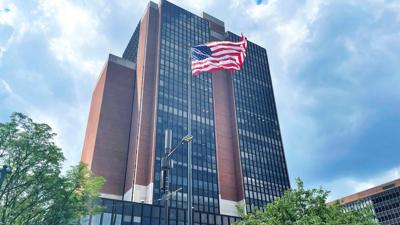


James A. Byrne U.S. Courthouse in Philadelphia
PHILADELPHIA – A man who spent 36 years in prison for a murder in Philadelphia and was released in 2024 after exculpatory evidence was turned over to his lawyers is suing the City.
William Bailey Jr. joined the long list of former inmates suing Philadelphia police over false arrest and wrongful imprisonment, filing suit last week in federal court. Cases like his can result in large settlements and verdicts, like a $32.8 million judgment in St. Louis last month.
Testimony from one witness who later recanted led to the arrest of Bailey over the 1987 murder of Derek Walker. Bailey’s suit says Pelzer’s mistaken identification was contradicted by others who did not see Bailey at the murder scene and pointed to other suspects.
And detectives Leon Lubiejewski and James Dougherty fabricated a confession as Bailey maintained his innocence, the suit says.
“This resulted in an unfair trial and unlawful conviction,” says the lawsuit, filed by attorneys at Kline & Specter.
The firm Blank Rome and the Pennsylvania Innocence Project represented Bailey in the effort to overturn his conviction, which finally happened in 2024. Bailey was a U.S. Army veteran who had been honorably discharged by 1987, when Walker was shot and killed outside a bar in West Philadelphia.
Walker had been in a fight with Gerald Brown before the shooting. Witnesses said Brown slashed Walker’s face with a broken bottle and repeatedly pistol-whipped him.
Then a bullet fired by an unknown shooter grazed Brown’s head, stopping the fight. Shortly after, a shooter shot Walker in the head at close range.
Victor Pelzer told detectives he believed the shooter was the bartender’s brother – Bailey. Six other witnesses said they knew Bailey and that he wasn’t there, and Bailey provided an alibi. Detectives never interviewed Bailey’s alibi witnesses, the suit says.
They also ignored a witness who identified the shooter as a man named Fred, the suit adds. Handwritten notes of the interview of Bailey included “yeah I did it,” but the notes weren’t signed by Bailey and he disputed ever saying that.
The District Attorney’s Office turned files over to Bailey’s lawyers in 2021. It contained exculpatory evidence not disclosed at trial, the suit says, including a change in Pelzer’s account of the story that would have shown he contradicted himself.