
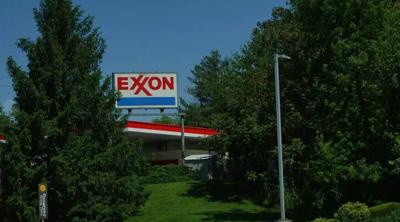


An Exxon sign at a gas station.
PHILADELPHIA – Philadelphia jurors have rejected claims that gasoline and other automotive products caused a man’s leukemia – a decision that contrasts with an earlier case that produced a $725 million verdict.
That jackpot was recently affirmed by the Superior Court, though ExxonMobil successfully defended itself in the lawsuit brought by Leon and Ruth Mazza against other companies like U.S. Steel, Shell, Chevron and BP. An Oct. 13 verdict says the company’s benzene-containing gas was not defectively designed.
The Mazzas sued several companies in July 2023 with lawyers at Locks Law Firm, which also represented Paul Gill in the blockbuster case. In that one, a juror bragged in a blog post after hammering Exxon that the “best feeling ever” was seeing the company’s lawyers look like they “were going to puke.”
Leon Mazza’s complaint says he worked several jobs from 1970-2020, including at a Wyndmoor Exxon, a Philadelphia body shop and landscaping businesses. He also used “various benzene-containing products” enjoying his hobby, drag racing and was diagnosed with leukemia in 2022.
The suit, like experts in Gill’s lawsuit, said there is no safe level of exposure to benzene. The International Agency for Research on Cancer, a controversial body that gave credence to claims Roundup weedkiller causes non-Hodgkin lymphoma, last year reclassified gasoline from possibly carcinogenic to carcinogenic to humans.
But the Trump administration has moved to cut IARC’s influence, which has also propelled litigation claiming talcum powder contains cancer-causing asbestos. The departments of State and Health and Human Services issued a joint statement calling IARC’s reports “politicized” and that they “undermine confidence in everyday products.”
When the IARC said glyphosate, the active ingredient in Roundup, was a “probable carcinogen,” lawsuits followed. Though a proposed settlement is worth billions and plenty of plaintiffs scored huge verdicts, the U.S. Supreme Court said in June that federal law declaring glyphosate safe preempts state-law failure-to-warn claims. The non-voting chair of the IARC panel on glyphosate later quit to become a paid expert for plaintiff lawyers.
Federal agencies have set standards for benzene amounts in gasoline, and the IARC declared it causes bladder cancer and acute myeloid leukemia in adults. In children, it claims, it can cause other types of cancer too.
Exxon’s gasoline lacked an adequate benzene warning, jurors in the Mazza case found. But the company didn’t “intentionally conceal” the dangers of benzene.
Should the case be appealed, the Superior Court in the Gill case seemed wary of overturning the decision of the jury. Instead of delving into the disputed science, judges mostly complained that Exxon had not properly preserved the issues it raised during its appeal.
The court was unwilling to lessen the verdict, made entirely of non-economic damages, despite pleas from legal reform and business groups to do so. The huge amount was bad for everyone, they claimed, because nuclear verdicts like it discourage settlements, encourage protracted litigation and increase the costs of food, housing and health care.
However, Judge Deborah Kunselman and others rejected that request.
“Exxon also asks us to substitute our view of what verdict amount is shocking to our consciences for that of the trial court, rather than deferring to the trial court, who heard and saw the witnesses testify,” she wrote.
“Hence, Exxon asks us to overstep our role as a reviewing court and invade the provinces of both the jury and the trial court. This not the function of an appellate court.”

