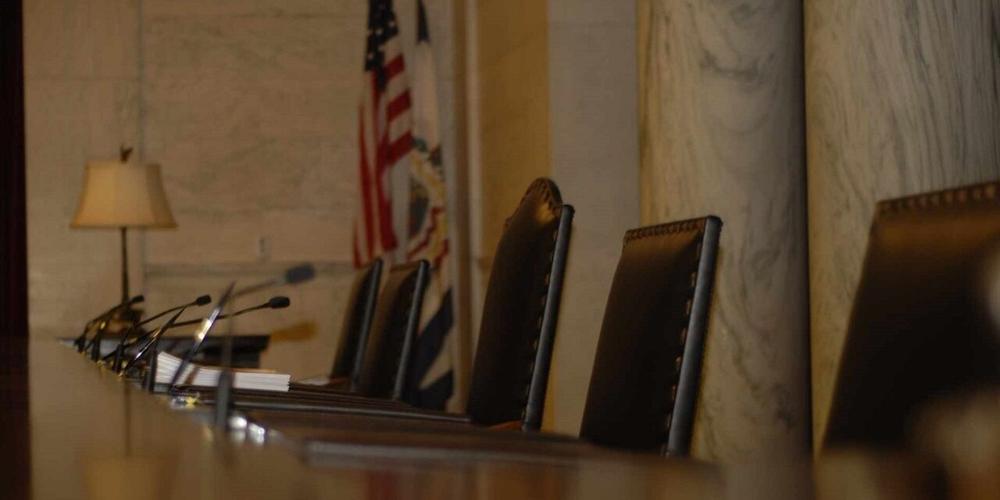


The chambers of the West Virginia Supreme Court of Appeals
CHARLESTON – The president of the West Virginia Chamber of Commerce says the state Supreme Court might lean to the left.
In Tuesday’s primary election, incumbent Justices Tom Ewing and Gerald Titus were defeated by Wheeling attorney Bill Flanigan and retired circuit court judge H.L. “Kirk” Kirkpatrick. Both sitting justices had been appointed to the bench last year by Republican Gov. Patrick Morrisey.
Like many political observers across the state, Roberts said he was surprised by those outcomes.
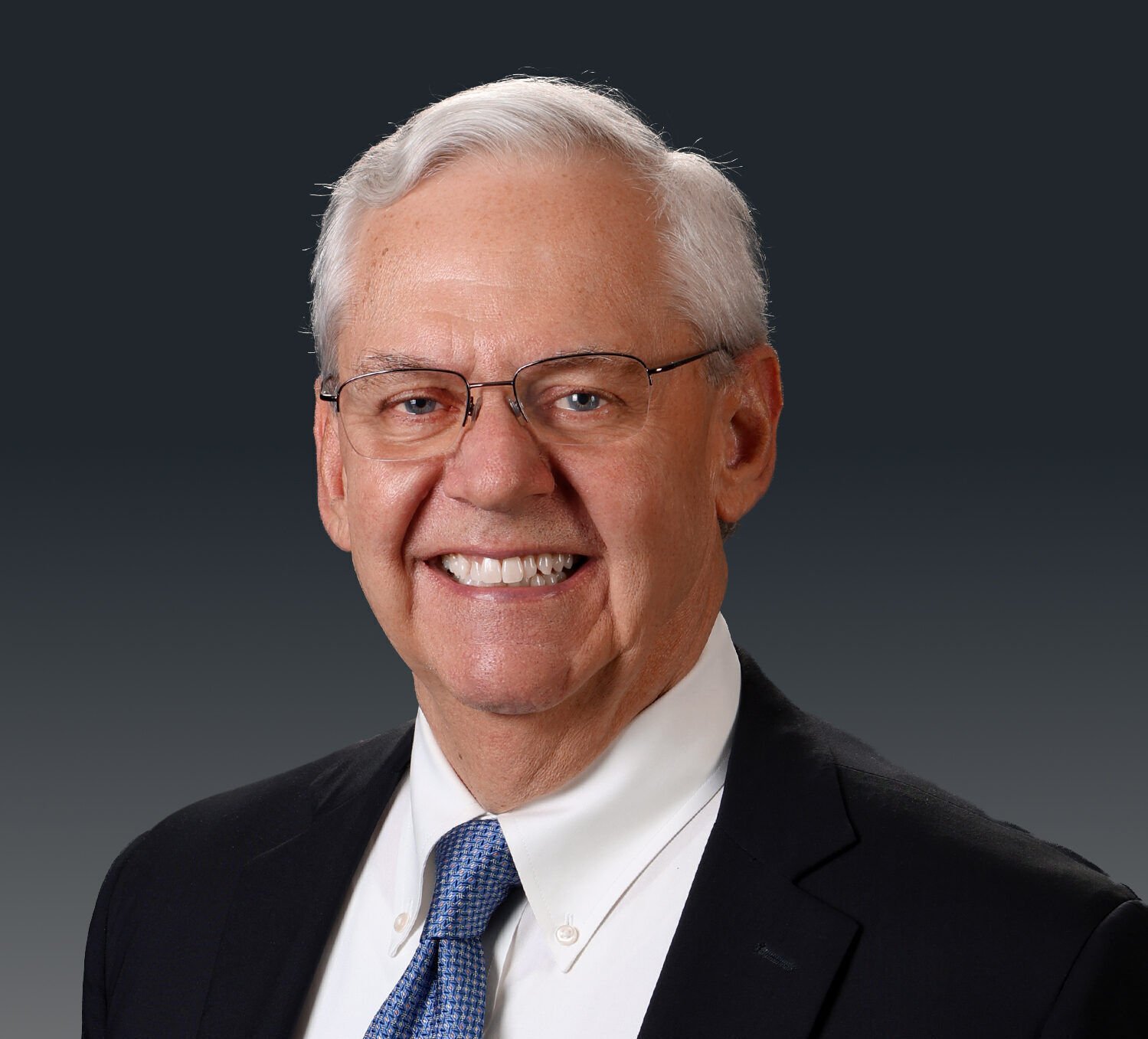
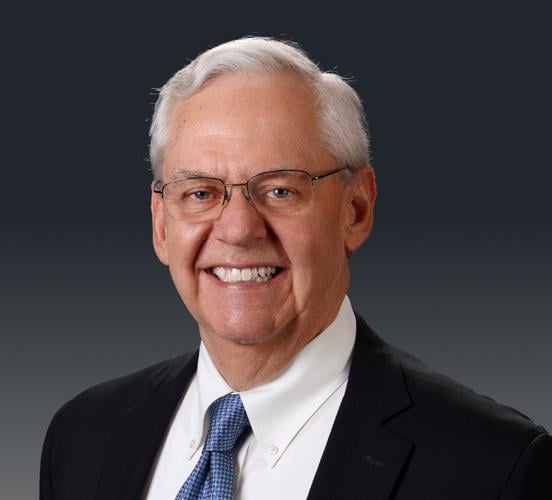
Roberts
“I suppose hindsight is 20/20, but the combination of higher-than-expected turnout from Democrats and low Republican turnout played a role there,” Chamber President Steve Roberts told The West Virginia Record. “Perhaps some regional differences made the difference in those races as well.
“There’s probably lawyers across the state who believe the ideological lean of the court now probably tilts a different direction.”
Incumbent Intermediate Court of Appeals Judge Dan Greear also was defeated in Tuesday’s nonpartisan race by Kanawha Family Court Judge Jim Douglas. Greear was appointed to the ICA by former Republican Gov. Jim Justice when it was created in 2021.
“I think we’re going to see that candidates who received heavy support from the trial lawyers won,” Roberts said. “We know a fair amount about Justice Titus and Justice Ewing, and we know a fair amount about Judge Greear.
“From our point of view, those three were balanced middle-of-the-road judges who were not going to expand liability. I’m not ready to say the two elected to the Supreme Court are, but I think we’ll see they’re back by those who want to see an expansion of liability.”
Still, Roberts said he’s optimistic.
“Kirk has a good track record on the bench,” Roberts said. “And Flanigan was a moderate while serving in the Legislature. I think we’ll just have to wait and see. But I do think we’re going to find out the winners received substantial support from members of the trial bar.”
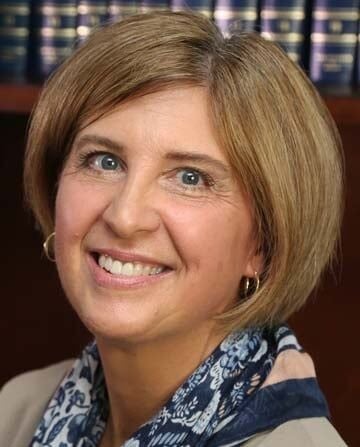
Reed
The president of a statewide group for trial lawyers is optimistic about the new members of the state judiciary.
“In the West Virginia Supreme Court elections, state voters had the rare privilege of selecting from several exceptionally well-qualified candidates,” West Virginia Association for Justice President Kelly Reed said. “It’s not often that you can have some many options for a win-win outcome.
“We believe that H. L. Kirkpatrick and Bill Flanigan are committed to protecting our Constitution, the rule of law and judicial independence. I believe that both are going to be extraordinary justices for our state’s highest court.”
The president of West Virginia Citizens Against Lawsuit Abuse said independents had one outlet to punish Morrisey for the GOP closure of the primary: non-partisan judicial races.

Thomas
“If you look at the vote totals, you essentially had Kirkpatrick, Flanigan and Douglas campaigned toward Democrats and independents,” Greg Thomas said. “With Republicans closing the primary, I think independents were going to come out and vote against Republicans. And the non-partisan judicial races were the way for them to express their disapproval of closing the primary. They voted against the conservative judges appointed by Republicans.
“And part of it, too, I think was that Democrats are fired up to vote against Republicans.”
Looking at the vote totals, Thomas said the candidates who leaned more toward the Democratic and independent ticket in the statewide judicial races each received around 110,000 votes compared to the Republican candidates who received about 80,000 votes each.
Kirkpatrick and Laura Faircloth combined for 109,612 votes in one Supreme Court race while Titus and Todd Kirby received 82,378 in that race. Flanigan received 110,784 votes in his race against Ewing’s 82,793. Douglas garnered 111,241 votes in the ICA election compared to Greear’s 78,058. For comparison, incumbent Republican Shelley Moore Capito received 79,221 votes in her unopposed U.S. Senate race.
Thomas called this year’s primary a “gross-out campaign.”
I think this campaign Morrisey and the national special interests … they ran a campaign to purposely suppress Republican vote, and they did. The result is the perceived Republican team were voted out, and they were voted out by a big margin. It’s also, like I said, a byproduct of closing the primary. It was a perfect recipe to entirely possibly change the court wholesale.
“All of these groups Morrisey brought in to get involved in the legislative races. It was more transgender stuff, more drag queens on mailers, more about boys and girls bathroom, more of that kind of stuff. Stuff that has been settled in West Virginia, yet these guys keep bringing it up. Most people are saying, ‘Why aren’t we talking about jobs and healthcare?’ But there is a third of the Republican Party who only cares about those types of social issues.”
Thomas said he doesn’t think the judicial votes were so much about voters loving the three victors or disliking the three incumbents who lost.
“I know very little about Kirkpatrick, Flanigan or Douglas,” he said. “I don’t think this really had anything to do with them. And I’m not trying to take anything away from what they’ve done. I don’t think this is a liberal takeover of the court.
“All of these judicial incumbents just got caught up in a very big political messaging war.”
Thomas said WVCALA and others have worked for years to bring predictability to the judiciary.
“It was in a good place,” he said. “Now, it’s uncertain. I hope Kirkpatrick and Flanigan and Douglas do well. We’re not against anybody here. We just were in a good place. Now it’s all uncertain because of the actions from this political game that had nothing to do with the judiciary.”
Roberts said he isn’t sure the judicial outcomes are a commentary on Morrisey.
“We’ve actually talked about that around the office,” Roberts said. “It’s fair to say several of the people he appointed lost, including some in the Legislature. But do the voters know that and put two and two together? I just don’t know.”
West Virginia Democratic Party Chairman Mike Pushkin said he thinks strong Democratic turnout helped the statewide judicial candidates.
“With strong Democratic support, moderates were able to take control of the Supreme Court over Governor Morrisey’s hand-picked candidates,” Pushkin said. “Likewise, on the Intermediate Court of Appeals, registered Democrat Jim Douglas defeated incumbent Republican Dan Greear, who was backed by Morrisey.”
Pushkin also said he thinks Greear’s close association with House Speaker Roger Hanshaw became a political liability.
“Greear was dragged into the data center controversy through his close association with Speaker Hanshaw, who pushed legislation benefiting Data Centers and then went on to represent them before the court,” Pushkin said. “Voters clearly had concerns about those conflicts and the appearance of insiders taking care of insiders.”
Talking during MetroNews’ election night coverage, Morrisey discussed the Supreme Court races.
“Listen, I think one of the challenges with these judicial races when they’re held in a primary, and I always had some concerns about it, that it’s difficult for people to get known in a short period of time,” Morrisey told MetroNews. “And so I think they were wonderful picks, but both of them were relatively unknown. …
“And I think some of the other candidates brought some other advantages, in terms of their name ID, in terms of the resources that they could bring to bear. But I want to congratulate the justices who did prevail, and we’re going to want to work with everyone.”
* * *
For the most part, Roberts said he was pleased with the results in other state races.
“We were glad to see such a resounding victory from Senator Shelley Moore Capito and pleased she won by such a margin that it looks like she’ll continue to represent West Virginia in Washington,” Steve Roberts told The West Virginia Record. “We think a number of more pro-business, pro-education people were elected to the House of Delegates.
“In the (state Senate, we worked very hard to make sure Tom Takubo and Vince Deeds were re-elected. We had hoped to replace some incumbents, but we didn’t succeed with all of those. However, we did retain some our greatest allies which also were the most high-profile races. We had to work hard to help them retain their seats.”
Roberts said he doesn’t expect much change in the state Senate.
“The House is going to be significantly improved based on the primary,” he said. “But the balance of power in the Senate doesn’t really change. It could have been a lot worse if Takubo and Deeds had been defeated. They’re two highly respected and hard-working senators.”