
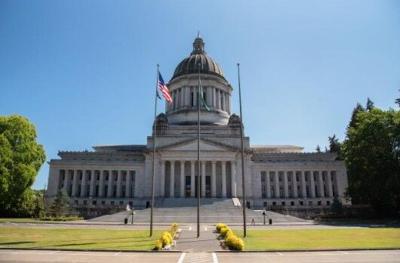



Legislative Building in Olympia, Wash.
OYMPIA, Wash. - A parade of union officials, industry association leaders and representatives of landowners and fisheries appeared at a Washington state legislative hearing to oppose a bill that would attach criminal penalties to environmental violations.
The bill, SB5360, narrowly passed the Washington Senate but has drawn strong opposition from critics who say it will subject workers to criminal penalties for honest mistakes and potentially reduce the willingness of farmers and foresters to engage in environmentally helpful activities.
At a Monday hearing before the House Committee on Environment & Energy, Dave Garegnani of Local 77 of the International Brotherhood of Electrical Workers said it is unfair to subject rank-and-file workers to criminal liability for failing to follow complex environmental regulations.
“It is the responsibility of management,” Garegnani told committee members. “The way this bill came forward in this session, rapidly and late, has not allowed an opportunity for any type of engagement with labor representatives.”
The Washington bill, like a similar one pending in New York, makes it a criminal offense to knowingly violate environmental regulations if they place someone else “in imminent danger of death,” or risk property or natural resources. The bill includes misdemeanor criminal penalties for negligently violating air pollution regulations.
Sponsor Sen. Yasmin Trudeau, a Democrat, said the bill had been substantially modified since it was introduced last year to widespread hostility. Legislators added protections for workers who are acting in the course of employment or if they can prove they didn’t know what they did was illegal. Local prosecutors, not the state attorney general, must initiate criminal actions and they must be tried before elected judges, Trudeau said.
Those additions didn’t satisfy representatives of the Steelworkers, pulp and paper workers and Operating Engineers unions, who testified their members should not be subject to criminal liability. The Building Industry Association, Washington Association of Counties and Energy Northwest, a public electricity producer, also oppose the bill in its current form.
Dr. Elaine Oneil of the Washington Farm Forestry Association said “the process is part of the penalty,” because it will “terrify” small landowners into avoiding any action, such as reducing wildfire brush or invasive weed control, with criminal risk.
“We’re going to end up with a reduction in effective land management because of the fear of a felony conviction,” she said.
The bill’s sponsors say it only brings Washington environmental law in line with federal law, which includes criminal penalties for some violations. It is supported by the Puyallup Tribe and and environmental groups like the Puget Soundkeeper Alliance, who say financial penalties aren’t stiff enough to deter companies from polluting.