


Recycling center
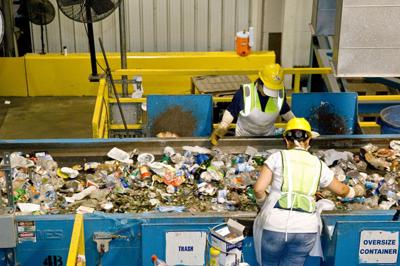
SAN DIEGO — The state of California can't enforce a so-called "Truth in Recycling" law that would allow food producers and a broad range of other companies to be sued should they claim packaging materials are recyclable, should the state of California claim it isn't.
On July 14, U.S. District Judge William Q. Hayes granted an injunction sought by a large coalition of business groups, blocking the state from enforcing its so-called "Truth in Labeling for Recyclable Materials" law.
In the ruling, Hayes said the law, formally passed as Senate Bill 343, likely sets up unconstitutionally vague standards that businesses can't realistically comply with and would chill their ability to make otherwise truthful claims about their packaging and products, for fear of being sued, potentially violating their First Amendment rights.
"... Manufacturers are left to guess which reading of the provision a judge or jury will adopt in a subsequent civil or criminal proceeding," Hayes wrote in his order.
SB 343 was enacted in 2021 by California Democrats concerned about the so-called practice of "greenwashing," in which makers of certain packaging and other products allegedly mislead consumers about how recyclable their products may be, resulting in consumers unwittingly filling their recycling bins with non-recyclable materials that would ultimately only end up in landfills with the rest of their trash.
Democratic state lawmakers and Gov. Gavin Newsom supported the law. At the time the law was passed, Newsom said the law would help "reduce the waste filling our landfills and generating harmful pollutants driving the climate crisis."
Specifically, the law forbids companies from placing the ubiquitous "chasing arrows" symbol, generally used to denote a material's recyclability, on their products, unless the product complies with California's strict criteria governing product recyclability.
The law, for instance, would forbid manufacturers from putting the recyclability symbol on products unless they meet a "60/60 threshold." Under the threshold, manufacturers would need to certify that their packaging products are collected by recycling programs serving at least 60% of California's population and is processed into so-called recycling "feedstock" by at least 60% of those recycling programs.
Should businesses improperly label materials with the "chasing arrows" logo, the law would subject them to potentially costly regulatory actions, as well as lawsuits from activist groups, individuals and trial lawyers.
Enforcement of the law was scheduled to begin in October 2026.
However, this spring, a coalition of food producers, packaging makers and other companies filed suit in San Diego federal court, asking the court to block enforcement and ultimately strike the law down as unconstitutional.
A hearing was held in June, in which Judge Hayes expressed skepticism over the state's claims manufacturers should have little trouble complying with the law by using "common sense" when determining a product's recyclability.
That skepticism ultimately resulted in the July 14 injunction order, blocking the state from enforcing the law.
In the ruling, Hayes said he believed the plaintiffs were likely to prevail on their claims the law was unconstitutionally vague and violated their First Amendment speech rights.
He particularly noted the law does not require California's recycling regulator, CalRecycles, to provide clear guidance on how to comply with any of the standards, particularly the definition of "feedstocks."
So, the judge said, businesses would essentially be left to guess how to meet California's potentially evolving and shifting standards. And should they guess wrong, the judge said, those businesses could face potentially costly enforcement actions and lawsuits.
That threat, in turn, could lead businesses to simply choose not to risk such losses, and refuse to discuss the recyclability of their products with consumers at all, ultimately producing the opposite result California officials say they hope the law will achieve.
"Although SB 343 attempts to provide consumers with a single, standardized definition of recyclability, the loss of qualified recycling information and the likelihood that manufacturers may forgo recyclability claims suggests that the law’s requirements are 'more extensive than necessary to serve' Defendant’s (California's) stated interest," Hayes wrote.
"The bill attempts to reduce consumer confusion, but the record indicates that the opposite result may occur because manufacturers will omit relevant information that consumers might consider in their purchasing decisions."
And, the judge agreed the law's threat of lawsuits over vague and potentially shifting standards chills the businesses' First Amendment rights to speak about their products.
The ruling was was hailed by business groups as a victory for free speech and against regulatory overreach.
In a statement released July 15, Julie Landry, vice president of government affairs for the American Forest & Paper Association, said: “This ruling is a significant win, not just for our members, but for every business that wants to give consumers accurate information about the products they buy.
"Paper-based packaging is among the most recyclable in the country, and our members should be able to say so truthfully. SB 343 would have forced manufacturers to strip accurate recycling information off packaging that is, in fact, recyclable - not because the claims were false, but because the law’s own standards were too vague to comply with.
"The Court recognized what we’ve said from the beginning: California cannot fix consumer confusion by restricting truthful speech.”
And the group known as Californians for Affordable Packaging added the coalition "will continue to press the case that California can strengthen recycling without censoring truthful information on packaging and without adding unnecessary and significant costs for California families and businesses."
Plaintiffs in the action include the California Restaurant Association, Dairy Institute of California, California Grocers Association, Pet Food Institute, SNAC International, Californians for Affordable Packaging, California League of Food Producers, Flexible Packaging Association, the Print Creative Alliance, Grower-Shipper Association of Central California, California Table Grape Commission, California Strawberry Commission, California Apple Commission, California Blueberry Commission, Olive Oil Commission of California, California Walnut Commission, American Forest & Paper Association and the Western Growers Association.
They are represented in the action by attorneys Trenton H. Norris, Alexander Tablan and Andrew Muse-Fisher, of the firm of Hogan Lovells US LLP, of San Francisco.